

Introduction
Navigating the complexities of Autism Spectrum Disorder (ASD) can be a daunting journey for parents, yet understanding the nuances of this condition is crucial for fostering their child's development. With the prevalence of ASD on the rise, it is more important than ever for families to equip themselves with knowledge about the diverse symptoms and challenges associated with autism. From the key diagnostic criteria outlined in the DSM-5 to the various age-specific approaches in assessment, this article aims to empower parents with essential insights and resources.
By embracing a proactive stance, parents can advocate effectively for their children, ensuring they receive the tailored support and interventions necessary for their growth and well-being. Join in as we explore the landscape of autism, offering guidance that transforms challenges into opportunities for understanding and connection.
Understanding Autism Spectrum Disorder (ASD)
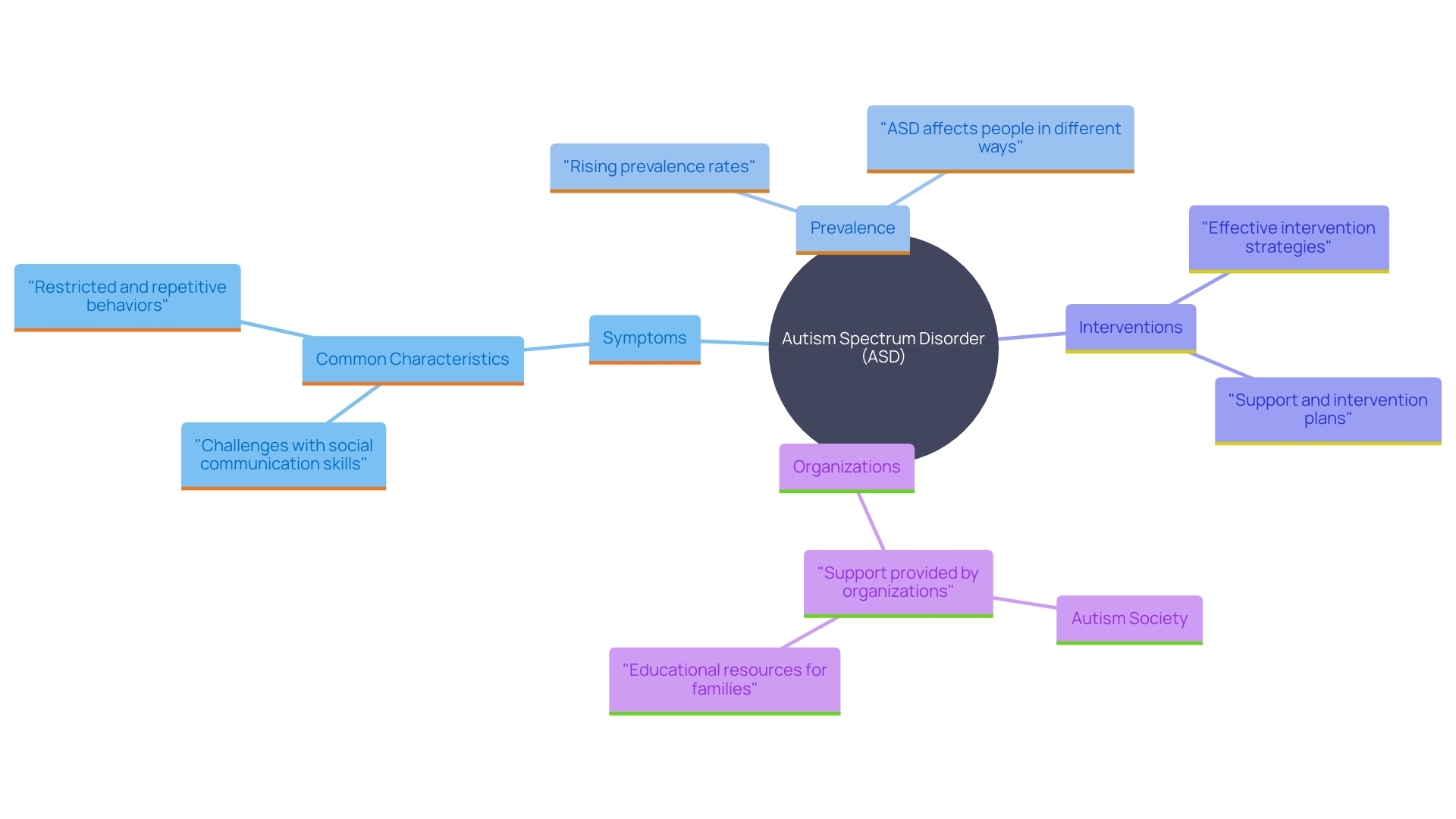
Autism Spectrum Disorder (ASD) is a neurodevelopmental condition that includes a wide range of symptoms and challenges, especially in interaction, behavior, and social engagement. The term 'spectrum' aptly reflects the wide variation in symptoms and their severity among individuals diagnosed with ASD. For instance, some individuals may experience significant difficulties in expressing themselves and social engagement, while others might demonstrate advanced language capabilities and high-functioning skills.
Recent statistics indicate that the prevalence of ASD continues to rise, with estimates for 2024 suggesting that approximately 1 in 36 youths are diagnosed with the condition. This marks an increase from previous years, highlighting the urgent need for awareness and understanding within our communities. Insights from psychologists indicate that emotional regulation, as observed in youngsters like Tait, often benefits from the support of familiar partners; however, consistent strategies across various settings are essential to enhance learning and interaction.
Empowering guardians with this information is essential, as it allows them to tailor their methods and seek the most effective resources and assistance for their offspring. For instance, a case study on prelinguistic interaction interventions demonstrated that structured approaches effectively promoted spoken skills among preschoolers with ASD, showcasing the potential benefits of targeted strategies.
The Autism Society emphasizes the importance of this advocacy, stating that they support the needs of their 71 local and state affiliates through training, advocacy, and financial assistance. This commitment to providing robust support systems is essential for families navigating the complexities of ASD.
As research in this field progresses, staying informed about the latest developments, such as the recent continuing education programs offered by ASHA focusing on the roles of speech-language pathologists in ASD, can further equip parents with the tools they need to advocate effectively for their offspring. Grasping the traits of ASD—like challenges in social interaction, repetitive behaviors, and sensory sensitivities—and acknowledging the obstacles encountered by those with this condition is not merely an academic task; it is a vital aspect of nurturing an inclusive and supportive atmosphere for every young person.
Key Diagnostic Criteria for Autism
The diagnostic journey for autism is anchored in the criteria established by the Diagnostic and Statistical Manual of Mental Disorders, Fifth Edition (DSM-5). The key indicators for Autism Spectrum Disorder (ASD) include:
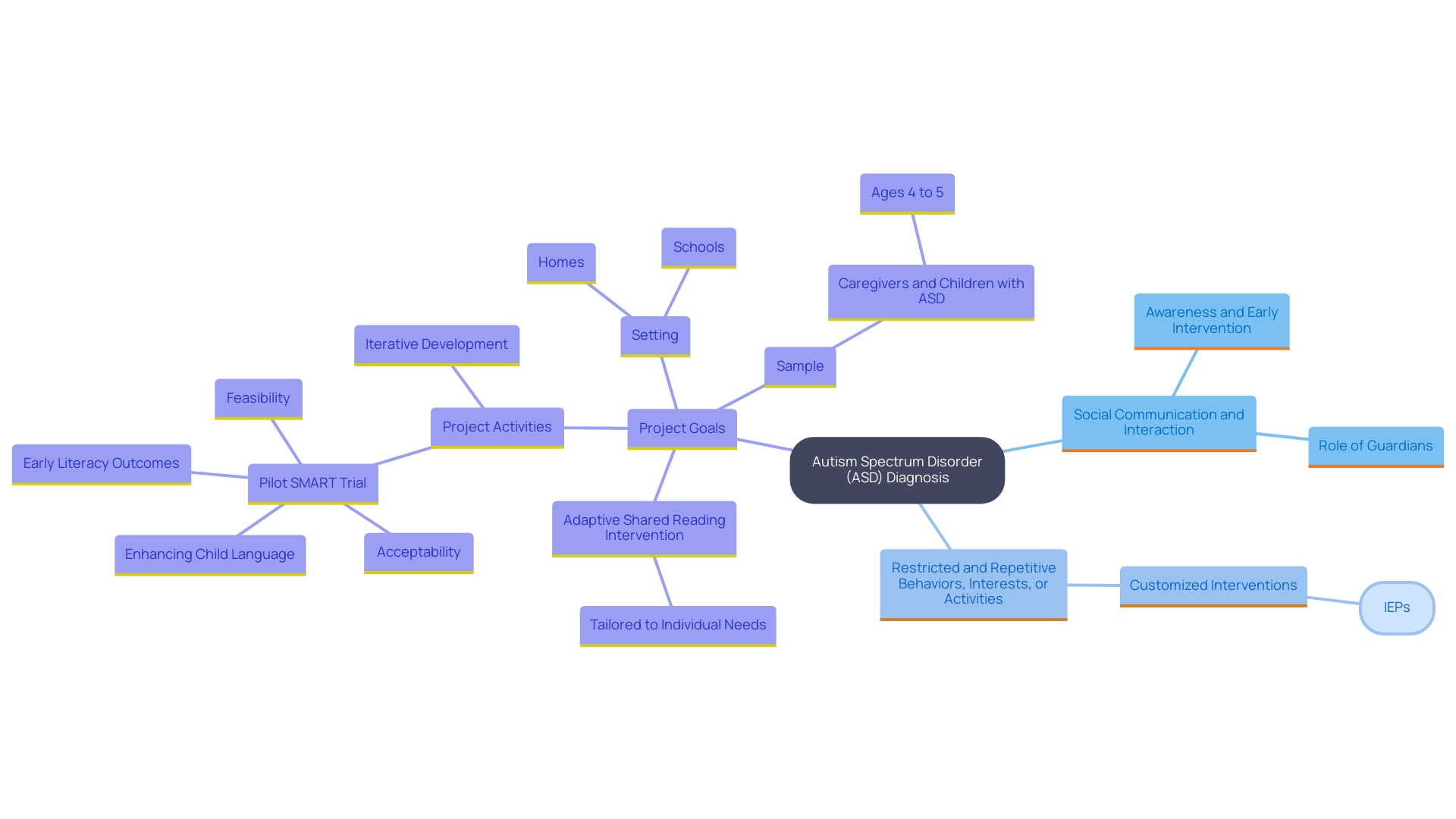
- Enduring difficulties in social communication and interaction across various settings
- Restricted and repetitive behaviors, interests, or activities
Research indicates that about 1 in 54 youngsters are diagnosed with autism, emphasizing the importance of awareness and early intervention. These criteria not only provide a comprehensive framework for healthcare professionals but also serve as crucial information for guardians.
As Laura NG, Clinical Operations Manager, states, 'The DSM-5 revisions not only refine the diagnostic criteria for Autism Spectrum Disorder but also enhance the clinical application of these criteria in practice, leading to more targeted and effective interventions.'
By familiarizing themselves with these diagnostic benchmarks, guardians can confidently engage in meaningful conversations with clinicians, ensuring that their offspring's unique needs are recognized and addressed. This understanding enables guardians to advocate for customized interventions, such as Individualized Education Plans (IEPs), which can greatly improve educational experiences for their offspring. In essence, being informed about the DSM-5 criteria equips parents to be proactive participants in their offspring's care and development.
Age-Specific Approaches to Autism Diagnosis
Diagnosis of autism can differ at various developmental stages, with early signs often visible in toddlers. For instance, younger individuals may be evaluated using play-based assessments that focus on communication and social interactions. As children grow, clinicians may incorporate standardized tests and behavioral assessments tailored to their developmental stage. Understanding these age-specific approaches is vital for parents, as it helps them recognize the importance of early intervention and the different strategies that may be employed during the diagnostic process.
Age-Specific Approaches to Autism Diagnosis
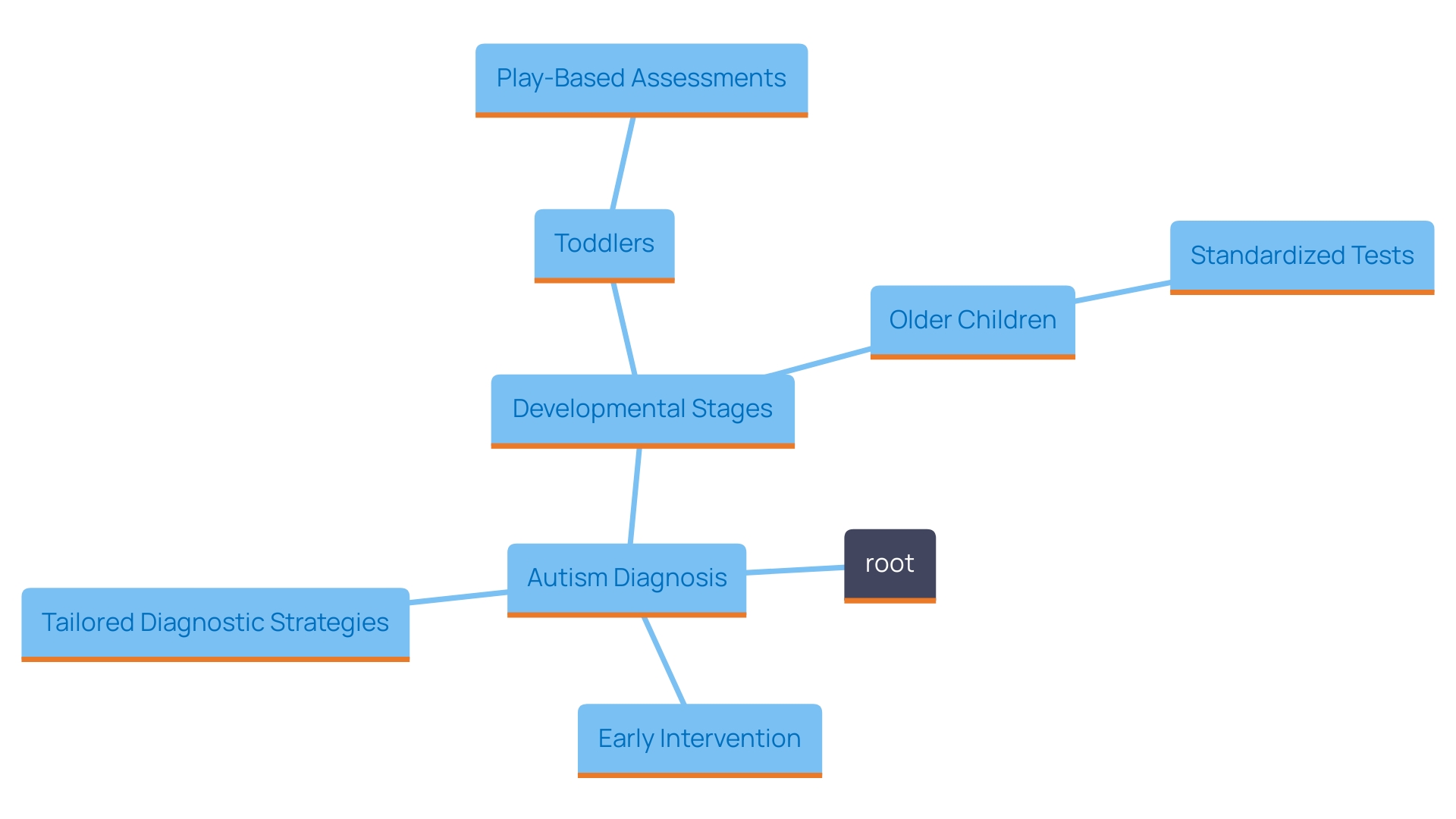
Diagnosis of autism can differ at various developmental stages, with early signs often visible in toddlers. For instance, younger individuals may be evaluated using play-based assessments that focus on communication and social interactions. As children grow, clinicians may incorporate standardized tests and behavioral assessments tailored to their developmental stage. Understanding these age-specific approaches is vital for parents, as it helps them recognize the importance of early intervention and the different strategies that may be employed during the diagnostic process.
Conclusion
Navigating the complexities of Autism Spectrum Disorder (ASD) requires a multifaceted understanding of its symptoms, diagnostic criteria, and the importance of timely intervention. This article has illuminated the diverse range of challenges faced by children with ASD, emphasizing the significance of tailored support and advocacy for parents. By familiarizing themselves with the DSM-5 diagnostic criteria, parents can better engage with healthcare professionals, ensuring their child's unique needs are met through personalized interventions.
Recognizing the age-specific approaches to diagnosis is equally crucial, as it highlights the importance of early detection and intervention strategies. Understanding how assessments evolve with a child’s development empowers parents to seek timely evaluations and appropriate resources. These insights not only equip families with knowledge but also foster a proactive attitude in advocating for their children's well-being.
Ultimately, the journey through autism advocacy is one of empowerment and connection. By embracing the information and resources available, parents can transform challenges into opportunities for growth and understanding, laying the foundation for their child's success and happiness. Every step taken towards understanding ASD is a step towards creating a supportive environment that nurtures the potential of every child on the spectrum.
Frequently Asked Questions
What is Autism Spectrum Disorder (ASD)?
Autism Spectrum Disorder (ASD) is a neurodevelopmental condition characterized by a range of symptoms and challenges, particularly in social interaction, behavior, and engagement. The term 'spectrum' indicates the wide variation in symptoms and severity among individuals diagnosed with ASD.
How prevalent is Autism Spectrum Disorder?
Recent estimates suggest that approximately 1 in 36 youths are diagnosed with ASD in 2024, indicating a rising prevalence and highlighting the need for increased awareness and understanding in communities.
What are the key indicators for diagnosing Autism Spectrum Disorder according to the DSM-5?
The key indicators for ASD include enduring difficulties in social communication and interaction across various settings, and restricted or repetitive behaviors, interests, or activities.
How can guardians support children with ASD?
Guardians can support children with ASD by tailoring their methods, seeking effective resources, and being informed about interventions such as Individualized Education Plans (IEPs) that can enhance educational experiences.
What role does emotional regulation play in children with ASD?
Emotional regulation is crucial for children with ASD, and support from familiar partners can enhance their learning and interaction. Consistent strategies across different environments are essential for effective emotional regulation.
What types of interventions have shown effectiveness for children with ASD?
Structured interventions, such as prelinguistic interaction strategies, have been shown to effectively promote spoken skills among preschoolers with ASD.
How does the diagnostic process for ASD vary with age?
The diagnostic process for ASD can differ at various developmental stages, with younger individuals often evaluated using play-based assessments focused on communication and social interactions, while older children may undergo standardized tests and behavioral assessments.
Why is it important for parents to understand the DSM-5 criteria for ASD?
Understanding the DSM-5 criteria equips parents to engage meaningfully with clinicians, advocate for their children's unique needs, and ensure that appropriate interventions are implemented.
List of Sources
- Understanding Autism Spectrum Disorder (ASD)
- nimh.nih.gov (https://www.nimh.nih.gov/health/statistics/autism-spectrum-disorder-asd)
- autismspeaks.org (https://www.autismspeaks.org/life-spectrum/autism-quotes)
- cdc.gov (https://www.cdc.gov/autism/about/index.html)
- autismsociety.org (https://autismsociety.org/resources/new-autism-diagnosis/)
- Children with Autism Spectrum Disorders: Three Case Studies (https://leader.pubs.asha.org/doi/10.1044/leader.FTR2.15012010.14)
- autismspeaks.org (https://autismspeaks.org/signs-autism-adults)
- cnet.com (https://cnet.com/health/mental/heres-what-you-need-to-know-about-autism-spectrum-disorder)
- Key Diagnostic Criteria for Autism
- apexaba.com (https://www.apexaba.com/blog/autism-quotes)
- pmc.ncbi.nlm.nih.gov (https://pmc.ncbi.nlm.nih.gov/articles/PMC6547063/)
- ncbi.nlm.nih.gov (https://www.ncbi.nlm.nih.gov/books/NBK573609/)
- levelaheadaba.com (https://www.levelaheadaba.com/blog/dsm-5-for-autism-diagnosis-criteria)
- ies.ed.gov (https://ies.ed.gov/funding/grantsearch/details.asp?ID=6038)
- ies.ed.gov (https://ies.ed.gov/blogs/research/post/the-impact-of-parent-mediated-early-intervention-on-social-communication-for-children-with-autism)
- Age-Specific Approaches to Autism Diagnosis
- forbes.com (https://www.forbes.com/health/mind/signs-of-autism-in-children/)
- autism.org (https://autism.org/age-and-diagnosis/)
- sjdr.se (https://sjdr.se/articles/10.1080/15017410902753862)
- ncbi.nlm.nih.gov (https://www.ncbi.nlm.nih.gov/pmc/articles/PMC3166636/)
- researchgate.net (https://www.researchgate.net/publication/236693056_Case_Study_of_the_Development_of_an_Infant_with_Autism_from_Birth_to_Two_Years_of_Age)
- pmc.ncbi.nlm.nih.gov (https://pmc.ncbi.nlm.nih.gov/articles/PMC10189150/)
- Eye-Tracking Biomarkers and Autism Diagnosis in Primary Care (https://jamanetwork.com/journals/jamanetworkopen/fullarticle/2818669)
- frontiersin.org (https://frontiersin.org/articles/10.3389/fpubh.2023.1309154/full)
- jamanetwork.com (https://jamanetwork.com/journals/jamanetworkopen/fullarticle/2812964)


