

Introduction
For those navigating the landscape of autism spectrum disorder (ASD), a variety of interventions, therapies, and support mechanisms are available. These services are not just about addressing immediate needs; they are a bridge to enhancing communication abilities, fostering social connections, guiding positive behavior, and ultimately enriching the lives of those with ASD.
With guidance from esteemed institutions and experts, parents and caregivers are equipped with evidence-based strategies to help unlock their children's potential. In this article, we will explore the different types of autism services and provide guidance on how to navigate the autism service landscape to ensure the well-being and growth of your child.
Understanding Autism Services
For those navigating the landscape of autism spectrum disorder (ASD), a variety of interventions, therapies, and support mechanisms are available, each tailored to meet the diverse challenges faced by individuals with ASD. These services are not just about addressing immediate needs; they are a bridge to enhancing communication abilities, fostering social connections, guiding positive behavior, and ultimately enriching the lives of those with ASD.
With guidance from esteemed institutions like the National Academies of Sciences, Engineering, and Medicine, which regularly convene top experts across multiple fields, parents and caregivers are equipped with evidence-based strategies to help unlock their children's potential. The insights from these expert gatherings are invaluable in shaping policies and interventions that cater to the nuanced needs of individuals with ASD, ensuring that each person receives the support necessary to thrive.
Types of Autism Services
Early intervention programs are critical for children with autism, targeting the crucial developmental window from birth to three years. These programs offer an array of therapies such as speech, occupational, and behavior analysis, each designed to cater to the child's developmental milestones.
Applied Behavior Analysis (ABA) therapy stands out as a cornerstone intervention, with its evidence-based approach to enhancing life skills and minimizing challenging behaviors via positive reinforcement. Tailored to each child, ABA therapy is adaptable to various environments, including clinics, schools, and homes.
Speech and language therapy tackles the communication barriers faced by many with autism, focusing on articulation, comprehension, and social communication. Therapists work intimately with children to foster effective communication strategies, thereby supporting their language journey.
Similarly, occupational therapy aids in mastering everyday activities, enhancing life quality by developing motor skills, sensory integration, and self-reliance in daily tasks. Social skills training is another facet, honing the ability to interact, such as learning to make eye contact or initiate conversations, through structured activities and role-play. Special education services complement these by offering personalized educational programs and resources, including individualized education plans (IEPs) and specialized classroom support. Lastly, support groups and parent advocacy organizations are invaluable, providing emotional backing, resources, and a community for shared experiences and collective advocacy. It's essential for parents to navigate the autism service landscape, understanding that a multi-faceted approach often yields the most positive outcomes for their child's growth and well-being.
Navigating Autism Services
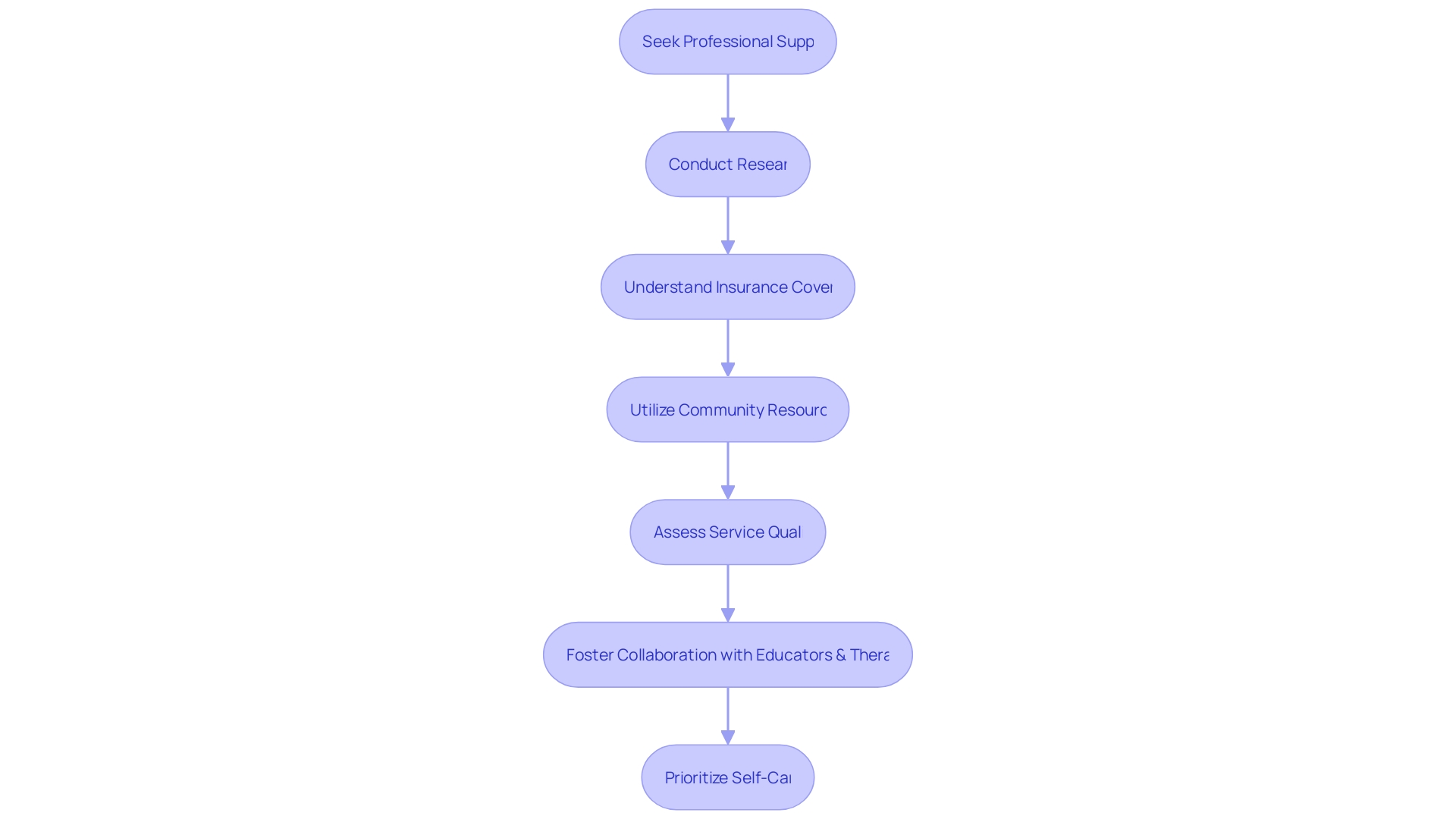
For parents and caregivers, the journey through autism services can feel like a maze. Yet, with structured guidance, the path becomes clearer. Start with professional support; pediatricians, psychologists, or developmental specialists can evaluate your child's unique needs and suggest suitable interventions.
They act as a bridge to the right service providers, ensuring your child receives the care they deserve. Diligent research is key in pinpointing experienced service providers specializing in autism. Gather insights through reviews, consult with fellow parents, and tap into the knowledge base of local autism bodies.
Understanding your insurance policy is also crucial. It's important to know what services are covered to avoid unexpected costs. Community resources are invaluable allies.
Local support organizations, community centers, and parent advocacy groups offer workshops and support networks that can ease the navigation process. When assessing service quality, don't hesitate to ask providers about their qualifications and approach to treatment. Look for those who use evidence-based practices and track records of success.
Fostering collaboration with your child's educators and therapists is essential for continuous care. This partnership is vital for sharing progress and tackling challenges together. Last but not least, self-care is paramount.
Caring for a child with autism is a marathon, not a sprint. Support from your network can sustain you, making you a more effective advocate for your child. By embracing these strategies, you can illuminate the pathway to unlocking your child's potential and nurturing their growth.
Conclusion
In conclusion, navigating the world of autism services can be challenging, but with guidance and support, parents and caregivers can ensure the well-being and growth of their child with autism spectrum disorder (ASD). These services are designed to enhance communication abilities, foster social connections, guide positive behavior, and enrich the lives of individuals with ASD.
Early intervention programs provide crucial therapies such as speech, occupational, and behavior analysis to target developmental milestones. Applied Behavior Analysis (ABA) therapy stands out as an evidence-based approach that enhances life skills and reduces challenging behaviors through positive reinforcement.
Speech and language therapy address communication barriers, while occupational therapy focuses on developing motor skills and self-reliance. Social skills training helps individuals with autism interact effectively through structured activities.
Special education services offer personalized educational programs and resources. To navigate the autism service landscape effectively, seek professional support to evaluate your child's unique needs and connect with suitable providers.
Conduct diligent research to find experienced service providers specializing in autism. Utilize community resources like local support organizations for workshops and support networks.
Collaboration with educators and therapists is essential for continuous care. Prioritize self-care as you advocate for your child's needs. Support from your network will sustain you throughout the journey. By embracing these strategies and utilizing evidence-based practices, parents can unlock their child's potential and nurture their growth. With the right resources and support, individuals with ASD can thrive socially, emotionally, and academically. Remember that every step taken towards accessing appropriate services brings your child closer to a brighter future.
Frequently Asked Questions
What is the purpose of autism services?
Autism services aim to address immediate needs while enhancing communication skills, fostering social connections, guiding positive behavior, and enriching the lives of individuals with autism spectrum disorder (ASD).
How do institutions like the National Academies of Sciences, Engineering, and Medicine contribute to autism services?
These institutions convene experts to provide evidence-based strategies and insights that shape policies and interventions tailored to the needs of individuals with ASD.
Why are early intervention programs important for children with autism?
Early intervention programs target the critical developmental period from birth to three years, offering therapies that are key to reaching developmental milestones.
What is Applied Behavior Analysis (ABA) therapy and why is it significant?
ABA therapy is an evidence-based intervention that enhances life skills and minimizes challenging behaviors in individuals with autism through positive reinforcement. It is adaptable to various settings and is considered a cornerstone of autism interventions.
What does speech and language therapy for autism involve?
This therapy focuses on overcoming communication barriers, working on articulation, comprehension, and social communication to support the language development of those with autism.
How does occupational therapy help individuals with autism?
Occupational therapy develops motor skills, sensory integration, and independence in daily tasks, thereby enhancing the quality of life for individuals with autism.
What are social skills training and special education services?
Social skills training involves structured activities and role-play to improve interaction skills, while special education services offer personalized educational programs, IEPs, and specialized classroom support.
Why are support groups and parent advocacy organizations important?
They provide emotional support, resources, and a community for shared experiences and advocacy, which is vital for parents navigating autism services.
What steps should parents take to navigate autism services effectively?
Parents should seek professional evaluations for their child, research experienced service providers, understand their insurance coverage, utilize community resources, assess service quality, collaborate with educators and therapists, and practice self-care for sustained advocacy.
What should parents know about service providers’ qualifications?
Parents should inquire about providers' qualifications, treatment approaches, and their history of using evidence-based practices with successful outcomes.
Why is collaboration with educators and therapists important?
Collaborating with educators and therapists ensures continuous care and allows for sharing progress and addressing challenges together, benefiting the child's development.
How can parents ensure they are effective advocates for their child with autism?
By using structured guidance to navigate autism services, leveraging community support, and maintaining their well-being through self-care, parents can be more effective advocates for their child.
List of Sources
- Understanding Autism Services
- nap.nationalacademies.org (https://nap.nationalacademies.org/catalog/27800/applied-behavior-analysis-within-the-department-of-defenses-comprehensive-autism-care-demonstration?utm_source=twitter&utm_medium=social&utm_term=nasem_dbasse&utm_content=d9be4f21-d431-47d4-bbcc-3232527c9d34&utm_campaign=hootsuite)
- Types of Autism Services
- miragenews.com (https://www.miragenews.com/low-quality-autism-studies-dominate-early-1127669/)
- ies.ed.gov (https://ies.ed.gov/blogs/research/post/early-intervention-and-beyond-how-experience-with-young-children-and-special-education-motivated-a-career-in-autism-research)
- ai.northeastern.edu (https://ai.northeastern.edu/ai-system-predicts-aggressive-behavior-in-children-with-autism/)
- Navigating Autism Services
- nap.nationalacademies.org (https://nap.nationalacademies.org/catalog/27800/applied-behavior-analysis-within-the-department-of-defenses-comprehensive-autism-care-demonstration?utm_source=twitter&utm_medium=social&utm_term=nasem_dbasse&utm_content=d9be4f21-d431-47d4-bbcc-3232527c9d34&utm_campaign=hootsuite)


