

Introduction
Children with autism may encounter unique sensory processing challenges, one of which is hyposensitivity. This condition manifests as an under-reaction to sensory inputs, meaning that these children might not react as expected to touch, taste, sound, smell, or visual cues.
Unlike individuals who might feel inundated by strong sensory information, those with hyposensitivity could appear indifferent or may actively seek out more intense sensory experiences to satisfy their need for stimulation. Understanding this aspect of sensory processing is crucial in supporting a child's ability to navigate their environment effectively. In this article, we will explore the behavioral signs and symptoms of hyposensitivity, the impact it has on daily life, strategies for supporting individuals with hyposensitivity, and the importance of parent advocacy in ensuring their well-being.
Understanding Hyposensitivity in Autism
Children with autism may encounter unique sensory processing challenges, one of which is hyposensitivity. This condition manifests as an under-reaction to sensory inputs, meaning that these children might not react as expected to touch, taste, sound, smell, or visual cues.
Unlike individuals who might feel inundated by strong sensory information, those with hyposensitivity could appear indifferent or may actively seek out more intense sensory experiences to satisfy their need for stimulation. Understanding this aspect of sensory processing is crucial in supporting a child's ability to navigate their environment effectively.
Behavioral Signs and Symptoms of Hyposensitivity
Understanding the nuances of hyposensitivity is essential in providing the right support for children who experience the world more intensely than others. Hyposensitivity, a common aspect of sensory processing issues, manifests in several ways.
Children might seek out strong sensory experiences, showing an unusual craving for intense inputs like spinning, jumping, or loud noises. They may also engage in repetitive behaviors such as rocking or hand-flapping, which can be self-soothing.
It's not uncommon for these children to seem indifferent to pain or extreme temperatures, as their sensory threshold is higher. Recognizing these behaviors is crucial as it allows for the implementation of an Integrative and Holistic Framework. This approach is designed to foster self-awareness in highly sensitive children, enabling them to self-regulate, articulate their needs, and process their emotions effectively. By focusing on emotional intelligence, environmental connectivity, spiritual expression, and nurturing healthy relationships, the framework supports children in harnessing their unique sensory experiences to become empowered individuals.
Impact of Hyposensitivity on Daily Life
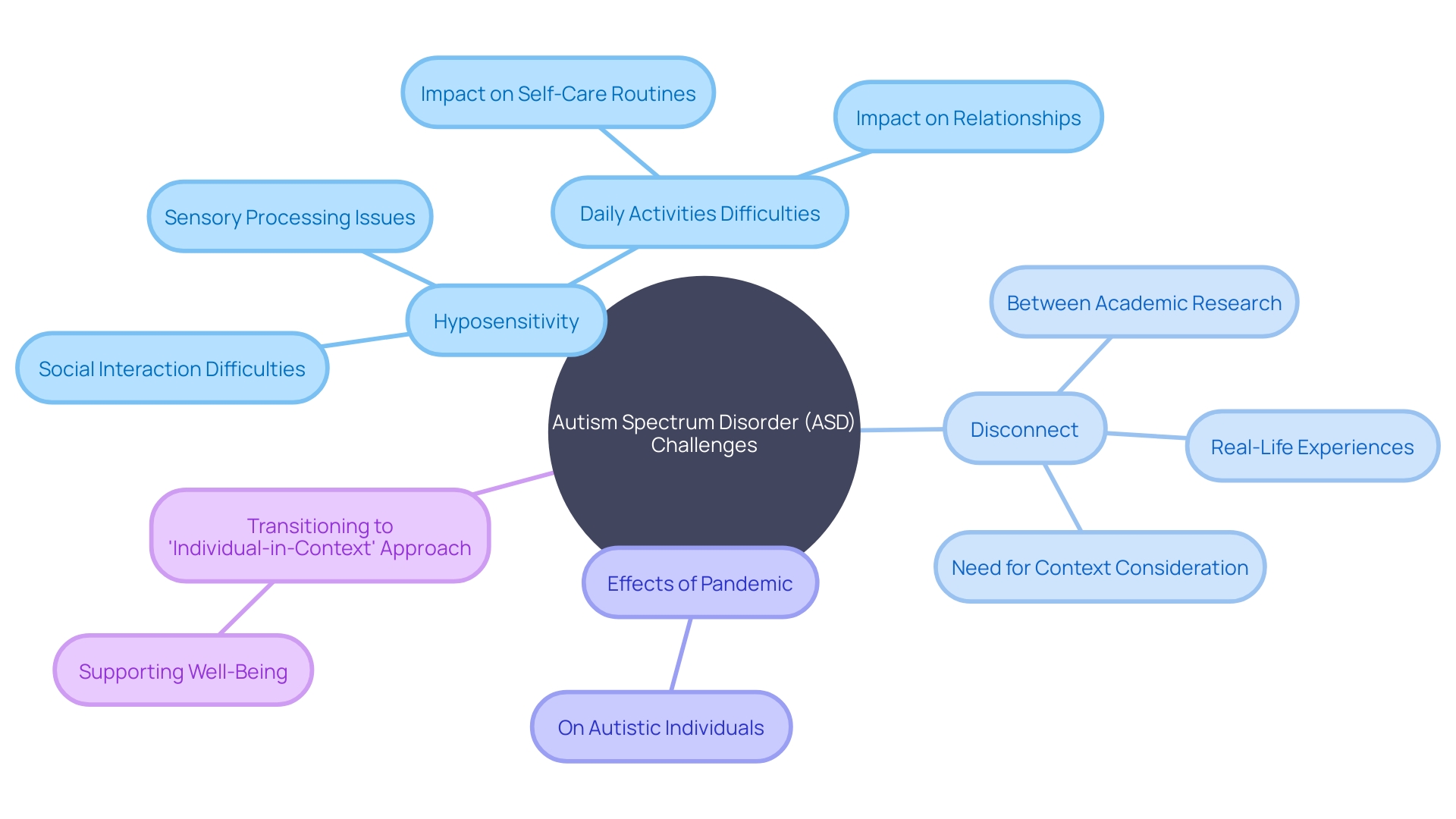
Understanding the nuances of autism spectrum disorder (ASD) is crucial, particularly when it comes to sensory processing issues like hyposensitivity. This condition can profoundly affect daily activities, making it challenging for individuals to engage in common tasks and social interactions. For the 1 in 45 adults diagnosed with ASD in the U.S., hyposensitivity may mean struggling with self-care routines due to a lack of typical sensations.
For example, they might find brushing their teeth or dressing to be difficult. Furthermore, interpreting social cues and maintaining personal boundaries can be daunting, potentially leading to strained relationships with peers. The impact of hyposensitivity extends beyond the individual.
As one woman poignantly expressed, research often overlooks the 'real life' struggles of those with autism. The disconnect between academic studies and the lived experiences of autistic individuals is stark, illustrated by the limited applicability of lab-based executive function research to everyday scenarios. A recent meta-analysis highlighted the moderate effect of these studies compared to the significant real-world challenges reported by autistic individuals and their families.
These findings underscore the importance of considering the context in which autistic individuals navigate their daily lives, from the anxiety of cooking in different settings to the clarity of instructions and personal motivation. The pandemic further emphasized this, as many autistic individuals felt the acute loss of routine activities that are vital to their well-being, such as visiting the library or attending dance classes. To truly support autistic flourishing, it's crucial to transition from an individual-focused approach to one that considers the 'Individual-in-Context,' recognizing that the context in which an autistic person lives plays a significant role in their experiences and challenges.
Strategies for Supporting Hyposensitivity in Autism
Understanding the unique needs of individuals with hyposensitivity is a fundamental aspect of supporting their development and well-being. An integrative and holistic framework plays a vital role in this process, aiming to nurture a child's self-awareness and self-regulation. By recognizing and addressing the emotional, mental, and behavioral aspects of highly sensitive children, this approach fosters a deeper connection with their environment and supports their spiritual expression.
Moreover, it lays the groundwork for forming healthy relationships, a skill set that is invaluable as they transition into adulthood. To support individuals with hyposensitivity, consider these strategies aligned with the integrative and holistic framework:
-
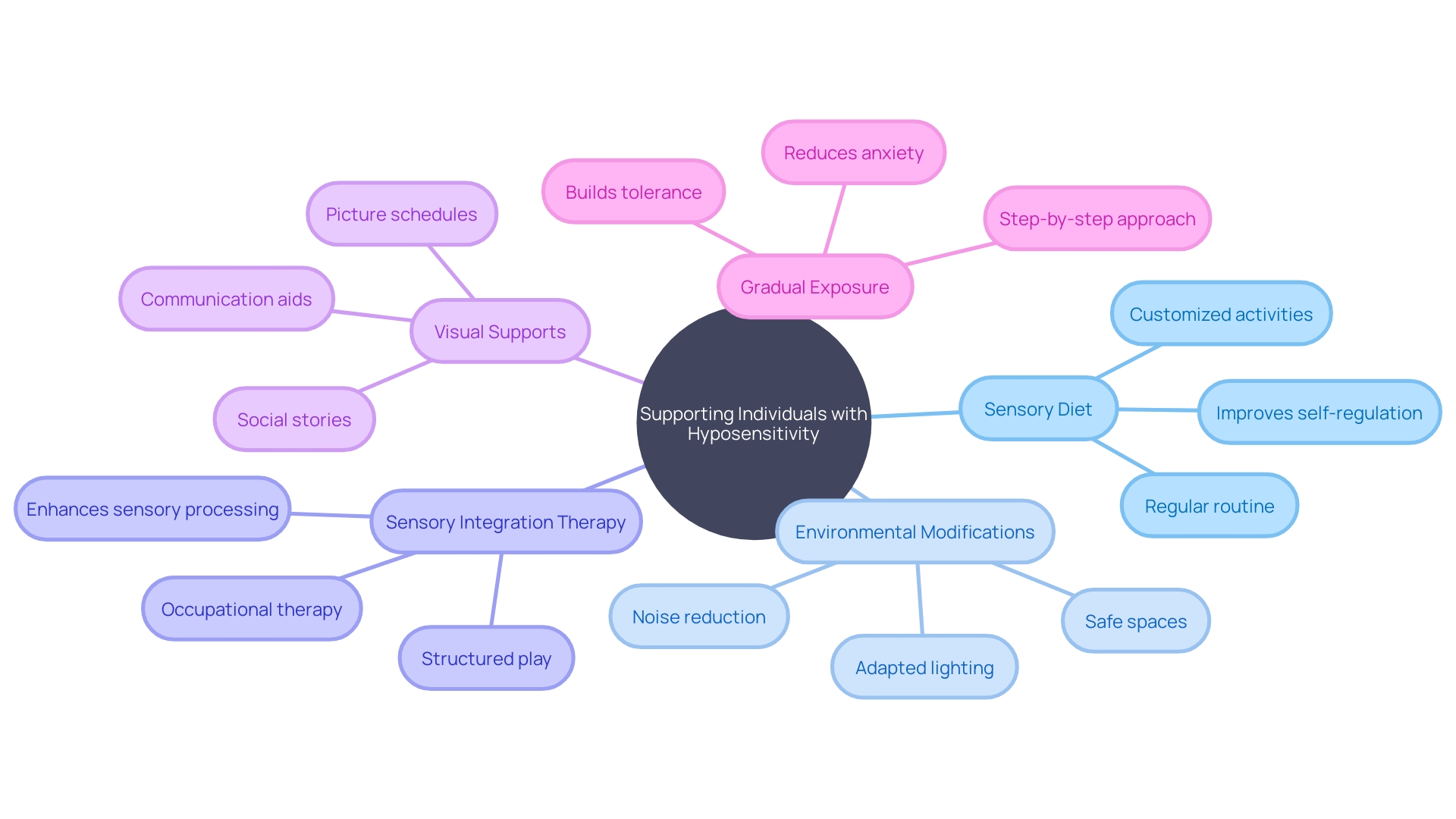
Sensory Diet: Tailor a sensory diet with diverse activities like swinging or deep pressure touch, aiding in sensory regulation and reflecting the child's emotional and behavioral needs. - Environmental Modifications: Create a sensory-friendly environment by adjusting noise levels and lighting, providing visual supports, and ensuring the space resonates with the child's mindset and environmental awareness.
-
Sensory Integration Therapy: Collaborate with an occupational therapist specializing in sensory integration therapy to enhance sensory processing, an essential component of the child's overall development and ability to form relationships. - Visual Supports: Use visual tools such as schedules or social stories to help the child better understand and manage their daily routines, promoting self-regulation and communication of needs. - Gradual Exposure: Introduce new sensory experiences gradually, helping the child to become more adaptable and comfortable with varied stimuli, which is crucial for their spiritual and emotional growth.
Supporting Hyposensitivity: The Importance of Parent Advocacy
Understanding the sensory profile of a child with hyposensitivity is pivotal for parent advocates. By actively engaging with the child's sensory experiences, they can champion the necessary accommodations, ensuring their child thrives in various environments.
Effective collaboration with educators and therapists is key to developing a tailored support plan that meets the child's distinctive sensory challenges. Moreover, parent advocates can find solace and empowerment in support groups and online forums dedicated to the Highly Sensitive Person (HSP) community. Such platforms offer a treasure trove of shared knowledge, from coping strategies to the latest research and updates, fostering a connected and informed network of support for both children and parents dealing with hyposensitivity.
Conclusion
In conclusion, understanding hyposensitivity in children with autism is crucial for supporting their ability to navigate the world effectively. Implementing an integrative and holistic framework that focuses on self-awareness, emotional intelligence, environmental connectivity, and nurturing relationships can empower these children to regulate their sensory experiences effectively.
Hyposensitivity significantly impacts daily life, making it challenging for individuals to engage in tasks and social interactions. Strategies such as creating a sensory diet, making environmental modifications, engaging in sensory integration therapy, using visual supports, and gradual exposure to new sensory experiences can provide meaningful support.
Parent advocacy plays a vital role in supporting children with hyposensitivity. By actively engaging with their child's sensory experiences, parent advocates can champion necessary accommodations in various environments. Collaboration with educators and therapists is key in developing tailored support plans. Overall, by understanding hyposensitivity and advocating for their children's unique needs, parent advocates can ensure their well-being and help them thrive in different environments.
Frequently Asked Questions
What is hyposensitivity?
Hyposensitivity is a condition often associated with autism, where an individual under-reacts to sensory inputs such as touch, taste, sound, smell, or visual cues. This means they may seem indifferent or may seek more intense sensory experiences to satisfy their stimulation needs.
How does hyposensitivity manifest in children with autism?
It can appear as an unusual craving for intense sensory experiences, such as a preference for spinning, jumping, or loud noises. Some children may engage in repetitive behaviors (like rocking or hand-flapping), show indifference to pain, or not react to extreme temperatures due to their higher sensory threshold.
What is the Integrative and Holistic Framework?
This framework is designed to support children with hyposensitivity by fostering self-awareness, emotional intelligence, environmental connectivity, spiritual expression, and nurturing healthy relationships. It helps them articulate their needs, self-regulate, and process their emotions.
How does hyposensitivity affect daily life and social interactions?
Hyposensitivity can make routine tasks challenging, such as self-care routines, interpreting social cues, and maintaining personal boundaries. The condition can lead to strained relationships and difficulties in engaging in common daily activities and social interactions.
What impact did the pandemic have on individuals with hyposensitivity?
The pandemic disrupted routines and activities that are vital to the well-being of individuals with hyposensitivity, emphasizing the importance of considering an autistic person's context when addressing their needs and challenges.
What strategies can support individuals with hyposensitivity?
Some strategies include creating a tailored sensory diet, making environmental modifications, engaging in sensory integration therapy, using visual supports, and gradually introducing new sensory experiences.
How can visual supports help a child with hyposensitivity?
Visual supports such as schedules or social stories can aid a child in better understanding and managing their daily routines, promoting self-regulation and communication of their needs.
What role do parent advocates play in supporting children with hyposensitivity?
Parent advocates play a crucial role by engaging with their child's sensory experiences, advocating for necessary accommodations, collaborating with educators and therapists to develop tailored support plans, and finding support through online forums and support groups within the HSP community.
Why is it important to consider the 'Individual-in-Context' approach for supporting autistic individuals?
This approach recognizes that the context in which an autistic person lives significantly affects their experiences and challenges, moving beyond an individual-focused approach to one that considers the individual's environment and daily life scenarios.
List of Sources
- Understanding Hyposensitivity in Autism
- hsperson.com (https://hsperson.com/about-dr-elaine-aron/)
- Behavioral Signs and Symptoms of Hyposensitivity
- hsptools.com (https://hsptools.com/learn-how-to-empower-highly-sensitive-children/)
- highspeedtraining.co.uk (https://www.highspeedtraining.co.uk/hub/sensory-overload-in-children/?utm_source=twitter&utm_medium=social&utm_campaign=sensory-overload-children)
- Impact of Hyposensitivity on Daily Life
- link.springer.com (https://link.springer.com/content/pdf/10.1007/s11920-023-01441-9.pdf)
- autismspeaks.org (https://www.autismspeaks.org/signs-autism-adults)
- Strategies for Supporting Hyposensitivity in Autism
- hsptools.com (https://hsptools.com/learn-how-to-empower-highly-sensitive-children/)
- hsptools.com (https://hsptools.com/learn-how-to-empower-highly-sensitive-children/)
- Supporting Hyposensitivity: The Importance of Parent Advocacy
- hsperson.com (https://hsperson.com/about-dr-elaine-aron/)


