

Introduction
Navigating the world with Asperger's Syndrome can be a unique and challenging journey for both individuals and their families. Asperger's, a neurodevelopmental disorder within the autism spectrum, is characterized by difficulties in social interaction, nonverbal communication, and repetitive behaviors. While those with Asperger's often possess average or above-average intelligence, interpreting social cues and forming relationships can be particularly challenging.
Understanding these complexities and providing tailored support is crucial, especially during significant life transitions such as moving from school to adulthood.
This article delves into the symptoms and challenges faced by individuals with Asperger's Syndrome, highlighting the importance of recognizing each person's unique experiences. It explores the various therapies and interventions that can aid in their development and well-being, emphasizing the role of social skills training, speech-language therapy, and Cognitive Behavioral Therapy (CBT). Additionally, it underscores the value of parental education and community resources in fostering a supportive environment.
By shifting the focus from viewing these traits as deficits to recognizing them as differences with potential advantages, a more inclusive and empowering approach to support can be achieved.
What is Asperger's Syndrome?
'Asperger's Disorder, categorized within the autism spectrum, is a neurodevelopmental condition characterized by difficulties in interpersonal interaction, nonverbal communication, and repetitive behaviors.'. Individuals with this condition often possess average or above-average intelligence, yet they may find it difficult to interpret social cues, which can make forming relationships and participating in usual social activities challenging. Transitions, such as moving from school to adulthood, can be particularly tough for those on the autism spectrum, as seen in the case of Lil, a 17-year-old navigating her post-16 destination. This period of change can be fraught with uncertainty and new expectations, emphasizing the need for tailored support and understanding. Even with greater cognitive skills, the complexities of interpersonal interactions and sensory sensitivities encountered by those with this condition require a supportive and knowledgeable approach from people in their environment.
Symptoms of Asperger's Syndrome
'Asperger's Syndrome, a type of Autism Spectrum Disorder (ASD), manifests uniquely in each person, often presenting with interpersonal challenges, a strong preference for routines, and intense, focused interests.'. These characteristics can significantly impact daily life and interactions. For instance, people may find it challenging to understand cues from others or participate in usual interactions, resulting in a feeling of awkwardness in group settings. Additionally, their adherence to routines can be so strong that any deviation might cause distress. Their interests, while highly focused, can be a source of great expertise and passion. This diverse range of symptoms underscores the importance of understanding and supporting each individual's unique experiences and needs.
Challenges of Asperger's Syndrome
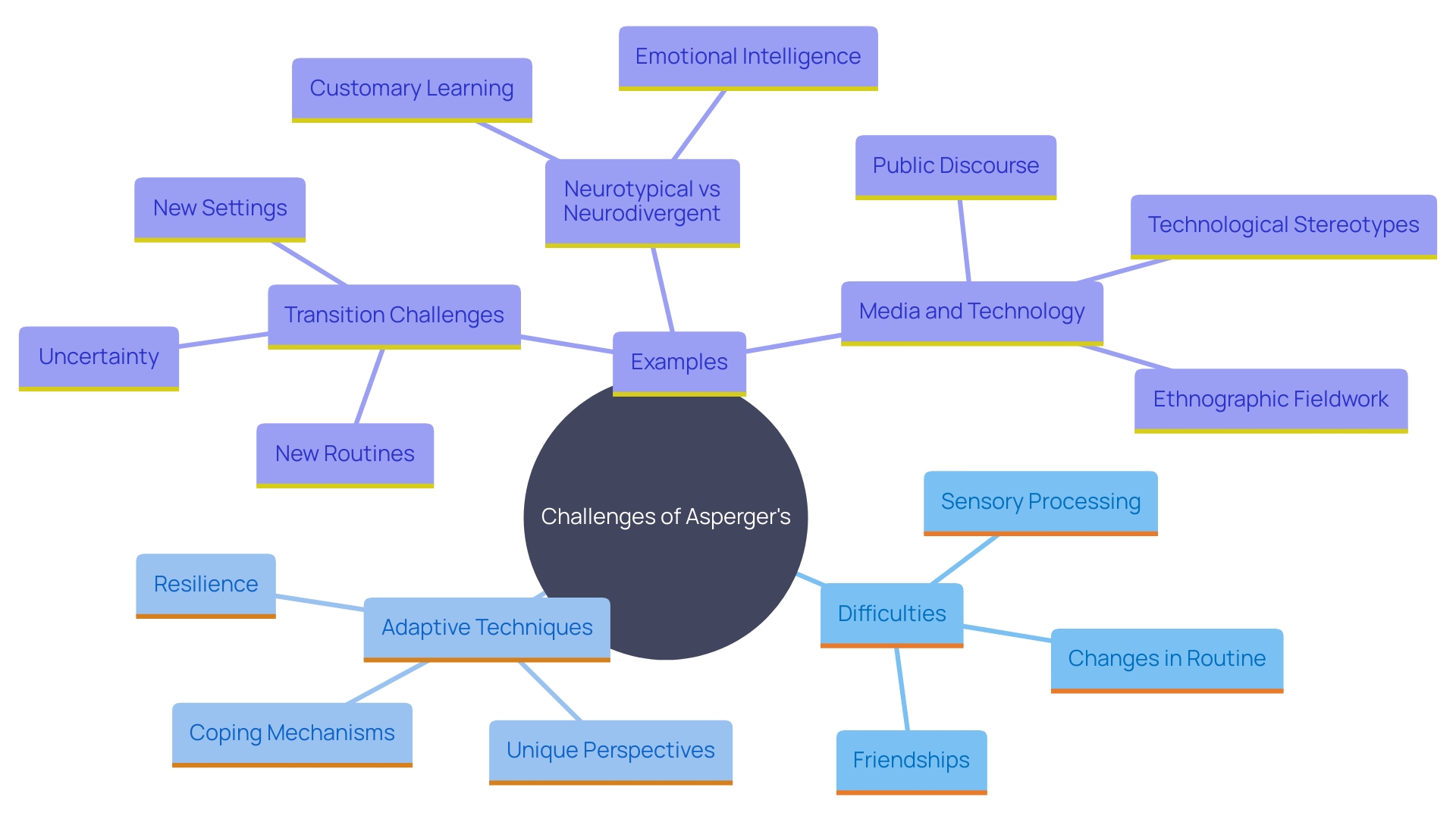
Individuals with Asperger's face unique challenges, particularly in interpersonal situations. Navigating friendships can be difficult, as understanding social norms and cues often requires extra effort. Adapting to changes in routine presents another layer of complexity for many. Sensory processing issues contribute to daily challenges, with some people being oversensitive or under-sensitive to sensory stimuli.
Imagine living in a world where your natural way of being is constantly at odds with societal norms. This is a daily reality for many individuals on the autism spectrum, who often employ hidden strategies to 'fit in,' known as 'compensation.' These adaptive techniques highlight their incredible ability to navigate a world not designed for their unique neural and cognitive differences.
Research indicates that individuals with autism, including those on the spectrum, are less swayed by others in dysfunctional or unethical circumstances. This distinct perspective can be an advantage, providing a unique form of social resilience. Despite the challenges, the ability to adapt and compensate is a testament to their resilience and strength.
In sensory experiences, autistic children and young people express their perspectives, revealing a complex landscape of oversensitivity and under sensitivity. These sensory experiences are crucial to understanding their daily lives and the strategies they use to cope. This nuanced understanding calls for a shift from viewing these traits as deficits to recognizing them as differences with potential advantages.
Support and Therapies for Asperger's Syndrome
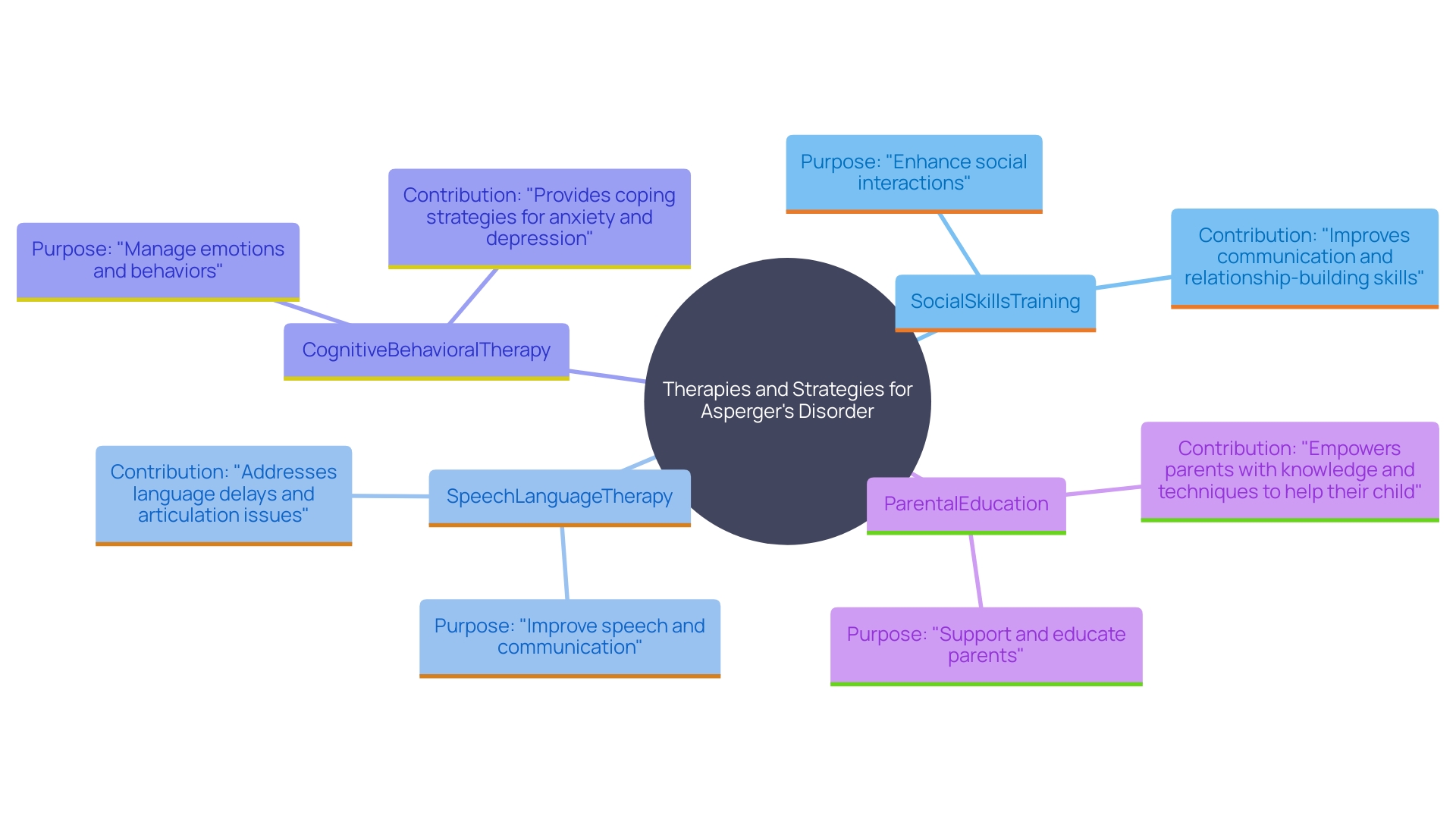
Efficient assistance for people with Asperger's Disorder can include a range of therapies and strategies customized to their specific requirements. Social skills training plays a crucial role in enhancing interpersonal interactions, promoting better integration in school and community settings. Speech-language therapy is essential for addressing communication challenges, enabling clearer and more effective expression. Cognitive Behavioral Therapy (CBT) is another essential element, assisting individuals in managing anxiety and behavioral problems that frequently accompany this condition. Furthermore, parental education and training are crucial in empowering families, ensuring they have the necessary resources and strategies to assist their children's development and well-being. This holistic approach not only addresses the immediate needs of those with autism but also contributes to their long-term mental well-being and social involvement.
Resources and Support for Individuals and Families
Relatives of people with Asperger's Syndrome have access to a variety of resources intended to offer assistance and encourage community. Support groups, educational programs, and online communities are invaluable sources of information and shared experiences. Connecting with others who face similar challenges can offer encouragement and practical advice tailored to each family's unique situation. As Dr. David (Dan) R. Offord once stated, “I do not mind if my children are in a race as long as the race is fair.” Ensuring fair assistance for children with disabilities is essential for their mental health and overall well-being. Initiatives like the Adult Autism Health Resources project at Harvard Medical School highlight the need for ongoing assistance, even into adulthood, emphasizing that autistic individuals require the same quality of medical care as neurotypical individuals. By reducing chronic sources of stress and providing necessary resources, caregivers can better support the healthy development of their children and the well-being of their families.
Conclusion
Navigating the complexities of Asperger's Syndrome requires a comprehensive understanding of its unique characteristics and challenges. Individuals with this condition often face significant hurdles in social interactions and routine adaptations, yet they also possess strengths that can be harnessed for their benefit. Emphasizing the need for tailored support during transitions, such as moving from school to adulthood, highlights the importance of recognizing each person's individual journey.
The range of symptoms associated with Asperger's underscores the necessity for personalized interventions. From social skills training to speech-language therapy and Cognitive Behavioral Therapy (CBT), a multifaceted approach can empower individuals to thrive. These therapies not only address immediate challenges but also foster long-term resilience and social participation.
Moreover, the resources available to families play a crucial role in creating a supportive environment. By connecting with support groups and educational programs, families can access invaluable information and encouragement. This collective effort to ensure equitable support reinforces the notion that every child deserves a fair chance to succeed, regardless of their neurological differences.
With the right understanding and resources, individuals with Asperger's Syndrome can navigate their unique paths with confidence and strength.
Frequently Asked Questions
What is Asperger's Disorder?
Asperger's Disorder is a neurodevelopmental condition within the autism spectrum characterized by challenges in interpersonal interaction, nonverbal communication, and repetitive behaviors. Individuals often have average or above-average intelligence but may struggle to interpret social cues.
What challenges do individuals with Asperger's Disorder face?
Individuals may find it difficult to form relationships and participate in social activities. They often experience difficulties in understanding social norms, navigating friendships, and adapting to changes in routine. Sensory processing issues, such as being oversensitive or undersensitive to stimuli, can also pose daily challenges.
How does Asperger's Disorder affect daily life?
Daily life can be significantly impacted by interpersonal challenges, a strong preference for routines, and intense interests. These factors can lead to feelings of awkwardness in social settings and distress when routines are disrupted.
What is the significance of understanding unique experiences in Asperger's?
Recognizing the unique experiences and needs of individuals with Asperger's is essential for providing effective support. Each person's symptoms manifest differently, and understanding these differences can help tailor assistance.
What strategies do individuals with Asperger's use to cope?
Many individuals develop adaptive strategies, known as 'compensation,' to fit into a society that may not accommodate their unique cognitive and neural differences. These strategies highlight their resilience in navigating social situations.
What types of therapies are beneficial for individuals with Asperger's Disorder?
Effective therapies include: Social Skills Training to enhance interpersonal interactions, Speech-Language Therapy to address communication challenges, Cognitive Behavioral Therapy (CBT) to help manage anxiety and behavioral issues, and Parental Education and Training to empower families with resources and strategies.
What resources are available for families of individuals with Asperger's?
Families can access support groups, educational programs, and online communities that provide information and shared experiences. These resources can offer encouragement and practical advice tailored to individual situations.
Why is ongoing support important for individuals with Asperger's?
Ongoing support is crucial for ensuring the mental health and overall well-being of individuals with Asperger's, even into adulthood. Initiatives like the Adult Autism Health Resources project emphasize the need for quality medical care and resources to reduce stress and support healthy development.
List of Sources
- What is Asperger's Syndrome?
- medicalxpress.com (https://medicalxpress.com/news/2023-12-ai-early-diagnosis-autism.html?utm_source=twitter.com&utm_medium=social&utm_campaign=v2)
- albany.edu (https://albany.edu/news-center/news/2024-noteworthy-research-grants-awards-and-publications-7)
- news-medical.net (https://news-medical.net/news/20231122/A-novel-theoretical-framework-for-understanding-and-treating-autism-spectrum-disorder.aspx)
- cnet.com (https://cnet.com/health/mental/heres-what-you-need-to-know-about-autism-spectrum-disorder)
- all-about-psychology.com (https://all-about-psychology.com/high-functioning-autism-guide.html)
- verywellmind.com (https://verywellmind.com/interpersonal-intelligence-8640261)
- journals.sagepub.com (https://journals.sagepub.com/doi/10.1177/13607804231186856)
- arxiv.org (https://arxiv.org/abs/2407.12014)
- sciencedirect.com (https://sciencedirect.com/science/article/abs/pii/S1750946724001041)
- deborahruf.substack.com (https://deborahruf.substack.com/p/independence-and-relationship-issues?r=wmzwk&utm_campaign=post&utm_medium=email)
- nature.com (https://nature.com/articles/s41390-023-02885-8)
- Symptoms of Asperger's Syndrome
- mirceap.com (https://mirceap.com/blog/how-i-discovered-i-have-autism)
- all-about-psychology.com (https://all-about-psychology.com/high-functioning-autism-guide.html)
- autismspeaks.org (https://autismspeaks.org/signs-autism-adults)
- psychologytoday.com (https://psychologytoday.com/us/blog/sound-minds/202401/how-autistic-individuals-adapt-to-a-neurotypical-world)
- pubmed.ncbi.nlm.nih.gov (https://pubmed.ncbi.nlm.nih.gov/38900555)
- link.springer.com (https://link.springer.com/article/10.1007/s10803-023-06192-3)
- medrxiv.org (https://medrxiv.org/content/10.1101/2023.11.03.23298042v1)
- autism-icn.weebly.com (https://autism-icn.weebly.com/winter-2024.html)
- Challenges of Asperger's Syndrome
- National Study of Mental Health and Wellbeing, 2020-2022 (https://abs.gov.au/statistics/health/mental-health/national-study-mental-health-and-wellbeing/latest-release)
- all-about-psychology.com (https://all-about-psychology.com/high-functioning-autism-guide.html)
- psychologytoday.com (https://psychologytoday.com/us/blog/sound-minds/202401/how-autistic-individuals-adapt-to-a-neurotypical-world)
- paullodge.com (https://paullodge.com/single-post/waiting-for-autism-4-assessment-and-diagnosis)
- neurosciencenews.com (https://neurosciencenews.com/autism-bystander-effect-25105)
- crd.york.ac.uk (https://crd.york.ac.uk/prospero/display_record.php?RecordID=565111)
- thereader.mitpress.mit.edu (https://thereader.mitpress.mit.edu/shattering-stereotypes-about-autism-and-technology)
- journals.sagepub.com (https://journals.sagepub.com/doi/10.1177/13607804231186856)
- td.org (https://td.org/atd-blog/ei-accessibility-for-neurodivergent-audiences)
- Support and Therapies for Asperger's Syndrome
- oecd-ilibrary.org (https://oecd-ilibrary.org/education/social-and-emotional-skills-ses_ba34f086-en;jsessionid=j9MVt7LqscGYGUoHR_iyin9gNmvBM2M9_8e_5lp0.ip-10-240-5-92)
- frontiersin.org (https://frontiersin.org/articles/10.3389/fpubh.2023.1309154/full)
- nature.com (https://nature.com/articles/s41390-023-02885-8)
- iacc.hhs.gov (https://iacc.hhs.gov/news/2023/summary-of-advances-release-2022.shtml)
- news-medical.net (https://news-medical.net/news/20240123/Blood-pressure-drug-could-help-lower-anxiety-for-kids-and-young-adults-with-ASD.aspx)
- sciencedirect.com (https://sciencedirect.com/science/article/abs/pii/S1750946724001041)
- all-about-psychology.com (https://all-about-psychology.com/high-functioning-autism-guide.html)
- all-about-psychology.com (https://all-about-psychology.com/high-functioning-autism-guide.html)
- Resources and Support for Individuals and Families
- frontiersin.org (https://frontiersin.org/articles/10.3389/fpubh.2023.1309154/full)
- postgraduateeducation.hms.harvard.edu (https://postgraduateeducation.hms.harvard.edu/trends-medicine/improving-care-autistic-adults?utm_content=buffere9273&utm_medium=social&utm_source=twitter&utm_campaign=pgme)
- todaysparent.com (https://todaysparent.com/family/special-needs/how-to-support-children-with-autism)
- beyondautism.org.uk (https://beyondautism.org.uk/about-autism/understanding-autism/mental-health)
- parentdata.org (https://parentdata.org/?utm_medium=paid_proof&utm_source=google&utm_campaign=domestic_branded&gclid=Cj0KCQiAqsitBhDlARIsAGMR1RjjSKcTPKn6V3iBXR8mKG58rANCJ0-HM8oCCruxOowsn-70cqhMHuAaAgZMEALw_wcB)
- infodocket.com (https://infodocket.com/2024/01/13/journal-article-we-adapt-as-needed-autism-services-at-liberal-arts-college-libraries)
- disabilitydebrief.org (https://disabilitydebrief.org/debrief/further-my-education?ref=disability-debrief-newsletter)
- aru.ac.uk (https://aru.ac.uk/news/piers-celebrates-phd-he-was-told-he-would-never-get)


