

Introduction
Cultural influences play a crucial role in shaping parenting practices across various communities. In Pacific cultures, core values such as family, community, and respect for elders are deeply ingrained in everyday life, guiding parents in their child-rearing approaches. This fosters a sense of connection and belonging within both the family and the broader society.
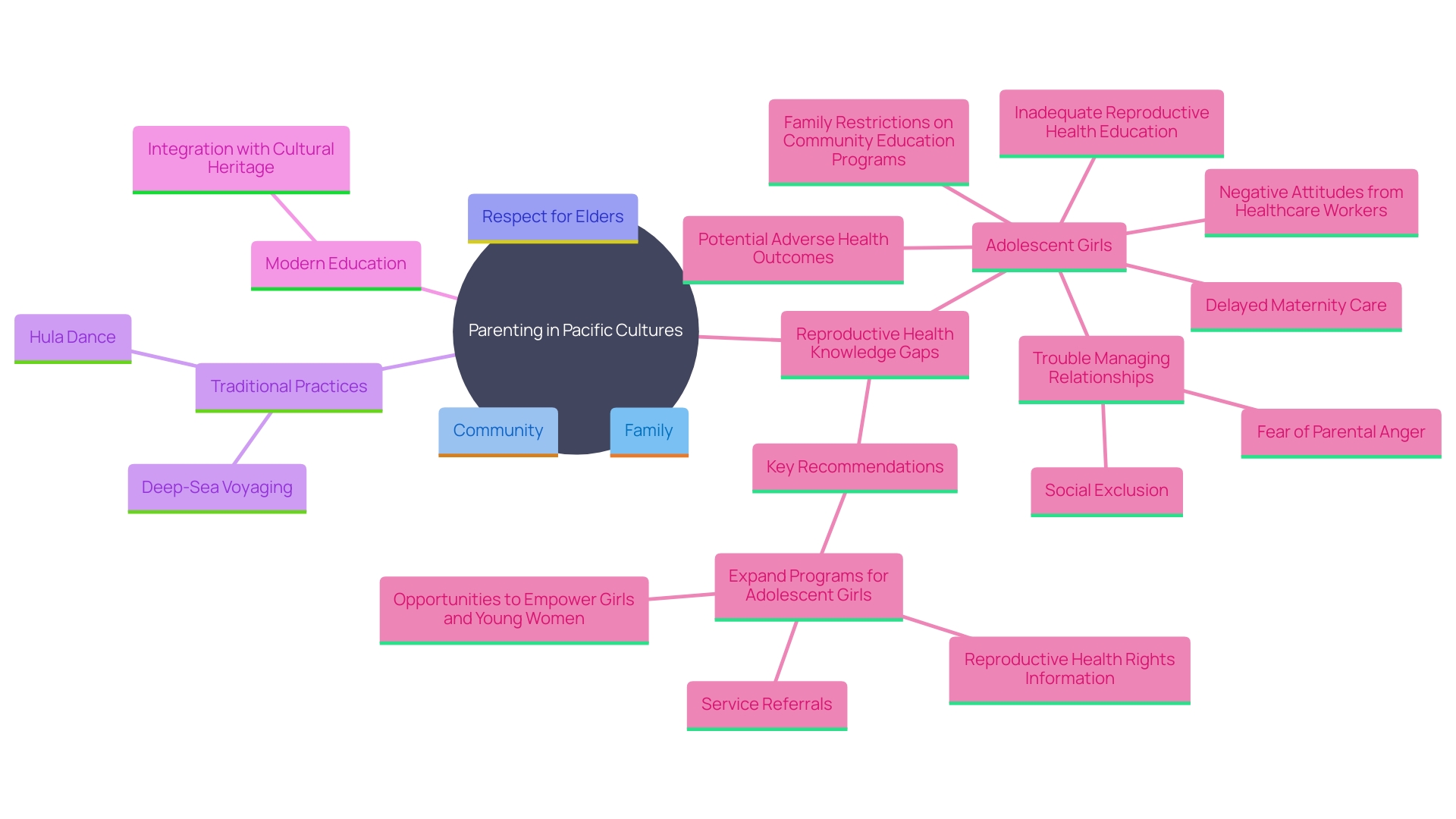
From the traditional hula dance to deep-sea voyaging, cultural practices are passed down through generations, ensuring their vitality and spirit. Addressing gaps in reproductive health knowledge among adolescent girls and integrating cultural values into modern education further illustrate how Pacific parenting adapts to contemporary needs while preserving rich heritage. By understanding these influences, parents can create nurturing environments that honor tradition and support their children's overall well-being.
Understanding Cultural Influences on Parenting
Cultural influences are crucial in shaping parenting practices across various groups. In Pacific cultures, core values such as family, community, and respect for elders are deeply embedded in everyday life. These societal pillars guide parents in their child-rearing approaches, fostering a sense of connection and belonging within both the family and the broader society.
A vivid example of this can be seen in the teaching of traditional hula dance. When Kumu Hula (traditional dance teacher) Kaimana offered to videotape a dance for students on other islands, he was advised that the video could never fully convey the 'hā' (breath of life) essential to the dance. This insight emphasizes the significance of individual, intergenerational sharing of information, ensuring that traditions maintain their vitality and essence.
Furthermore, the activity of deep-sea voyaging provides another example. On the canoe Makaliʻi, a seasoned voyager shared a proud moment with his teenage son as they navigated the seas together. This long-time crew member, who is also a school teacher, incorporates traditional methods such as planting, growing, and preparing indigenous foods into his educational curriculum, showcasing the smooth combination of heritage and contemporary education.
'Pacific parenting methods are also influenced by research highlighting gaps in reproductive health knowledge among adolescent girls.'. Studies in regions like Vanuatu, Micronesia, and Tonga reveal significant barriers due to inadequate education and family restrictions. Addressing these gaps is crucial for empowering young women to make informed decisions about their health and relationships.
These examples demonstrate that Pacific parenting involves not only upholding traditions but also adjusting and incorporating societal values into modern approaches. By doing so, parents in the Pacific not only uphold their rich heritage but also provide their offspring with a strong cultural foundation that nurtures their overall well-being.
Cultural Belief Systems and Parenting Practices
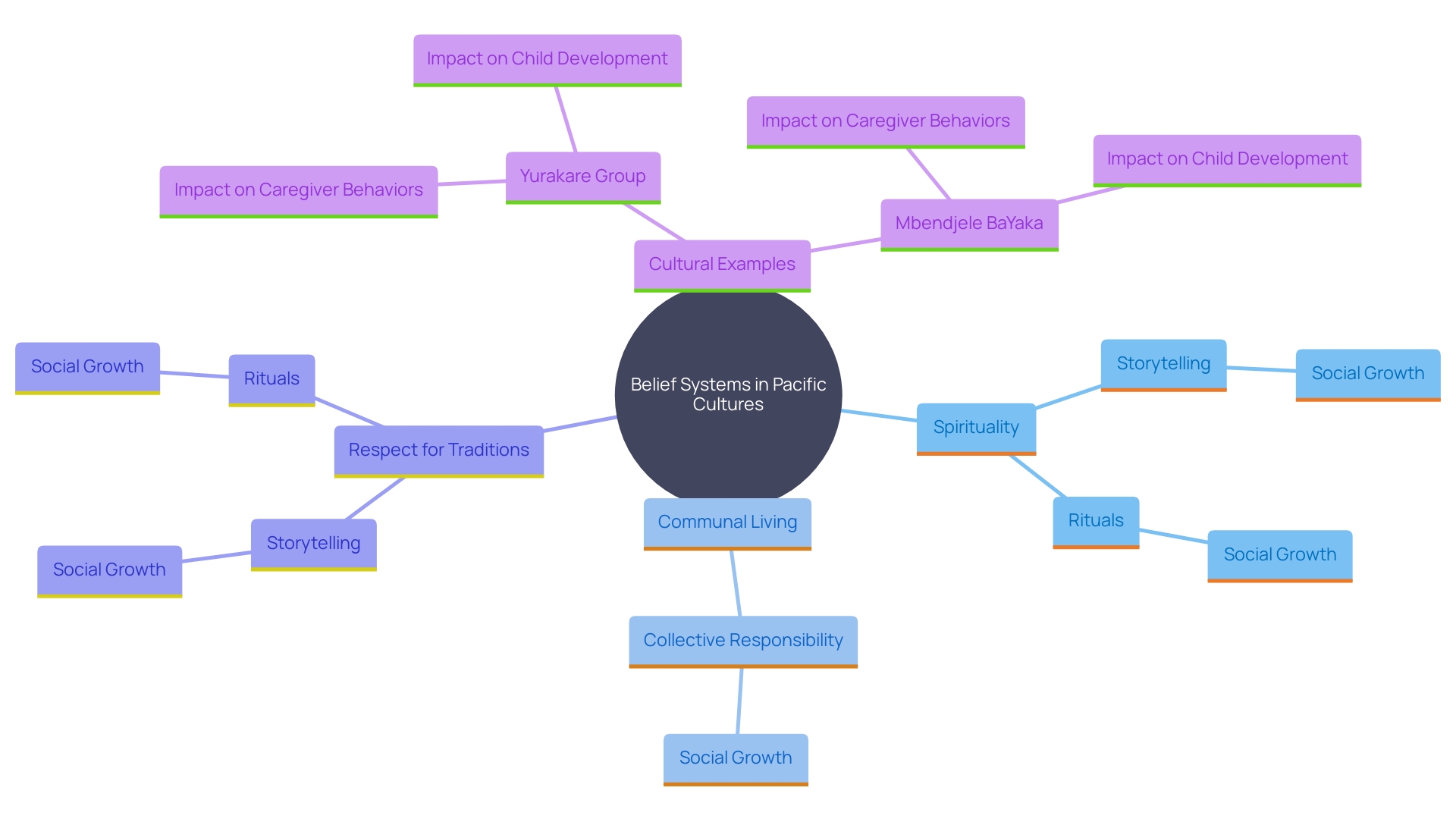
Belief systems in Pacific cultures profoundly incorporate spirituality, communal living, and respect for traditions, influencing different parenting approaches that promote the social growth of young individuals. Storytelling, rituals, and collective responsibility are essential to nurturing young individuals, ensuring they grow within a supportive environment. Studies have demonstrated that societal values and customs greatly impact caregiver behaviors, which subsequently mold youngsters' social abilities, peer connections, and school adaptation. For instance, research on the Yurakare group in Bolivia emphasizes how youngsters' involvement in social life from a young age assists them in becoming well-adjusted members of their cultural surroundings. Likewise, hunter-gatherer societies such as the Mbendjele BaYaka highlight the significance of numerous caregivers, with young ones frequently having more than ten individuals who aid in their development. This approach not only supports the young one's development but also enhances maternal well-being, reducing the risk of neglect and abuse. Comprehending these cultural frameworks enables parents to establish nurturing settings that respect tradition while accommodating contemporary developmental requirements.
Pacific Parenting Values: A Focus on Interdependence
Interdependence is a core value in Pacific parenting, emphasizing the importance of relationships and community support. Parents instruct youngsters to appreciate teamwork and shared regard, nurturing a feeling of inclusion and duty toward each other. This interconnectedness is crucial for young people's social and emotional development. In this context, the idea of respectful love is essential, as it involves recognizing young individuals as legitimate beings with their own voices and instilling in them a sense of self-worth. This nurturing approach is not confined to parents but expands to the whole community, fostering a supportive atmosphere for youth to flourish.
Research highlights the effect of high-quality co-parenting on the socioemotional well-being of young individuals. A study published in the Journal of Marriage and Family involving 4,266 unmarried couples and their preschool-aged offspring found that youngsters in families with strong co-parenting relationships exhibited better socioemotional outcomes. This emphasizes the significance of mutual support and collaboration among parents in nurturing a young person's development.
Furthermore, the family systems theory reinforces the idea that families function as interconnected subsystems, where the co parenting relationship is essential in influencing the growth of children. Positive and congruent perceptions of coparenting can significantly promote socioemotional well-being, especially in low-income families. Supportive networks, as observed in different societal settings, further boosts the development of young individuals by engaging a system of caregivers beyond biological parents.
Thus, the Pacific parenting approach, with its emphasis on interdependence and respectful love, aligns well with the broader understanding of family systems and community support, ensuring a holistic nurturing environment for children.
Engaging Pacific Parents: Strategies for Reciprocal Relationships
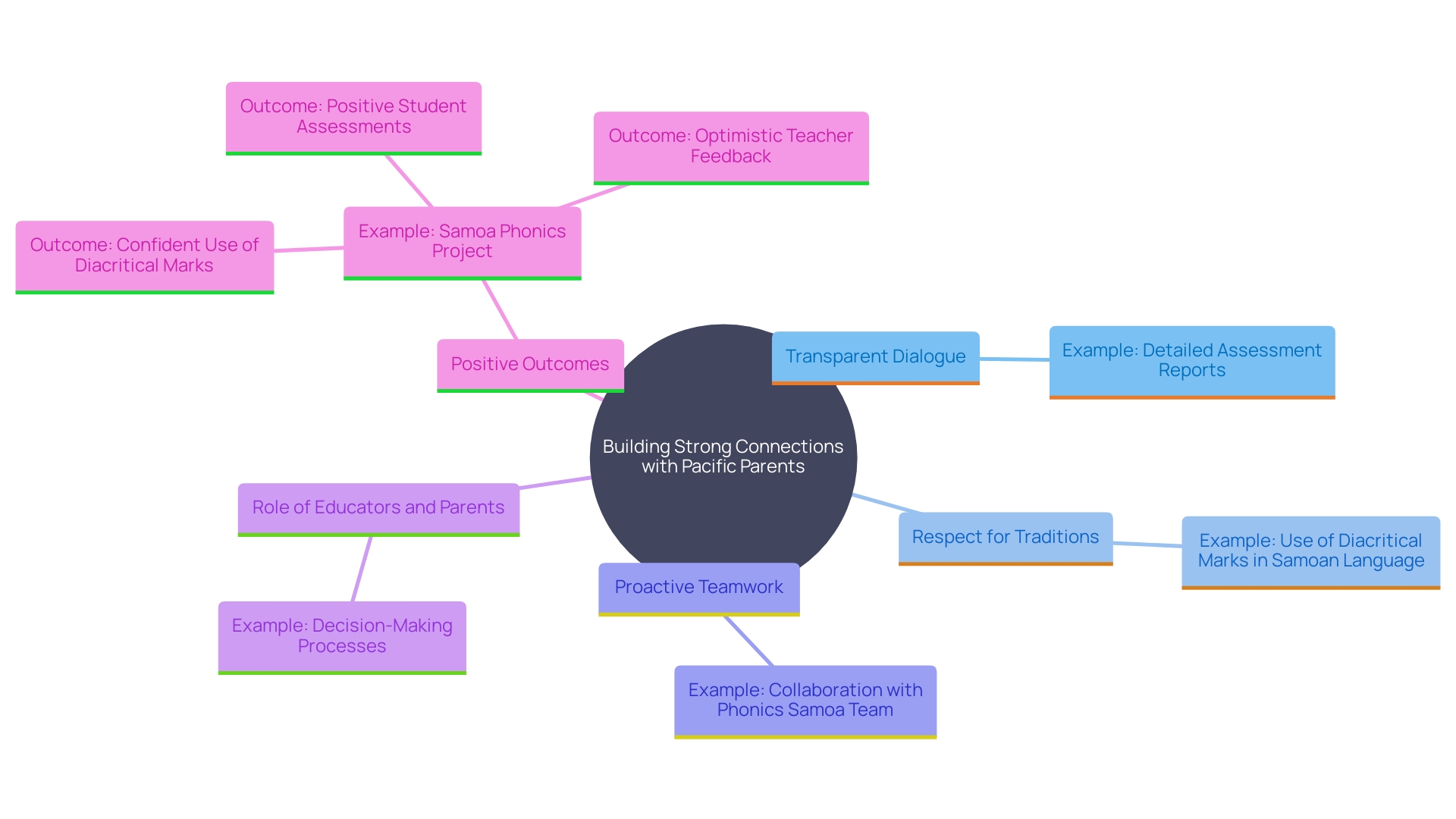
Establishing strong connections with Pacific parents necessitates a basis of transparent dialogue, regard for traditions, and proactive teamwork. Educators and support professionals should strive to involve parents in decision-making processes, valuing their insights and contributions. This engagement fosters trust and ensures that parents feel empowered in their roles. For instance, the successful implementation of Samoa’s phonics project highlighted the importance of such collaboration. Educators, after obtaining training and assistance, were able to confidently utilize diacritical marks and instruct on unique indigenous sounds, demonstrating a profound respect for cultural traditions. Additionally, detailed assessment reports provided to teachers helped them identify areas of strengths and weaknesses for each child, further cementing the importance of collaboration between educators and parents. As noted in the Regional Teacher Standard workshop, bringing together representatives from various countries to share experiences and contextualize standards is crucial. This collaborative approach aids in the creation of pertinent education policies and practices, ultimately benefiting students and promoting a collective vision of education within groups.
Creating a Welcoming Environment for Pacific Families
Establishing a friendly atmosphere for Pacific families necessitates a profound comprehension of their distinct backgrounds and values. Recognizing and honoring their traditions, languages, and customs is crucial to fostering an inclusive environment. For example, the My Two Aunties program, inspired by the story of the Three Sisters, has demonstrated how embracing traditional practices can build resilience and empowerment among Native families. The program's evaluation was resiliency-centered and strengths-based, focusing on what was strong within the families rather than their challenges.
'Bridge Meadows, an innovative multigenerational housing community in Oregon, exemplifies how creating spaces that respect traditions can foster strong, supportive communities.'. Inhabitants, including foster youth and seniors, share their experiences and contribute to a vibrant communal life, offering a model for how respecting traditional values can transform lives.
Moreover, the forthcoming regional experience-sharing workshop in Samoa emphasizes the continuous efforts to uphold the rights of youth in the Pacific. By bringing together stakeholders to discuss best practices and challenges, the initiative aims to build regional momentum and ensure that cultural values are integrated into policies and practices for children's welfare.
By integrating lessons from these instances, it becomes clear that establishing inviting spaces for Pacific families not only encourages inclusiveness but also enables them to flourish and make significant contributions to society. As one community participant aptly put it, 'Move like ‘āina (land), slow like mud, but with purpose like wai (water).' This wisdom encapsulates the essence of building spaces that are respectful and nurturing, allowing families to feel at home and valued.
Teaching Tolerance and Cultural Competence
Instructing acceptance and competence regarding different backgrounds is vital in today's diverse society. Motivating youngsters to appreciate and respect various cultures promotes empathy and understanding, assisting them in navigating a multicultural world with greater ease. New research led by Associate Professor of Language Education Kongji Qin highlights how multilingual classrooms can promote shared identity and bonding, which is crucial for fostering a sense of common humanity. By integrating cultural education into parenting, parents can help bridge social and political divides, pursue justice, and create a supportive community environment.
Responsive caregiving—engaging children in meaningful conversations and varied language use—has been shown to significantly benefit their communication and social skills. However, these practices can be challenging to implement due to busy schedules. Messaging programs have emerged to provide parents with bite-sized ideas to integrate education and tolerant behaviors into daily routines.
Research shows the significance of societal influences at various levels, from personal identification to group dynamics. Highlighting cultural values, beliefs, and traditions in caregiving practices can influence young people's social skills, peer relationships, and school adjustment. Motivating youngsters to cultivate a robust sense of self and acknowledging diversity aids them in valuing the richness of various cultures while discovering shared values that bring us together.
Social studies education plays a vital role in early development, offering opportunities for young individuals to question and learn about significant issues affecting their lives and communities. Through planned activities and guided play, young individuals can develop democratic citizenship skills and participate in shaping their learning experiences. This holistic approach to parenting ensures children grow with values of respect and acceptance, preparing them for a world where diversity is celebrated.
Conclusion
Cultural influences are fundamental in shaping parenting practices, particularly within Pacific communities where values such as family, respect for elders, and community interdependence are paramount. These principles not only provide a framework for nurturing children but also ensure that cultural heritage is preserved and celebrated. By integrating traditional practices like storytelling, communal rituals, and intergenerational knowledge sharing, Pacific parents create environments that foster connection and belonging, essential for children's social and emotional development.
Furthermore, addressing contemporary challenges such as gaps in reproductive health education for adolescents is critical. Empowering young individuals with knowledge enables them to make informed decisions, reinforcing the importance of adapting traditional values to meet modern needs. The emphasis on co-parenting and community support demonstrates that raising children is a collective responsibility, enhancing well-being and resilience within families.
Engaging Pacific parents through respect, open communication, and collaboration is vital for effective child-rearing. Initiatives that honor cultural practices and involve parents in educational processes foster trust and ensure that children receive the holistic support they need. Creating welcoming environments that celebrate diversity and promote cultural competence not only enriches the community but also prepares children to thrive in a multicultural world.
In summary, the fusion of traditional values with contemporary practices in Pacific parenting promotes the well-being of children and families. By nurturing a deep respect for cultural heritage while addressing modern challenges, parents can cultivate supportive and empowering environments that enable their children to flourish. This approach not only honors the past but also paves the way for a brighter future.
Frequently Asked Questions
What are the core values that shape parenting practices in Pacific cultures?
Core values in Pacific cultures include family, community, and respect for elders. These values guide parents in their child-rearing approaches and foster a sense of connection and belonging within the family and society.
How is traditional knowledge transmitted in Pacific cultures?
Traditional knowledge is often shared through individual, intergenerational interactions. For example, traditional hula dance is taught in a way that emphasizes the 'hā' (breath of life) that cannot be fully captured through video, highlighting the importance of personal teaching and experience in maintaining cultural practices.
What role does deep-sea voyaging play in Pacific parenting?
Deep-sea voyaging serves as a practical example of combining heritage with contemporary education. Experienced voyagers engage with younger family members, sharing traditional methods of navigation and indigenous food practices to strengthen cultural ties and education.
How do societal values impact adolescent health education in Pacific regions?
Research indicates significant gaps in reproductive health knowledge among adolescent girls in areas like Vanuatu, Micronesia, and Tonga. Addressing these gaps is essential for empowering young women to make informed decisions about their health and relationships.
What is the importance of interdependence in Pacific parenting?
Interdependence emphasizes relationships and community support, teaching children the value of teamwork and shared respect. This approach fosters a sense of inclusion and responsibility, which is crucial for social and emotional development.
How does co-parenting affect children's socioemotional well-being in Pacific cultures?
Research shows that strong co-parenting relationships contribute positively to the socioemotional well-being of children. Families with high-quality co-parenting exhibit better developmental outcomes, highlighting the importance of mutual support among parents.
Why is it important to involve Pacific parents in educational decision-making?
Involving parents in educational processes fosters trust and empowers them in their roles. Successful collaborations, such as in Samoa’s phonics project, demonstrate the benefits of respecting cultural traditions and engaging parents in their children's education.
How can educators create a welcoming environment for Pacific families?
Educators should recognize and honor the distinct backgrounds, traditions, and languages of Pacific families. Programs like 'My Two Aunties' illustrate how embracing traditional practices can build resilience and empower communities.
What is the significance of teaching acceptance and competence regarding cultural diversity?
Teaching children to appreciate and respect diverse cultures promotes empathy and understanding, helping them navigate a multicultural world. Incorporating cultural education into parenting supports social cohesion and justice.
How does responsive caregiving benefit children's development?
Responsive caregiving involves engaging children in meaningful conversations and diverse language use, enhancing their communication and social skills. This approach, however, can be challenging due to busy family schedules, leading to the development of supportive messaging programs that offer practical ideas for parents.
List of Sources
- Understanding Cultural Influences on Parenting
- spc.int (https://spc.int/updates/blog/blog-post/2023/11/empowering-pacific-children-recap-of-2020-crc84-and-looking-ahead-to)
- link.springer.com (https://link.springer.com/article/10.1007/s12564-023-09916-3)
- pnas.org (https://pnas.org/doi/10.1073/pnas.2311847121)
- spc.int (https://spc.int/updates/blog/did-you-know/2024/03/stat-of-the-week-on-march-8th-we-celebrated-the-human-rights-of)
- culturalsurvival.org (https://culturalsurvival.org/publications/cultural-survival-quarterly/ike-kuuna-oiwi-indigenous-knowledge-passed-generation)
- spc.int (https://spc.int/updates/news/joint-release/2024/08/addressing-unplanned-adolescent-pregnancy-in-vanuatu)
- onlinelibrary.wiley.com (https://onlinelibrary.wiley.com/doi/10.1111/sode.12732)
- spc.int (https://spc.int/updates/news/joint-release/2024/08/addressing-unplanned-adolescent-pregnancy-in-vanuatu)
- Cultural Belief Systems and Parenting Practices
- onlinelibrary.wiley.com (https://onlinelibrary.wiley.com/doi/10.1111/sode.12732)
- pewresearch.org (https://pewresearch.org/short-reads/2024/02/20/most-east-asian-adults-say-men-and-women-should-share-financial-and-caregiving-duties)
- link.springer.com (https://link.springer.com/article/10.1007/s41042-024-00181-2)
- sciencedirect.com (https://sciencedirect.com/science/article/pii/S0145213424003508)
- apa.org (https://apa.org/pubs/journals/dev/household-experiences-childrens-positive-social-development-culturally-diverse)
- phys.org (https://phys.org/news/2023-11-hunter-gatherer-approach-childcare-key-mother.html)
- spc.int (https://spc.int/updates/blog/blog-post/2023/11/empowering-pacific-children-recap-of-2020-crc84-and-looking-ahead-to)
- pewresearch.org (https://pewresearch.org/short-reads/2024/02/20/most-east-asian-adults-say-men-and-women-should-share-financial-and-caregiving-duties)
- Pacific Parenting Values: A Focus on Interdependence
- onlinelibrary.wiley.com (https://onlinelibrary.wiley.com/doi/10.1111/sode.12732)
- raffifoundation.org (https://raffifoundation.org/the-9-principles)
- humsci.stanford.edu (https://humsci.stanford.edu/feature/tapping-interdependent-motivation-shrinks-racial-achievement-gaps-schools)
- onlinelibrary.wiley.com (https://onlinelibrary.wiley.com/doi/10.1111/jomf.12952)
- frontiersin.org (https://frontiersin.org/articles/10.3389/fpsyg.2023.1274160/full?utm_source=S-TWT&utm_medium=SNET&utm_campaign=ECO_FPSYG_XXXXXXXX_auto-dlvrit)
- frontiersin.org (https://frontiersin.org/articles/10.3389/fpsyg.2023.1283748/full?utm_source=S-TWT&utm_medium=SNET&utm_campaign=ECO_FPSYG_XXXXXXXX_auto-dlvrit)
- news.osu.edu (https://news.osu.edu/most-unmarried-low-income-couples-show-positive-co-parenting?utm_campaign=omc_science-medicine_fy23&utm_source=twitter&utm_medium=social)
- Engaging Pacific Parents: Strategies for Reciprocal Relationships
- spc.int (https://spc.int/updates/news/speeches/2024/08/opening-remarks-by-michelle-belisle-director-of-the-pacific)
- spc.int (https://spc.int/updates/blog/blog-post/2023/12/striving-for-education-research-excellence-in-papua-new-guinea)
- brookings.edu (https://brookings.edu/articles/six-global-lessons-on-how-family-school-and-community-engagement-can-transform-education)
- spc.int (https://spc.int/updates/blog/blog-post/2024/01/contextualisation-of-the-regional-teacher-standards-within-the)
- spc.int (https://spc.int/updates/blog/2024/09/samoas-phonics-project-success-its-exactly-how-it-sounds)
- spc.int (https://spc.int/updates/blog/2024/09/samoas-phonics-project-success-its-exactly-how-it-sounds)
- spc.int (https://spc.int/updates/blog/blog-post/2024/06/empowering-young-minds-through-phonics-a-teachers-success-story)
- Creating a Welcoming Environment for Pacific Families
- tandfonline.com (https://tandfonline.com/doi/full/10.1080/15374416.2024.2304140)
- frontiersin.org (https://frontiersin.org/journals/sustainability/articles/10.3389/frsus.2024.1456437/full?utm_source=twitter&utm_medium=social&utm_content&utm_campaign=imp_impartaut-_05-24_frsus_en_n--ww)
- ies.ed.gov (https://ies.ed.gov/funding/grantsearch/details.asp?ID=5975)
- spc.int (https://spc.int/updates/blog/blog-post/2023/11/empowering-pacific-children-recap-of-2020-crc84-and-looking-ahead-to)
- hawaii.edu (https://hawaii.edu/news/2024/01/04/4m-project-unlocks-health-literacy)
- utpjournals.press (https://utpjournals.press/doi/full/10.3138/cjpe-2023-0042)
- pbs.org (https://pbs.org/newshour/show/a-brief-but-spectacular-take-on-multigenerational-housing)
- Teaching Tolerance and Cultural Competence
- today.usc.edu (https://today.usc.edu/controversial-school-topics-how-americans-really-feel)
- learningforjustice.org (https://learningforjustice.org/exploring-identity-and-commonalities)
- multilinguallearner.org (https://multilinguallearner.org/mobile-messaging-helps-parents-increase-family-quality-time)
- naeyc.org (https://naeyc.org/resources/pubs/yc/spring2024/social-studies-early-childhood)
- apa.org (https://apa.org/pubs/journals/dev/household-experiences-childrens-positive-social-development-culturally-diverse)
- srcd.org (https://srcd.org/news/child-development-special-section-positive-development-and-adaptation-asian-children)
- greatergood.berkeley.edu (https://greatergood.berkeley.edu/article/item/15_practices_to_bridge_differences_with_kids)
- steinhardt.nyu.edu (https://steinhardt.nyu.edu/news/case-study-multilingualism-classrooms-shows-acts-care-and-solidarity-well-exclusion-aggression?utm_source=hootsuite&utm_medium=twitter&utm_term=Fall&utm_content=News&utm_campaign=Thought+Leadership)


