

Introduction
Navigating the complexities of autism and associated neurodevelopmental disorders can be challenging for parents and caregivers. In this article, we will explore the role of medication in the treatment of autism spectrum disorder (ASD) and related conditions, such as Kleefstra syndrome.
While medication is not a cure-all, it can be a valuable tool in managing specific symptoms and improving daily functioning for individuals with ASD. We will also discuss primary non-medication treatment strategies and the importance of personalized care in ensuring the well-being of those with autism. Join us as we delve into the latest research and resources available to empower parent advocates in their journey of supporting their children with autism.
Understanding Medication for Autism
Navigating the complexities of autism and associated neurodevelopmental disorders, such as Kleefstra syndrome, underscores the importance of personalized medicine. For those with autism, medication can serve as a pivotal component of a multifaceted treatment strategy, addressing specific symptoms that may hinder daily functioning and quality of life.
While not a panacea, medication allows for symptom management in autism spectrum disorder (ASD), enhancing the potential for individuals to engage more fully in educational and therapeutic programs. Recent advancements in drug development, as evidenced by the FDA's approval of new Alzheimer's treatments, highlight the potential of medications to alter disease trajectories.
Similarly, in the realm of autism, early intervention is paramount. The Autism Community in Action emphasizes the transformative impact of initiating treatment promptly, which is bolstered by the promise of early diagnostic tools from organizations like NeuroQure.
However, it's crucial to approach medication within the context of evidence-based practices. The rise in adult autism diagnosis and the increased prescription of CNS stimulants and drugs for ADHD—by 32% in adults and 12% in children—signal a broader recognition of neurodiversity and the need for tailored therapeutic approaches. This aligns with the sentiment that the increase in autism diagnoses reflects not an 'epidemic' but a shift in understanding and identification of the condition. Integrating medication into the care of individuals with autism requires a clear-eyed assessment of the potential benefits and risks. As such, healthcare providers must be attuned to the preferences and practices of families, ensuring that any pharmacological intervention aligns with the broader goals of enhancing the well-being of those with ASD.
Primary Non-Medication Treatment Strategies
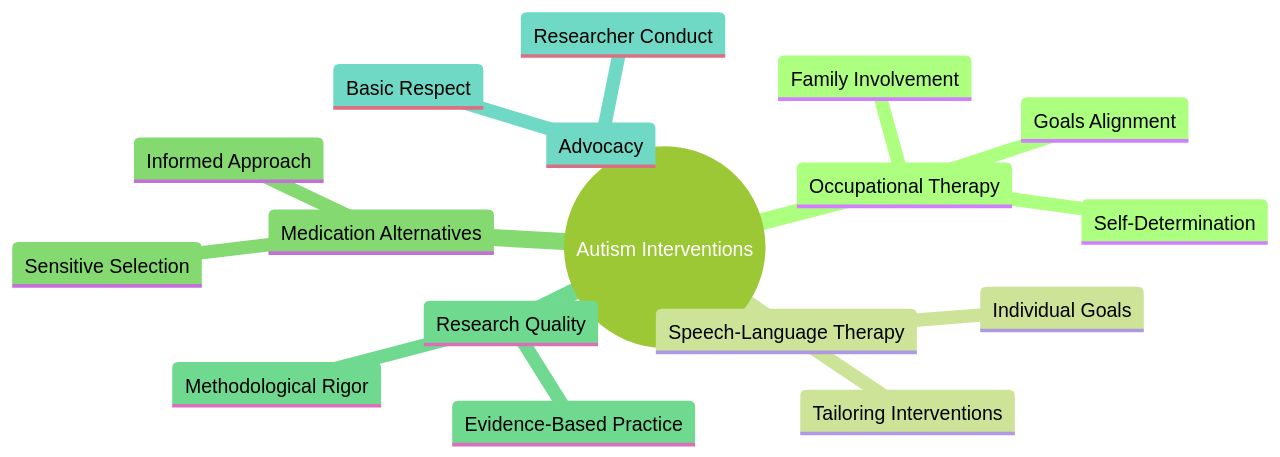
Navigating the landscape of autism interventions can be overwhelming, yet it's crucial to recognize that a multitude of therapies are available beyond medication that can significantly enhance the quality of life for those on the spectrum. Key therapies such as occupational and speech-language therapy are not just about teaching skills but are about empowering individuals with autism to communicate effectively, whether through oral speech or the use of communication devices.
A compassionate approach to therapy involves tailoring interventions to align with the individual's goals and advocating for self-determination. The importance of this individualized approach is underscored by recent legislation in California, which expands treatment options for children with autism, ensuring that interventions are chosen based on personal preference and necessity rather than a one-size-fits-all model.
Moreover, recent studies highlight the need for professionals to clearly communicate the available evidence for interventions and to be vigilant about potential negative impacts, as the research landscape has been dominated by studies of varying quality. This calls for a more informed and sensitive approach to selecting therapies, one that acknowledges the unique strengths and challenges of each individual with autism. Emphasizing the role of family involvement and generalization of skills, interventions should strive to cultivate a sense of independence and self-advocacy, fostering an environment where autistic individuals can thrive without feeling the need to camouflage their true selves to fit societal norms.
Medication as a Treatment Tool for Emotional or Behavioral Challenges
Recent research highlights the potential of propranolol, a well-established beta-blocker, in reducing anxiety for individuals with autism. Traditionally used to manage blood pressure, propranolol has shown promise in a study where it significantly decreased anxiety levels in autistic children and young adults over a three-month period.
This finding is particularly noteworthy as it offers an affordable and accessible option compared to other treatments. The study, led by David Beversdorf of the University of Missouri, involved 69 participants aged between 7 and 24, who were assessed for anxiety at the beginning and end of the trial.
Those who received propranolol showed a marked reduction in anxiety, although no improvements in social communication were observed. With a growing recognition of the diverse needs of autistic individuals, especially as they reach adulthood, this research is a step forward in providing them with more effective therapeutic options. The significance of this study is underscored by the increasing diagnosis rates of autism and related conditions such as ADHD, which affect a substantial portion of the population, with recent stats indicating that 11.3% of children aged 5-17 years have been diagnosed with ADHD. These findings are crucial for healthcare professionals who are adapting their practices to better cater to the autistic community, acknowledging their specific therapeutic needs that often align with the broader population.
Symptoms and Medications
Navigating the terrain of autism spectrum disorder (ASD) treatments can be complex, as each individual's experience with autism is unique. The diversity of symptoms associated with ASD means that medication may play a role in managing specific challenges.
For instance, children with heightened levels of hyperactivity and impulsivity might find benefit from stimulants such as methylphenidate, which has a robust track record for treating ADHD, a condition often co-occurring with autism. In contrast, antipsychotic medications like risperidone are sometimes prescribed to address severe aggression or self-injurious behaviors, a potential manifestation in certain genetic conditions, such as Kleefstra syndrome, which is linked to autism and characterized by a range of developmental and behavioral difficulties.
Recent studies have expanded the scope of potential treatments. For example, research led by Dr. David Beversdorf uncovered that propranolol, a beta-blocker originally used for managing blood pressure, showed promise in reducing anxiety in children and young adults with autism.
This finding is significant as it opens up avenues for off-label use of medications to address the nuanced aspects of ASD, such as the anxiety that can impede daily functioning but does not directly affect social communication skills. In light of these developments, it is crucial for parents and healthcare professionals to engage in informed discussions about the potential benefits and side effects of medications. This ensures that the treatment aligns with the individual's specific symptoms and overall health profile, considering the intricate and dynamic nature of ASD and its associated conditions. The goal is always to enhance the quality of life for individuals with autism, leveraging the best available evidence to guide therapeutic decisions.
Important Factors to Consider for Medication Treatment
Navigating the landscape of autism and its treatment options, including medication, demands a thoughtful approach tailored to each individual's unique profile. Medications can offer significant benefits, such as the recent findings on propranolol, a beta-blocker shown to reduce anxiety in autistic individuals.
The study led by Dr. David Beversdorf highlighted that after three months, participants exhibited significantly lower anxiety levels, providing hope for addressing psychiatric issues within this population. However, the decision to medicate is nuanced.
Each case, comparable to the rare Kleefstra syndrome, illustrates that responses to medication can vary, with some individuals experiencing positive outcomes like reduced seizures and improved cognitive function. This reinforces the importance of personalized care, ongoing assessment, and the dynamic partnership between healthcare providers and families.
With the prevalence of ASD in the United States being approximately 1 in 150 children, understanding and addressing the diverse needs of this population is critical. The challenges faced by providers, such as low pay and high turnover, further accentuate the need for stability and continuity in care. As Dr. Deborah Pearson's study on co-occurring maladaptive behaviors in children with ASD suggests, interventions with low risk and potential for positive impact should be explored. In the end, making informed decisions about autism medication involves weighing the potential for enhancing quality of life against the backdrop of individual health profiles and the ever-evolving research in the field.
Conclusion
In conclusion, medication plays a pivotal role in managing specific symptoms and improving daily functioning for individuals with autism spectrum disorder (ASD). While not a cure-all, it is a valuable tool in personalized treatment strategies.
Recent advancements in drug development highlight the potential of medications to alter disease trajectories, emphasizing the importance of early intervention. Primary non-medication treatment strategies like occupational therapy and speech-language therapy significantly enhance the quality of life for those on the spectrum.
These therapies empower individuals with autism to communicate effectively and cultivate independence. Research has shown the potential of propranolol in reducing anxiety for individuals with autism, offering an affordable option for addressing psychiatric issues within this population.
To make informed decisions about medication treatment, considering each individual's unique profile and symptoms is crucial. The goal is always to enhance quality of life by leveraging evidence-based practices and fostering a dynamic partnership between healthcare providers and families. By understanding the diverse needs of individuals with autism and utilizing personalized care approaches, parents and healthcare professionals can effectively navigate the challenges of autism treatment. Ongoing assessment, informed discussions, and continuity in care are essential to ensure that individuals with autism receive the support they need to thrive.
Frequently Asked Questions
What role does medication play in the treatment of autism?
Medication is used to manage specific symptoms in individuals with autism spectrum disorder (ASD), helping to improve daily functioning and allowing them to engage more fully in educational and therapeutic programs. It is not a cure but a tool for symptom management.
How important is early intervention in the treatment of autism?
Early intervention is critical in the treatment of autism, as initiating treatment promptly can have a transformative impact on the individual's development and quality of life.
What are some non-medication treatment strategies for autism?
Key therapies beyond medication include occupational and speech-language therapy, which empower individuals with autism to communicate effectively and achieve independence. Tailoring interventions to individual goals and advocating for self-determination are also important strategies.
What recent legislation affects treatment options for autism?
Recent legislation in California expands treatment options for children with autism by ensuring that interventions are chosen based on personal preference and necessity, rather than a one-size-fits-all model.
What is propranolol, and how might it benefit individuals with autism?
Propranolol is a beta-blocker traditionally used to manage blood pressure. Recent research indicates it may be effective in reducing anxiety in children and young adults with autism over a three-month period.
Are there any new findings regarding the use of medications for emotional or behavioral challenges in autism?
Yes, a study led by Dr. David Beversdorf has shown that propranolol can significantly decrease anxiety levels in autistic individuals, providing a potentially affordable and accessible treatment option.
What medications are commonly used to manage symptoms associated with autism?
Common medications include stimulants like methylphenidate for hyperactivity and impulsivity, and antipsychotic medications like risperidone for severe aggression or self-injurious behaviors.
What should be considered when deciding on medication treatment for autism?
When considering medication, it's important to assess personalized care, ongoing evaluation, and the dynamic partnership between healthcare providers and families. The potential benefits must be weighed against individual health profiles and current research.
How does the diversity of symptoms in ASD affect treatment choices?
The diversity of symptoms in ASD means that treatment must be personalized, as different medications may be needed to manage specific challenges. Informed discussions about potential benefits and side effects are crucial in aligning treatment with the individual's specific symptoms and health profile.
What is the prevalence of ASD in the United States, and what challenges does this pose for treatment providers?
The prevalence of ASD in the United States is approximately 1 in 150 children, creating a critical need to understand and address the diverse needs of this population. Providers face challenges such as low pay and high turnover, which can affect the stability and continuity of care.
List of Sources
- Understanding Medication for Autism
- media.nhsbsa.nhs.uk (https://media.nhsbsa.nhs.uk/news/nhs-releases-mental-health-medicines-statistics-for-20222023-in-england)
- journals.lww.com (https://journals.lww.com/jrnldbp/abstract/2006/04002/parental_perceptions_and_use_of_complementary_and.14.aspx)
- frontiersin.org (https://www.frontiersin.org/articles/10.3389/fpsyt.2023.1174195/pdf)
- science.slashdot.org (https://science.slashdot.org/story/23/07/06/2240238/fda-grants-first-full-approval-for-an-alzheimers-drug-in-20-years)
- science.slashdot.org (https://science.slashdot.org/story/23/07/18/1957252/alzheimers-drug-donanemab-helps-most-when-taken-at-earliest-disease-stage-study-finds)
- infomeddnews.com (https://infomeddnews.com/neuroqure-acquires-patents-to-detect-autism-in-newborns-with-a-skin-sample/)
- pubs.asha.org (https://pubs.asha.org/doi/abs/10.1044/2023_PERSP-23-00104)
- sciencedirect.com (https://www.sciencedirect.com/science/article/pii/S2215036623002912)
- theguardian.com (https://www.theguardian.com/society/article/2024/jun/01/the-truth-about-adhd-and-autism-how-many-people-have-it-what-causes-it-and-why-are-diagnoses-soaring)
- Primary Non-Medication Treatment Strategies
- tacanow.org (https://tacanow.org/monthly-learning-series/)
- pubmed.ncbi.nlm.nih.gov (https://pubmed.ncbi.nlm.nih.gov/37576502)
- laist.com (https://laist.com/news/health/autism-aba-applied-behavior-analysis-alternatives)
- disabilityscoop.com (https://www.disabilityscoop.com/2023/07/21/primary-care-doctors-can-be-trained-to-reliably-diagnose-asd/30471/)
- miragenews.com (https://www.miragenews.com/low-quality-autism-studies-dominate-early-1127669/)
- sciencedirect.com (https://www.sciencedirect.com/science/article/pii/S2215036623002912)
- journals.lww.com (https://journals.lww.com/iycjournal/fulltext/2005/04000/early_intervention_in_autism.2.aspx)
- apa.org (https://www.apa.org/monitor/2024/03/effective-treatment-autistic-adults)
- pubs.asha.org (https://pubs.asha.org/doi/full/10.1044/2023_PERSP-23-00104)
- Medication as a Treatment Tool for Emotional or Behavioral Challenges
- disabilityscoop.com (https://www.disabilityscoop.com/2024/02/20/study-finds-widely-available-drug-may-lower-anxiety-in-those-with-autism/30747/)
- apa.org (https://www.apa.org/monitor/2024/03/effective-treatment-autistic-adults)
- tacanow.org (https://tacanow.org/monthly-learning-series/)
- theguardian.com (https://www.theguardian.com/society/article/2024/jun/01/the-truth-about-adhd-and-autism-how-many-people-have-it-what-causes-it-and-why-are-diagnoses-soaring)
- cdc.gov (https://www.cdc.gov/mmwr/volumes/72/wr/mm7243a5.htm)
- cdc.gov (https://www.cdc.gov/nchs/products/databriefs/db499.htm)
- Symptoms and Medications
- nature.com (https://www.nature.com/articles/s41386-023-01668-3.pdf)
- frontiersin.org (https://www.frontiersin.org/articles/10.3389/fpsyt.2023.1184023/pdf)
- disabilityscoop.com (https://www.disabilityscoop.com/2024/02/20/study-finds-widely-available-drug-may-lower-anxiety-in-those-with-autism/30747/)
- drugs.com (https://www.drugs.com/news/common-heart-propranolol-might-lower-anxiety-kids-autism-117239.html)
- frontiersin.org (https://www.frontiersin.org/articles/10.3389/fpsyt.2023.1174195/pdf)
- theguardian.com (https://www.theguardian.com/society/article/2024/jun/01/the-truth-about-adhd-and-autism-how-many-people-have-it-what-causes-it-and-why-are-diagnoses-soaring)
- apa.org (https://www.apa.org/monitor/2024/03/effective-treatment-autistic-adults)
- pulse.seattlechildrens.org (https://pulse.seattlechildrens.org/focusing-care-adhd-expert-shares-current-treatments-and-latest-research/)
- mcleanhospital.org (https://www.mcleanhospital.org/essential/adhd)
- cdc.gov (https://www.cdc.gov/autism/treatment/)
- Important Factors to Consider for Medication Treatment
- disabilityscoop.com (https://www.disabilityscoop.com/2024/02/20/study-finds-widely-available-drug-may-lower-anxiety-in-those-with-autism/30747/)
- cnet.com (https://www.cnet.com/health/mental/heres-what-you-need-to-know-about-autism-spectrum-disorder/)
- theguardian.com (https://www.theguardian.com/society/article/2024/jun/03/adhd-does-medication-work)
- drugs.com (https://www.drugs.com/news/common-heart-propranolol-might-lower-anxiety-kids-autism-117239.html)
- infomeddnews.com (https://infomeddnews.com/neuroqure-acquires-patents-to-detect-autism-in-newborns-with-a-skin-sample/)
- drugs.com (https://www.drugs.com/news/could-treating-pancreas-help-preschoolers-autism-116688.html)
- mdpi.com (https://www.mdpi.com/2075-4426/13/7/1167/pdf)
- journals.lww.com (https://journals.lww.com/jrnldbp/abstract/2006/04002/parental_perceptions_and_use_of_complementary_and.14.aspx)
- apa.org (https://www.apa.org/monitor/2024/03/effective-treatment-autistic-adults)
- journals.lww.com (https://journals.lww.com/iycjournal/fulltext/2005/04000/early_intervention_in_autism.2.aspx)
- frontiersin.org (https://www.frontiersin.org/articles/10.3389/fpsyt.2023.1174195/pdf)
- onlinelibrary.wiley.com (https://onlinelibrary.wiley.com/doi/pdfdirect/10.1002/acn3.51838)
- newyorker.com (https://www.newyorker.com/science/annals-of-medicine/the-argument-over-a-long-standing-autism-intervention)
- cdc.gov (https://www.cdc.gov/autism/treatment/)
- journals.lww.com (https://journals.lww.com/iycjournal/fulltext/2005/04000/early_intervention_in_autism.2.aspx)


