

Introduction
Understanding Autism Spectrum Disorder
Autism spectrum disorder (ASD) is a complex neurodevelopmental disorder characterized by social interaction challenges, communication difficulties, and repetitive behaviors. Diagnosing ASD requires a combination of parental insights and professional assessments.
This article explores the diagnostic process, recognizing the signs and symptoms of autism in adults, preparing for the diagnosis process, the role of primary care physicians in diagnosis, and specialized diagnostic tools and assessments. With the prevalence of autism increasing, early identification and intervention are crucial for ensuring the well-being of individuals with ASD.
Understanding Autism Spectrum Disorder
Understanding autism spectrum disorder (ASD) is crucial when considering a diagnosis. ASD is characterized by challenges in social interaction, communication, and restricted, repetitive behaviors.
The diagnostic process for ASD aligns with the American Psychiatric Association's DSM-5, which offers standardized criteria. However, no single diagnostic tool is definitive.
Instead, a combination of parental or caregiver insights on a child's development and professional behavioral observations is essential. Specialists such as neurodevelopmental pediatricians and child neurologists, among others, are instrumental in conducting thorough assessments.
The Autism Diagnostic Interview-Revised (ADI-R) is a notable instrument for evaluating autism in both children and adults, focusing on social interaction, communication, and behaviors. Recent research has unearthed hundreds of genes linked to autism, emphasizing the complexity of brain development disorders.
Innovative lab studies using 'assembloids'—brain-like structures with altered DNA—may pave the way for targeted autism treatments. This approach marks a significant leap forward from relying solely on genetic associations, offering insights into gene function and the potential for early intervention. With autism affecting 1 in 36 children in the United States, the need for precise diagnosis and personalized treatment is more pressing than ever. Early diagnosis is particularly vital, as children identified with autism by age 4 are far more likely to receive necessary services. Nevertheless, disparities persist, with children of color and those from non-English speaking or low-income families facing barriers to early identification.
Recognizing the Signs and Symptoms of Autism
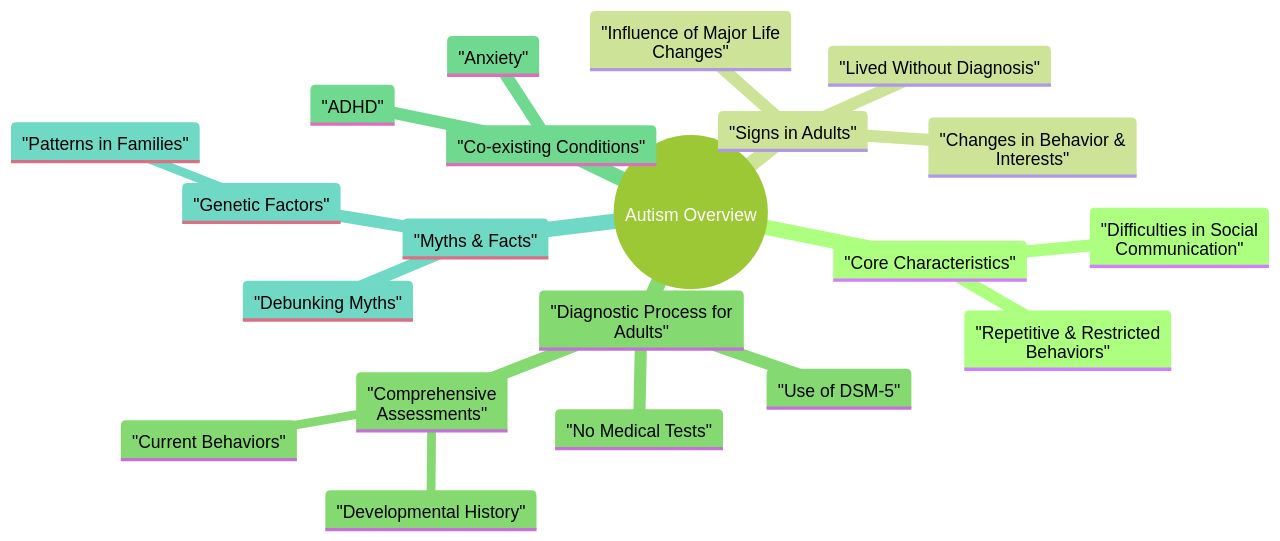
Understanding autism's core characteristics—difficulties in social communication and repetitive, restricted behaviors—is essential for adults who may have lived without a diagnosis. It's important to note that not everyone will exhibit all symptoms, and they can change with age or life events, such as college transitions, career changes, or shifts in family dynamics.
Co-existing conditions like anxiety and ADHD can also influence how autism presents itself. Despite increased public awareness and screenings, many adults who could be on the autism spectrum remain undiagnosed or misidentified, highlighting the importance of recognizing these signs.
Brain research has revealed structural differences in autistic individuals, debunking myths about causes like vaccines, parenting, or nutrition, and pointing towards genetic factors. Although no single gene has been pinpointed, patterns in families suggest a hereditary link. The diagnostic process for adults can be complex and costly, with a risk of overlooking the diverse ways autism can manifest across gender, culture, and other identities. Eye-tracking studies, like those reported in JAMA, have shown promise in enhancing diagnostic accuracy, emphasizing the need for comprehensive assessments that consider the individual's developmental history and current behaviors.
Preparing for the Diagnosis Process
When embarking on the journey toward an adult autism diagnosis, preparation is key. This involves compiling a developmental history and any relevant documentation to aid healthcare professionals in their assessment.
Autism, being a spectrum disorder, presents unique challenges due to its diverse manifestations which may not be recognized until later in life. Clinicians such as Dr. David Lynch and Liliana Valvano at Columbia's Lieber Recovery Clinic emphasize the need for neuro-inclusive, gender-affirming, and person-centered approaches in understanding autism across the lifespan.
The diagnostic process for adults is intricate and can be hindered by limited access to specialized assessors. Adult patients often face the additional burdens of high evaluation costs and insurance coverage issues.
Dr. John Ball and other experts highlight the systemic gaps that contribute to delayed diagnoses and the potentially severe consequences of such delays. With the prevalence of autism now identified as 1 in every 36, the importance of early diagnosis and intervention is paramount, as children diagnosed by age 4 are significantly more likely to receive necessary services. Despite the barriers, recent research shows promise in expanding diagnostic capacities. A study in Pediatrics found that community-based providers, once trained, agreed with autism specialists in 82% of cases, suggesting a potential to alleviate the bottleneck in diagnosis access. However, it remains crucial for healthcare providers to consider the individual's self-reported experiences, as emphasized by Dr. Melanie Sloan, and to be open to learning how to better serve the adult autistic community, thereby fostering a more inclusive healthcare environment.
The Role of Primary Care Physicians in Diagnosis
With the prevalence of autism spectrum disorder (ASD) in children at 2.78% and the broader range of neurodivergent traits present in up to 20% of the general population, it's clear that primary care physicians are integral to the early identification and diagnosis of ASD. Adults with autism are significantly less likely to be diagnosed compared to children, highlighting the need for increased awareness and understanding of autism in adults among healthcare providers.
Studies have shown that specially trained primary care clinicians can diagnose autism with an 82% concordance rate with specialists, offering a solution to the long waits and travel distances currently faced by many families. Additionally, research reveals that the brain's structure in individuals with autism differs from that of neurotypical development, although the exact causes of autism, which are not related to vaccines, parenting styles, or nutrition, remain under investigation.
The DSM-5 outlines that core features of autism must be present from early childhood, though they may not fully manifest until later when social demands exceed coping capacities. Accurate diagnosis requires observation by professionals skilled in assessing communication, behavioral, and developmental levels, ideally by a multidisciplinary team. The growing acceptance of tiered primary care models for autism evaluation, backed by positive predictive values of 92.6%, is promising for improving access to timely and accurate diagnoses, which are crucial for early intervention and better outcomes for individuals with ASD.
Specialized Diagnostic Tools and Assessments
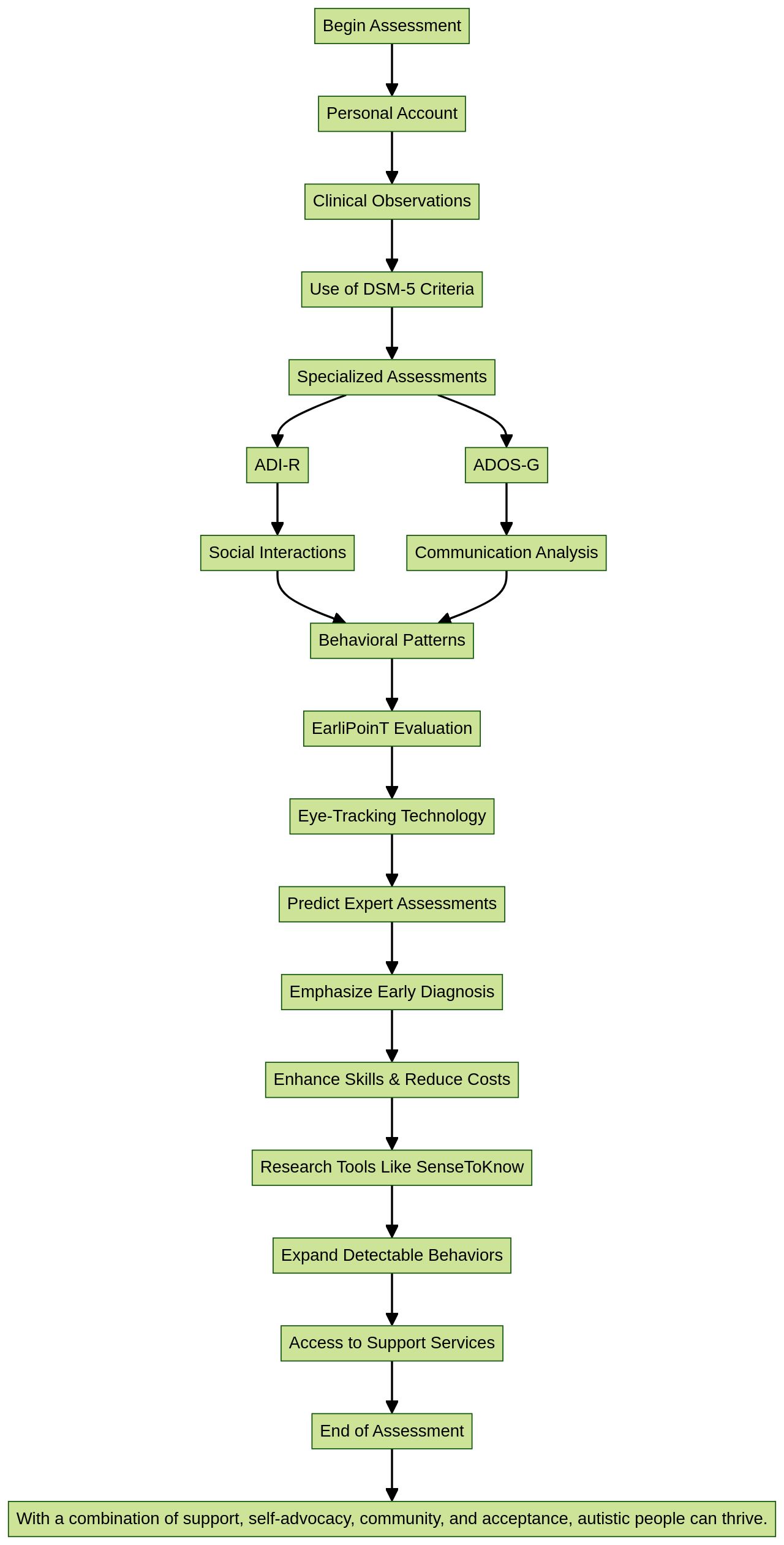
The journey to an autism diagnosis for adults involves a blend of personal accounts and clinical observations, guided by the DSM-5's standardized criteria. While no single tool is definitive for diagnosis, specialized assessments such as the ADI-R and ADOS-G provide a structured understanding of an individual's social interactions, communication, and behaviors. These instruments are particularly suited for those with a mental age of 18 months and older.
Recent advancements have introduced the EarliPoinT Evaluation for children, using eye-tracking technology to measure looking behavior, which has shown high accuracy in predicting expert clinician assessments. This tool is part of a growing trend to incorporate objective measurements that may hasten diagnosis and the initiation of personalized treatment plans. Early diagnosis is crucial, as it can lead to early intervention, which is known to enhance language, cognitive, and social skills.
Furthermore, early intervention has the potential to reduce the lifetime costs associated with autism for families and society. With the help of cutting-edge research, tools like SenseToKnow are expanding the range of detectable behaviors, further capturing the complexity of autism. This progress holds promise for children who currently face lengthy waits for a diagnosis, potentially enabling access to crucial support and services at a much younger age.
Conclusion
Understanding Autism Spectrum Disorder (ASD) is crucial for diagnosing and supporting individuals with this complex neurodevelopmental disorder. The diagnostic process involves a combination of parental insights and professional assessments, with no definitive tool.
Recognizing the signs and symptoms of autism in adults is essential, as many individuals may have lived without a diagnosis. Brain research has debunked myths about the causes of autism, highlighting genetic factors and structural differences in autistic individuals.
Preparing for the diagnosis process is key when seeking an adult autism diagnosis. Limited access to specialized assessors and high evaluation costs can present barriers.
Primary care physicians play an integral role in early identification and diagnosis of ASD, offering a solution to long wait times. Specialized diagnostic tools provide structured insights into social interactions, communication, and behaviors. Early identification and intervention are crucial for individuals with ASD, leading to better outcomes in language, cognitive, and social skills development. By understanding the diagnostic process, recognizing signs and symptoms of autism in adults, preparing for the diagnosis process, acknowledging the role of primary care physicians, and utilizing specialized diagnostic tools, we can ensure early identification and intervention for individuals with ASD. This empowers families to navigate challenges effectively while ensuring the well-being of their loved ones on the autism spectrum.
Frequently Asked Questions
What is Autism Spectrum Disorder (ASD)?
ASD is a developmental disorder characterized by challenges in social interaction, communication, and restricted, repetitive behaviors.
How is ASD diagnosed?
ASD diagnosis follows the American Psychiatric Association's DSM-5 criteria and involves a combination of insights from parents or caregivers about the child's development and professional behavioral observations by specialists.
Who can diagnose ASD?
ASD can be diagnosed by specialists such as neurodevelopmental pediatricians, child neurologists, and other professionals trained in conducting thorough assessments.
What are some tools used to diagnose autism?
The Autism Diagnostic Interview-Revised (ADI-R) is a notable tool for evaluating autism. Eye-tracking studies and other specialized assessments like the ADOS-G are also used.
Is autism hereditary?
While no single gene has been identified, research has found hundreds of genes linked to autism, and patterns in families suggest a hereditary component.
How common is autism?
Autism affects approximately 1 in 36 children in the United States.
Why is early diagnosis of autism important?
Early diagnosis is critical because children identified with autism by age 4 are more likely to receive the necessary services and early intervention, which can improve language, cognitive, and social skills.
Are there disparities in the diagnosis of autism?
Yes, children of color and those from non-English speaking or low-income families face barriers to early identification and diagnosis of autism.
Can adults be on the autism spectrum?
Yes, adults can have autism, and some may live without a diagnosis or be misidentified due to a lack of awareness and understanding of autism in adults.
What challenges do adults face in getting an autism diagnosis?
The diagnostic process for adults can be complex, costly, and affected by a risk of overlooking the diverse ways autism can manifest across different genders, cultures, and identities.
How can primary care physicians help in diagnosing autism?
Primary care physicians, when specially trained, can diagnose autism with a high concordance rate with specialists, improving access to timely and accurate diagnoses.
What is the role of primary care models in autism evaluation?
Tiered primary care models for autism evaluation show promise for increasing diagnostic capacities, thereby fostering a more inclusive healthcare environment.
What recent advancements have been made in autism diagnosis?
Recent advancements include the EarliPoinT Evaluation using eye-tracking technology and tools like SenseToKnow, which help in detecting autism-related behaviors and may enable earlier diagnosis and intervention.
List of Sources
- Understanding Autism Spectrum Disorder
- aihw.gov.au (https://www.aihw.gov.au/reports/disability/autism-in-australia/contents/autism)
- pubmed.ncbi.nlm.nih.gov (https://pubmed.ncbi.nlm.nih.gov/37692992)
- phxautism.org (https://phxautism.org/resources/what-is-autism/)
- npr.org (https://www.npr.org/2023/09/27/1202128281/a-new-study-shows-how-certain-genes-can-cause-brain-disorders-like-autism)
- npr.org (https://www.npr.org/sections/health-shots/2023/10/02/1202749791/new-tool-study-genetics-autism-schizophrenia-brain-disorders)
- cdc.gov (https://www.cdc.gov/autism/hcp/diagnosis/)
- jamanetwork.com (https://jamanetwork.com/journals/jama/article-abstract/2809023)
- cnet.com (https://www.cnet.com/health/mental/heres-what-you-need-to-know-about-autism-spectrum-disorder/)
- autismspeaks.org (https://www.autismspeaks.org/signs-autism-adults)
- cdc.gov (https://www.cdc.gov/autism/treatment/)
- Recognizing the Signs and Symptoms of Autism
- aihw.gov.au (https://www.aihw.gov.au/reports/disability/autism-in-australia/contents/autism)
- pubmed.ncbi.nlm.nih.gov (https://pubmed.ncbi.nlm.nih.gov/37692992)
- phxautism.org (https://phxautism.org/resources/what-is-autism/)
- nimh.nih.gov (https://www.nimh.nih.gov/news/science-news/2024/accelerating-science-to-improve-early-autism-screening)
- autismparentingmagazine.com (https://www.autismparentingmagazine.com/what-not-to-do-autistic-child/)
- autismspeaks.org (https://www.autismspeaks.org/signs-autism-adults)
- columbiadoctors.org (https://www.columbiadoctors.org/news/adults-autism-difficulties-and-strengths)
- cnn.com (https://www.cnn.com/2023/09/05/health/eye-tracking-autism/index.html)
- phxautism.org (https://phxautism.org/resources/what-is-autism/)
- autismspeaks.org (https://www.autismspeaks.org/signs-autism-adults)
- columbiadoctors.org (https://www.columbiadoctors.org/news/adults-autism-difficulties-and-strengths)
- Preparing for the Diagnosis Process
- mydiversability.com (https://mydiversability.com/blog/2023/6/23/six-truths-of-delayed-diagnosis-and-misdiagnosis)
- thehill.com (https://thehill.com/opinion/healthcare/4323865-millions-of-americans-live-with-an-undiagnosed-disease-healthcare-teams-are-the-solution/)
- cam.ac.uk (https://www.cam.ac.uk/research/news/clinicians-rank-patient-views-as-least-important-in-diagnosis-study-finds)
- liveapp.inews.co.uk (https://liveapp.inews.co.uk/2023/06/24/more-than-9-in-10-autistic-people-over-50-dont-have-a-diagnosis-study-finds/content.html)
- disabilityscoop.com (https://www.disabilityscoop.com/2023/07/21/primary-care-doctors-can-be-trained-to-reliably-diagnose-asd/30471/)
- apa.org (https://www.apa.org/monitor/2024/03/effective-treatment-autistic-adults)
- columbiadoctors.org (https://www.columbiadoctors.org/news/adults-autism-difficulties-and-strengths)
- phxautism.org (https://phxautism.org/resources/what-is-autism/)
- mdpi.com (https://www.mdpi.com/2227-9067/10/8/1394/pdf)
- cdc.gov (https://www.cdc.gov/autism/hcp/diagnosis/)
- The Role of Primary Care Physicians in Diagnosis
- disabilityscoop.com (https://www.disabilityscoop.com/2023/07/21/primary-care-doctors-can-be-trained-to-reliably-diagnose-asd/30471/)
- journals.lww.com (https://journals.lww.com/epidem/fulltext/2009/01000/the_rise_in_autism_and_the_role_of_age_at.16.aspx)
- medpagetoday.com (https://www.medpagetoday.com/pediatrics/autism/105525)
- medpagetoday.com (https://www.medpagetoday.com/opinion/second-opinions/109659)
- medicalxpress.com (https://medicalxpress.com/news/2024-05-eye-tracking-techniques-primary-autism.html)
- cdc.gov (https://www.cdc.gov/autism/hcp/diagnosis/)
- phxautism.org (https://phxautism.org/resources/what-is-autism/)
- Specialized Diagnostic Tools and Assessments
- cnn.com (https://www.cnn.com/2023/09/05/health/eye-tracking-autism/index.html)
- news-medical.net (https://www.news-medical.net/news/20230905/New-tool-can-diagnose-autism-in-children-as-young-as-16-months.aspx)
- pratt.duke.edu (https://pratt.duke.edu/about/news/autism-app-2023)
- marcus.org (https://www.marcus.org/news/marcus-autism-center-launches-first-of-its-kind-fda-authorized-device-for-early-diagnosis-of-autism)
- cdc.gov (https://www.cdc.gov/autism/hcp/diagnosis/)
- nimh.nih.gov (https://www.nimh.nih.gov/news/science-news/2024/accelerating-science-to-improve-early-autism-screening)
- phxautism.org (https://phxautism.org/resources/what-is-autism/)
- today.ucsd.edu (https://today.ucsd.edu/story/metabolism-of-autism-reveals-developmental-origins)
- jamanetwork.com (https://jamanetwork.com/journals/jama/article-abstract/2809023)
- columbiadoctors.org (https://www.columbiadoctors.org/news/adults-autism-difficulties-and-strengths)
- phxautism.org (https://phxautism.org/resources/what-is-autism/)


