

Introduction
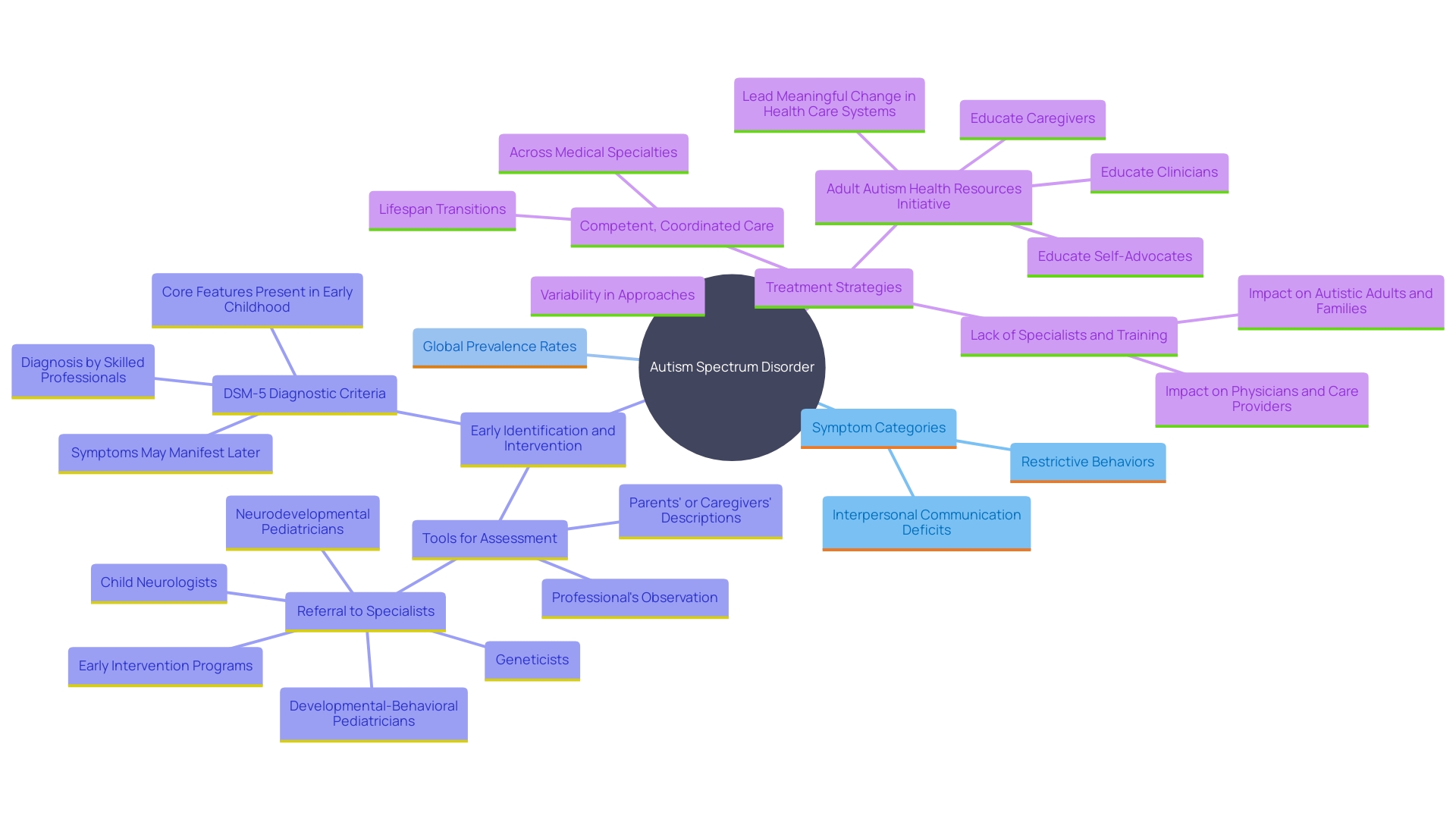
Autism Spectrum Disorder (ASD) presents a diverse and intricate range of challenges, particularly in social interaction, communication, and repetitive behaviors. The term 'spectrum' reflects the wide variability in symptom severity and manifestation among individuals, making it essential to understand ASD's multifaceted nature. Early and accurate diagnosis is crucial, as core features of autism must be present in early childhood, even if they fully manifest later.
Innovative approaches, such as recognizing literacy skills in nonspeaking autistic individuals, are expanding educational and social opportunities, advocating for alternative communication methods.
Families navigating the demands of caring for children with ASD benefit significantly from effective social support and peer networks. With approximately 1 in 160 children globally diagnosed with ASD, early interventions, particularly naturalistic developmental behavioral interventions, have shown promise in enhancing social communication skills. The interplay of genetic and environmental factors in ASD's development is complex but vital, with ongoing research delving into genetic predispositions and prenatal influences.
Current research and clinical trials continue to unravel the biological mechanisms of ASD, aiming to improve diagnosis, targeted prevention, and intervention strategies. This comprehensive understanding is crucial for empowering families and ensuring optimal care for children with ASD.
Definition and Characteristics of ASD
Autism Spectrum Disorder (ASD) is a complex neurodevelopmental condition that appears through a variety of challenges, especially in interpersonal interaction, communication, and repetitive behaviors. The term 'spectrum' aptly captures the diversity in symptom severity and presentation among individuals. For example, some children with ASD may show considerable communication difficulties, while others may have mild symptoms that only become noticeable when interpersonal demands exceed their coping abilities.
Understanding ASD's complex nature is critical for recognizing how varied its manifestations can be. As stated in the DSM-5, essential characteristics of the condition must be evident in early childhood, although they might not completely appear until interpersonal expectations rise. This variability underscores the importance of early and accurate diagnosis by professionals skilled in assessing communication, behavioral, and developmental levels.
Recent research has also highlighted innovative approaches to assessing and supporting individuals with ASD. A study from the University of Virginia revealed that many nonspeaking autistic individuals possess literacy skills, suggesting that written communication could unlock new educational and interpersonal opportunities for them. This finding challenges previous assumptions and advocates for exploring alternative communication methods to support nonspeaking autistic people.
Moreover, early childhood programs have been shown to improve core challenges associated with autism. For instance, naturalistic developmental behavioral strategies can significantly improve communication skills and adaptive behavior. Such interventions are crucial, as they help children develop essential skills that contribute to long-term positive outcomes.
Families caring for children with ASD often face significant demands that require substantial time, energy, and dedication. Effective community support and peer networks can alleviate some of the associated stress and anxiety, promoting family well-being and providing an optimistic perspective for the future. Continuous research and support systems are essential in helping families navigate these challenges and ensuring the best possible care for children with ASD.
Types and Severity of ASD Symptoms
'Autism Spectrum Disorder (ASD) symptoms are broadly divided into two categories: interpersonal communication deficits and restrictive, repetitive behaviors.'. These symptoms vary greatly in severity, from mild to profound, and significantly impact daily functioning and quality of life. Prompt identification is crucial for starting measures that can enhance results. According to the World Health Organization, approximately 1 in 160 children globally are diagnosed with ASD, with a higher prevalence of 1 in 68 in the United States. The fifth edition of the Diagnostic and Statistical Manual of Mental Disorders (DSM-5) reflects the complexity of ASD by including various specifiers and subcategories. However, these classifications are not always consistently applied in practice. Evidence indicates that early developmental strategies can improve social communication abilities, especially through naturalistic developmental behavioral approaches. Despite these potential benefits, the variability in treatment approaches and the lack of consistent monitoring for adverse effects highlight the need for more robust evidence to guide clinical recommendations. Research has indicated that early intensive behavioral approaches, which offer young autistic children 20-40 hours of individualized assistance each week, are frequently suggested in the United States. However, the efficacy and applicability of these interventions can vary, emphasizing the importance of tailored approaches to meet individual needs.
Genetic and Environmental Factors
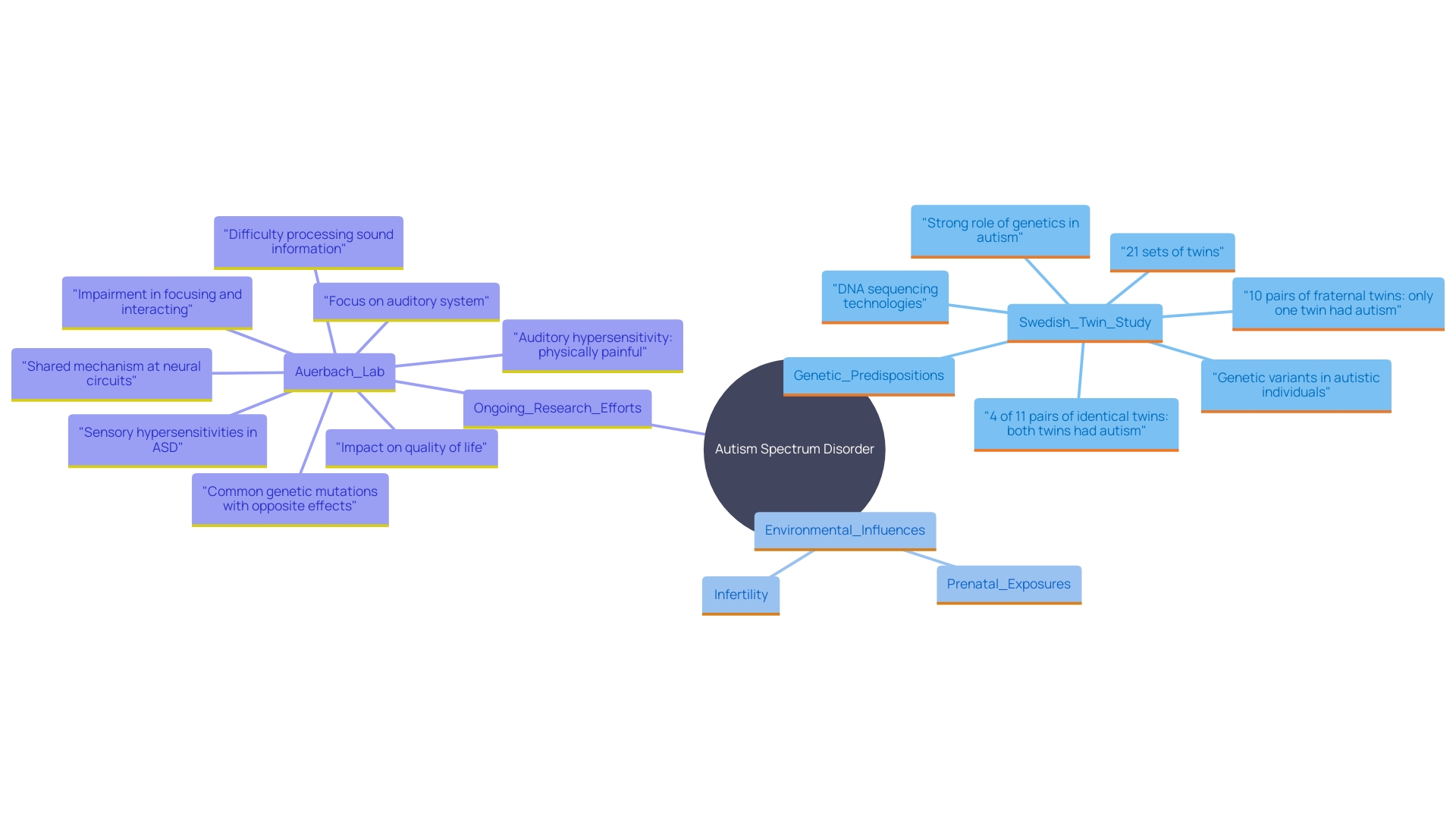
Studies have consistently demonstrated that both genetic and environmental influences are essential in the progression of spectrum disorders. Genetic predispositions significantly contribute to the likelihood of a child developing the condition, as highlighted by studies emphasizing the high heritability associated with it. For instance, the Swedish Twin Study of Child and Adolescent Development demonstrated significant heritability of the condition across different age groups, indicating the importance of genetic studies in understanding ASD.
Environmental factors are equally crucial in the development of this condition. Prenatal exposures and early life experiences can influence the onset and severity of ASD symptoms. According to a study from Ontario, Canada, there is a slightly higher risk of ASD in children born to individuals with infertility, underscoring the importance of considering obstetrical and neonatal factors. Additionally, the Auerbach Lab, supported by a $2 million grant from the National Institutes of Health, is investigating how different genes associated with ASD impact brain function, particularly in relation to heightened sensitivity to sounds.
Experts like Professor Iossifov, who has been working on the genetics side of neurodevelopmental disorder research, stress the significance of identifying subtypes and linking them to underlying biology. This approach aims to enhance the lives of individuals on the spectrum by enabling more targeted prevention and intervention strategies. Furthermore, as researcher and self-advocate Zack Williams highlights, comprehending both genetic and environmental factors is essential for creating effective approaches to enhance results for individuals on the spectrum.
In summary, the interplay between genetic predispositions and environmental influences is complex but essential to unraveling the causes of spectrum disorders. By integrating clinical data, genetic analysis, and functional studies, researchers aim to uncover the biological mechanisms driving ASD, which could lead to improved diagnosis and treatment options in the future.
Current Research and Clinical Trials on ASD
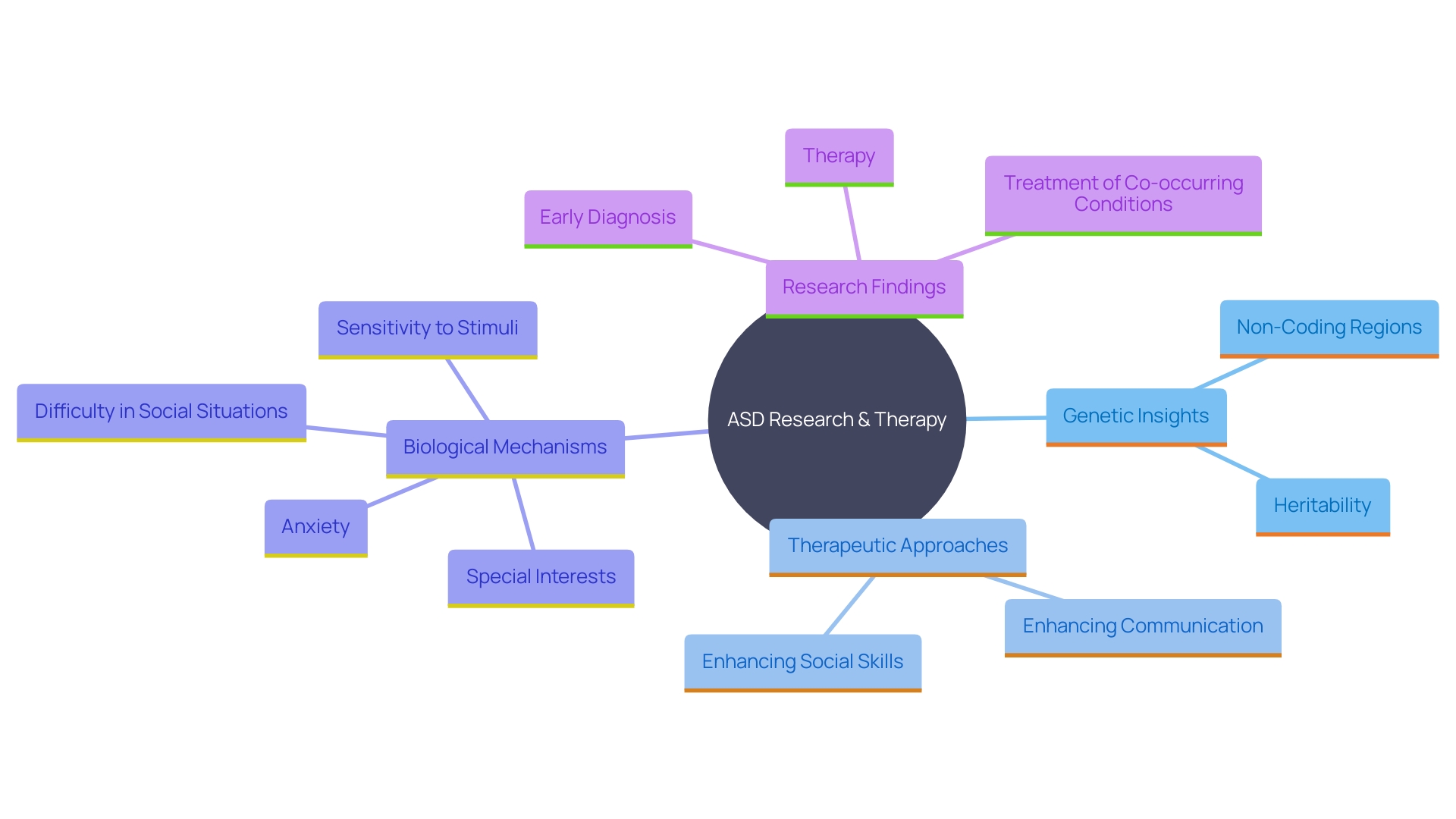
Ongoing research and clinical trials are delving deep into the underlying causes of Autism Spectrum Disorders (ASD), examining biological mechanisms and potential therapeutic approaches. Advances in genetics, neuroimaging, and behavioral science are providing profound insights into the complexities of this condition. For instance, studies have shown that the high degree of heritability in ASD cannot be explained solely by protein-coding regions of the genome. Instead, non-coding regions, particularly promoters, play a crucial role. Researchers are also exploring the intricate connections within the brain to bridge gaps in our understanding of neurodevelopmental conditions, as highlighted by recent studies that build on the pioneering work of Donald Olding Hebb.
Genetics-first approaches are transforming our comprehension and care of this condition. For instance, a study involving over 5,000 children on the spectrum identified subtypes related to underlying biology. Such findings underscore the need for further research involving more families and patients to better understand ASD's genetic roots. In parallel, innovative therapies are being developed to enhance communication skills, improve social interactions, and cultivate independence among individuals with autism. These therapies are part of a broader effort to create more effective interventions and support systems, ultimately improving the quality of life for those affected by ASD.
Conclusion
Understanding Autism Spectrum Disorder (ASD) is crucial for empowering families and fostering effective support systems. The multifaceted nature of ASD, characterized by varying degrees of social communication deficits and repetitive behaviors, emphasizes the importance of early diagnosis and intervention. Early and tailored approaches, particularly naturalistic developmental behavioral interventions, have demonstrated promise in enhancing social communication skills and adaptive behaviors, paving the way for improved long-term outcomes.
The interplay of genetic and environmental factors in the development of ASD cannot be overlooked. Research indicates a significant genetic predisposition, coupled with environmental influences that can affect symptom severity. Ongoing studies aim to unravel these complex relationships, providing insights that could lead to targeted prevention and intervention strategies.
This knowledge is vital for developing a more nuanced understanding of autism and ensuring that families are equipped with the resources they need.
Current research and clinical trials are at the forefront of uncovering the biological mechanisms underlying ASD. Advances in genetic studies and behavioral science are informing innovative therapies designed to enhance communication and independence in individuals with autism. As research continues to evolve, it holds the potential to transform the landscape of autism care, offering hope and improved quality of life for those affected by ASD.
By fostering awareness and advocating for effective support, families can navigate the challenges of autism with confidence and resilience.
Frequently Asked Questions
What is Autism Spectrum Disorder (ASD)?
ASD is a complex neurodevelopmental condition characterized by various challenges, particularly in interpersonal communication, social interaction, and repetitive behaviors. The term 'spectrum' reflects the wide range of symptom severity and presentation among individuals.
What are the key characteristics of ASD?
The essential characteristics of ASD include interpersonal communication deficits and restrictive, repetitive behaviors. These symptoms can vary greatly, impacting daily functioning and quality of life.
When do symptoms of ASD typically appear?
Symptoms of ASD must be evident in early childhood; however, they may not fully manifest until interpersonal demands increase. Early identification is crucial for effective intervention.
What is the prevalence of ASD?
According to the World Health Organization, approximately 1 in 160 children globally are diagnosed with ASD, while in the United States, the prevalence is about 1 in 68.
How does early intervention affect children with ASD?
Early childhood programs utilizing naturalistic developmental behavioral strategies have been shown to significantly improve communication skills and adaptive behavior, contributing to better long-term outcomes.
What role do genetic and environmental factors play in ASD?
Both genetic predispositions and environmental influences are important in the development of ASD. Studies indicate a high heritability for the condition, while environmental factors, such as prenatal exposures, can also influence symptom onset and severity.
What innovative approaches are being researched for individuals with ASD?
Recent studies have highlighted the literacy skills of many nonspeaking autistic individuals, suggesting that written communication may open educational and interpersonal opportunities. Additionally, new therapies are being developed to improve communication and social interactions.
Why is accurate diagnosis important for ASD?
Accurate and early diagnosis by skilled professionals is vital for implementing appropriate interventions, which can lead to improved outcomes for children with ASD.
How can families support children with ASD?
Families often face significant demands, so effective community support and peer networks can help alleviate stress and promote well-being. Continuous research and support systems are essential in helping families navigate challenges associated with ASD.
What are the challenges in treating ASD?
There is variability in treatment approaches and a lack of consistent monitoring for adverse effects. Tailored approaches that meet individual needs are important for effective intervention.
What is the future direction of ASD research?
Ongoing research aims to uncover the biological mechanisms driving ASD through genetic analysis and functional studies. This may lead to improved diagnosis, treatment options, and a better understanding of the condition.
List of Sources
- Definition and Characteristics of ASD
- ies.ed.gov (https://ies.ed.gov/funding/grantsearch/details.asp?ID=6037)
- bmj.com (https://bmj.com/content/383/bmj-2023-076733?utm_campaign=usage&utm_content=tbmj_sprout&utm_id=BMJ005&utm_medium=organic&utm_source=twitter%7C)
- National Study of Mental Health and Wellbeing, 2020-2022 (https://abs.gov.au/statistics/health/mental-health/national-study-mental-health-and-wellbeing/latest-release)
- cnet.com (https://cnet.com/health/mental/heres-what-you-need-to-know-about-autism-spectrum-disorder)
- phxautism.org (https://phxautism.org/resources/what-is-autism)
- neurosciencenews.com (https://neurosciencenews.com/literacy-nonverbal-asd-25717)
- news-medical.net (https://news-medical.net/news/20231122/A-novel-theoretical-framework-for-understanding-and-treating-autism-spectrum-disorder.aspx)
- Signs and Symptoms of Autism Spectrum Disorder (https://cdc.gov/autism/signs-symptoms)
- scielo.br (https://scielo.br/j/rlae/a/Q6SDP4CQrBqfHRLj4yQzQML?lang=en&format=pdf)
- Types and Severity of ASD Symptoms
- frontiersin.org (https://frontiersin.org/journals/psychiatry/articles/10.3389/fpsyt.2024.1287096/full)
- nature.com (https://nature.com/articles/s41598-023-46379-3)
- miragenews.com (https://miragenews.com/low-quality-autism-studies-dominate-early-1127669)
- scitechdaily.com (https://scitechdaily.com/breakthrough-ai-predicts-early-autism-with-surprising-accuracy)
- ies.ed.gov (https://ies.ed.gov/funding/grantsearch/details.asp?ID=6037)
- Signs and Symptoms of Autism Spectrum Disorder (https://cdc.gov/autism/signs-symptoms)
- bmj.com (https://bmj.com/content/383/bmj-2023-076733?utm_campaign=usage&utm_content=tbmj_sprout&utm_id=BMJ005&utm_medium=organic&utm_source=twitter%7C)
- sciencedirect.com (https://sciencedirect.com/science/article/pii/S0924977X24001263)
- cdc.gov (https://cdc.gov/autism/hcp/diagnosis)
- phxautism.org (https://phxautism.org/resources/what-is-autism)
- postgraduateeducation.hms.harvard.edu (https://postgraduateeducation.hms.harvard.edu/trends-medicine/improving-care-autistic-adults?utm_content=buffere9273&utm_medium=social&utm_source=twitter&utm_campaign=pgme)
- Genetic and Environmental Factors
- link.springer.com (https://link.springer.com/article/10.1007/s10803-024-06403-5)
- jamanetwork.com (https://jamanetwork.com/journals/jamanetworkopen/fullarticle/2812080)
- acamh.onlinelibrary.wiley.com (https://acamh.onlinelibrary.wiley.com/doi/10.1111/jcpp.13949)
- jamanetwork.com (https://jamanetwork.com/journals/jamapsychiatry/fullarticle/2817601)
- cshl.edu (https://cshl.edu/autism-genetics-the-faces-behind-the-data)
- thetransmitter.org (https://thetransmitter.org/spectrum/untangling-biological-threads-from-autisms-phenotypic-patchwork-reveals-four-core-subtypes)
- magazine.jhsph.edu (https://magazine.jhsph.edu/2023/discovering-how-environment-affects-autism)
- news-medical.net (https://news-medical.net/news/20240228/NIH-funds-study-on-neural-mechanisms-behind-autism-and-sound-sensitivity.aspx)
- today.ucsd.edu (https://today.ucsd.edu/story/12.7m-grant-to-establish-new-center-to-investigate-genetic-basis-of-autism-and-schizophrenia)
- jamanetwork.com (https://jamanetwork.com/journals/jamanetworkopen/fullarticle/2821339)
- magazine.jhsph.edu (https://magazine.jhsph.edu/2023/discovering-how-environment-affects-autism)
- news-medical.net (https://news-medical.net/news/20240228/NIH-funds-study-on-neural-mechanisms-behind-autism-and-sound-sensitivity.aspx)
- Current Research and Clinical Trials on ASD
- today.ucsd.edu (https://today.ucsd.edu/story/12.7m-grant-to-establish-new-center-to-investigate-genetic-basis-of-autism-and-schizophrenia)
- neurosciencenews.com (https://neurosciencenews.com/autism-genetics-25533)
- medicalxpress.com (https://medicalxpress.com/news/2024-10-autism-linked-chromosome.html)
- thetransmitter.org (https://thetransmitter.org/spectrum/untangling-biological-threads-from-autisms-phenotypic-patchwork-reveals-four-core-subtypes)
- news-medical.net (https://news-medical.net/news/20240828/New-system-can-spot-genetic-markers-of-autism-in-brain-images-with-high-accuracy.aspx)
- news-medical.net (https://news-medical.net/news/20231122/A-novel-theoretical-framework-for-understanding-and-treating-autism-spectrum-disorder.aspx)
- neurosciencenews.com (https://neurosciencenews.com/top-10-neuroscience-news-2023-25408)
- tacanow.org (https://tacanow.org/monthly-learning-series)
- science.org (https://science.org/doi/10.1126/sciadv.adi0074)
- cshl.edu (https://cshl.edu/autism-genetics-the-faces-behind-the-data)
- medrxiv.org (https://medrxiv.org/content/10.1101/2023.11.03.23298042v1)


