

Introduction
Navigating the landscape of love and relationships can be complex for anyone, but it often presents unique challenges for individuals on the autism spectrum. Understanding the distinctive perspectives and needs of autistic individuals is crucial in fostering meaningful and supportive connections. Research reveals that those on the spectrum frequently encounter higher rates of anxiety and depression, underscoring the necessity for greater awareness and skills among their partners, families, and communities.
Experts emphasize the importance of well-supported participation in all life domains, highlighting how social exclusion due to emotional and behavioral issues can impact mental health and equity. By delving into the intricacies of autism in relationships, this article aims to provide valuable insights, practical strategies, and essential resources to empower and support autistic individuals and their loved ones in cultivating strong, healthy, and fulfilling relationships.
Understanding Autism in Relationships
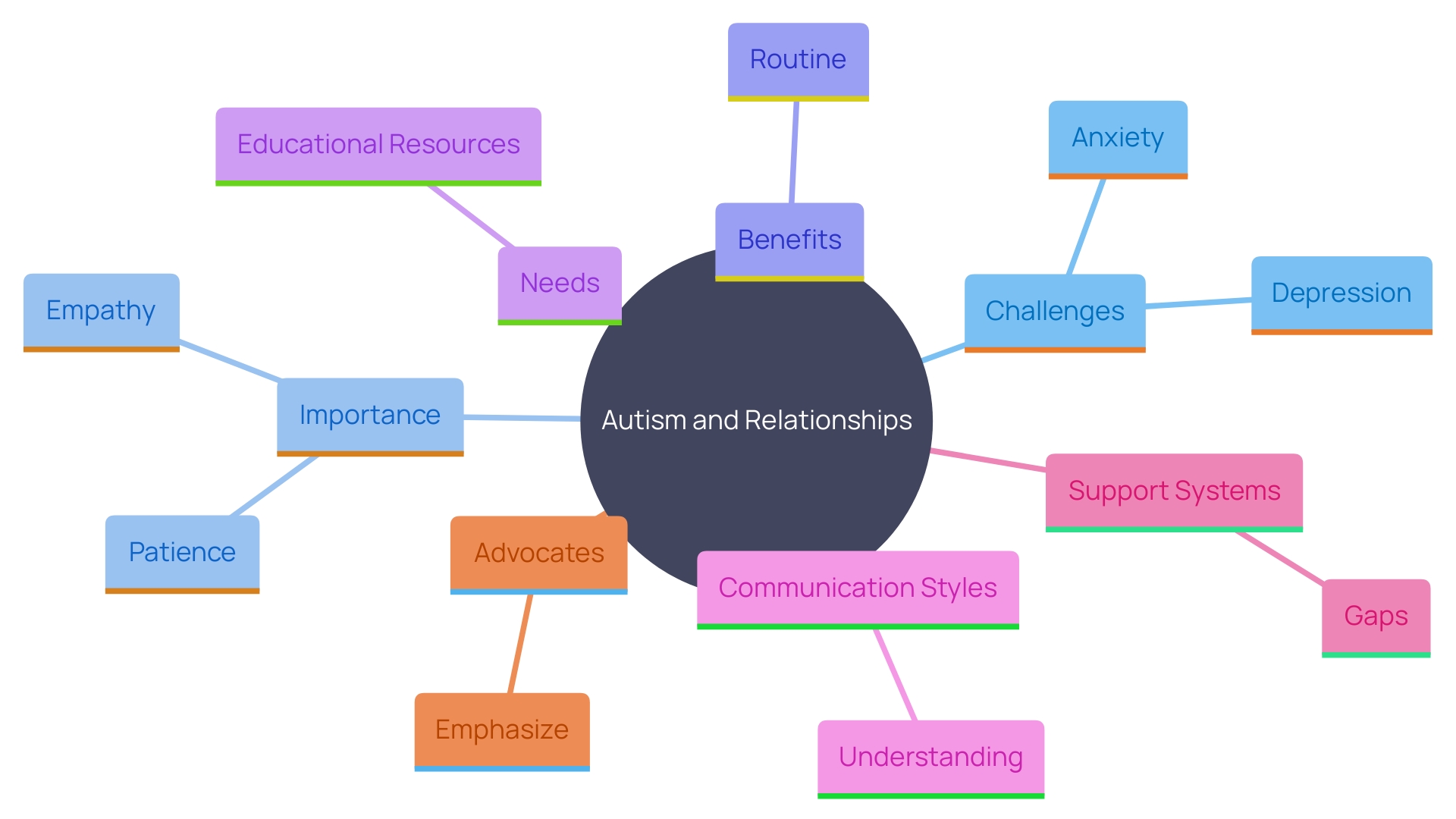
Autism can significantly influence how people experience love and relationships. Understanding the unique perspectives of those on the spectrum is essential in fostering meaningful connections. Studies show that people on the spectrum experience elevated levels of anxiety and depression, emphasizing the necessity for increased awareness and abilities among those in their vicinity. Dr. David Offord emphasized that the well-supported involvement of people with disabilities in various life domains is crucial for mental health and equity. This is especially significant for people on the spectrum who may encounter exclusion from social involvement due to accompanying emotional and behavioral challenges.
Assisting those on the spectrum in their connections necessitates patience and empathy from partners and family members. It involves recognizing both the challenges and strengths they bring to connections. For instance, many people on the spectrum flourish with routine and structure, which can clash with the unpredictable nature of dating. Setting clear boundaries and guidelines can help reduce uncertainty and foster a supportive environment. As Dr. Sultan notes, discussing preferred communication styles and comfort levels in social settings can make a significant difference.
'The significance of this comprehension is emphasized by the experiences shared in a guide developed by Dr. Amy Pearson's project team, which highlighted the necessity for educational materials on connections for individuals on the spectrum.'. Autism advocate Kieran Rose pointed out the lack of relevant information regarding intimate partner violence among autistic people, further emphasizing the gaps in support systems. Meeting these needs and offering resources can help close communication gaps and foster more supportive interactions, ultimately improving the well-being and connection experiences of individuals with autism.
Challenges in Social Interactions and Romantic Relationships
Navigating the complexities of social interactions can present significant hurdles for those on the autism continuum, particularly in the realm of romantic relationships. Challenges such as difficulties in interpreting social cues, understanding non-verbal communication, and managing anxiety in social settings often lead to misunderstandings between partners. According to the National Academies of Sciences, Engineering, and Medicine, creating an environment where individuals can openly express their feelings and expectations is crucial. This supportive setting enables better communication and fosters stronger connections. As emphasized by Dr. David (Dan) R. Offord, ensuring that children and youth with disabilities, including those with autism, have the resources and support they require is crucial for their mental health and social engagement. The Interagency Autism Coordinating Committee (IACC) also highlights the significance of collaboration and dialogue within the autism community to advance research and services, representing a joint effort to improve the quality of life for those affected.
Deconstructing Misconceptions About Autism and Love
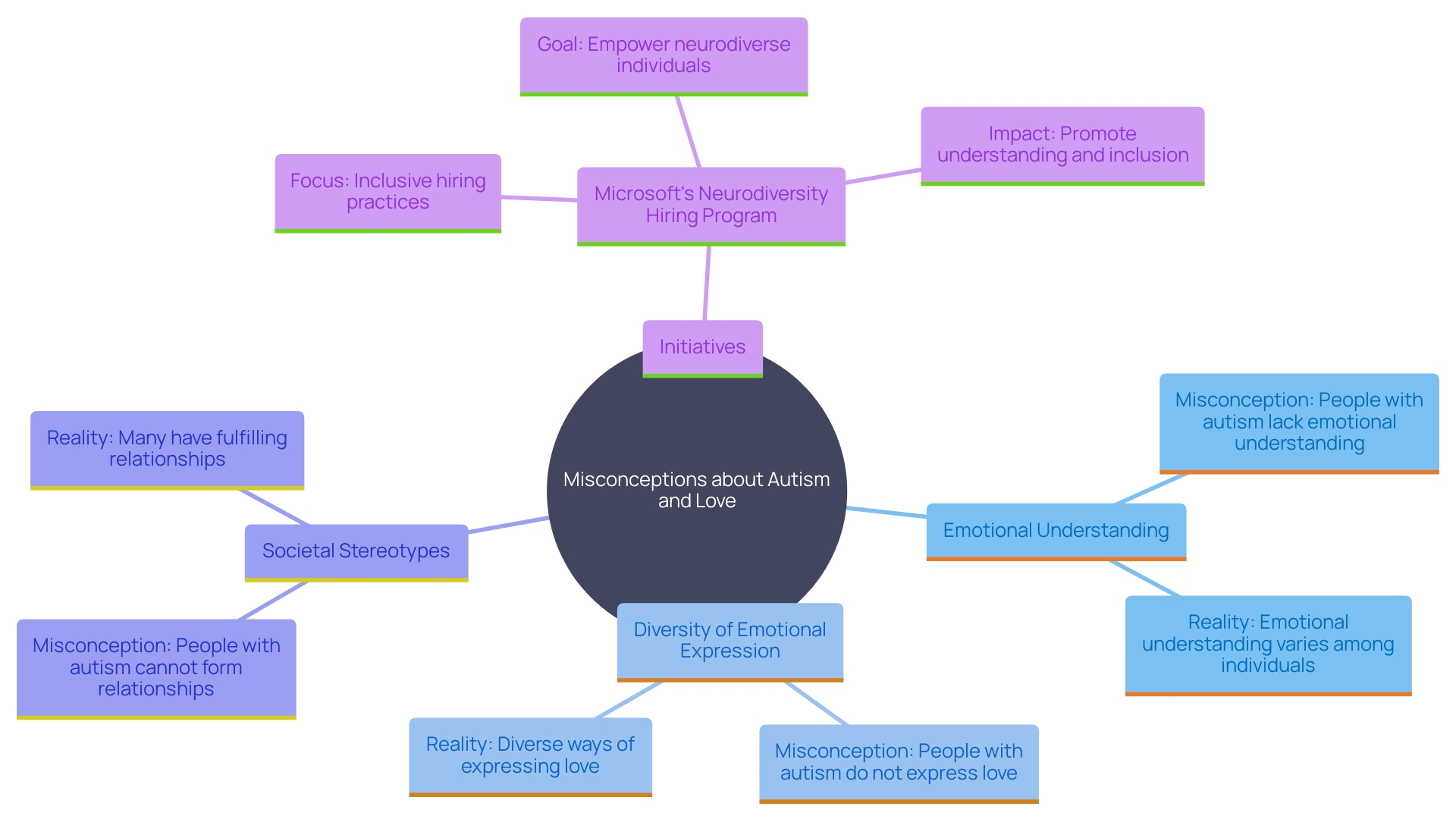
Misconceptions about autism and the capacity for love are not uncommon. Many people wrongly think that those with autism are unable to create profound emotional bonds. This couldn't be further from the truth. Research has demonstrated that individuals with autism can and do experience profound emotions and connections. For instance, the Department of Psychology at Princeton University highlights that understanding emotions—both one's own and others'—is key to social interactions, and people on the spectrum are no exception. They can predict and respond to emotional states, often drawing from internal experiences and social cues.
Moreover, it's crucial to acknowledge that the methods in which people on the spectrum convey their feelings may vary. As Meryl Alper, an expert in media and autism, points out, societal stereotypes often wrongly depict autistic people as unfeeling or robotic. This dehumanization overlooks their genuine capacity for affection and commitment. By challenging these stereotypes, we can foster a more inclusive understanding of love that appreciates the diverse ways people with autism express their feelings.
Furthermore, real-world initiatives, like Microsoft's neurodiversity hiring program, have shown the worth and abilities of neurodivergent people. These programs not only provide employment opportunities but also emphasize the importance of understanding and accommodating different communication styles and emotional expressions. This inclusive approach helps to break down barriers and promote a broader acceptance of the diverse ways individuals with autism experience and express love.
Fostering Healthy and Supportive Relationships
Establishing a foundation for healthy relationships is crucial, particularly for people on the autism spectrum. Open communication, trust, and mutual respect are key components. Partners must prioritize understanding each other's needs, including emotional and sensory preferences. Establishing a safe space for dialogue allows couples to navigate challenges together, ensuring that both partners feel valued and supported.
Research shows that well-supported participation in major life domains is crucial for mental health and equity. This is particularly true for children and youth with disabilities, including autism. By recognizing their unique needs and strengths, we can create a fair environment that reduces stress and promotes healthy development. People with autism often experience exclusion from meaningful social participation, making it even more important to provide them with the resources and support they need.
'To address the gaps in resources and support, educational guides have been developed based on feedback from people on the autism spectrum.'. These guides emphasize the experiences of individuals on the spectrum in connections and offer valuable perspectives on the difficulties they encounter. Autism advocate Kieran Rose highlights the significance of these resources, stating that they provide a voice to those on the spectrum and illuminate the necessity for improved support systems.
In conclusion, understanding and addressing the unique needs of autistic individuals in relationships can lead to healthier and more fulfilling connections. By fostering open communication, trust, and mutual respect, couples can create a supportive environment that benefits both partners.
Conclusion
Navigating love and relationships for individuals on the autism spectrum requires a nuanced understanding of their unique experiences and needs. Acknowledging the higher rates of anxiety and depression faced by autistic individuals emphasizes the importance of patience, support, and education among partners and families. Creating environments that foster open communication and establish clear boundaries can significantly enhance relationship dynamics, allowing both partners to thrive.
Misconceptions about the emotional capabilities of autistic individuals often hinder meaningful connections. It is crucial to challenge these stereotypes and recognize that many on the spectrum experience profound emotions and can form deep connections. By promoting awareness of diverse emotional expressions, society can create a more inclusive understanding of love that appreciates the varied ways individuals communicate their feelings.
Fostering healthy and supportive relationships hinges on open dialogue, trust, and mutual respect. Providing educational resources tailored to the experiences of autistic individuals is essential in bridging communication gaps and enhancing relationship quality. By empowering both partners with knowledge and understanding, it becomes possible to cultivate fulfilling connections that honor the unique perspectives and strengths each person brings to the relationship.
Frequently Asked Questions
How does autism influence love and relationships?
Autism can significantly affect how individuals experience love and relationships. People on the spectrum may face challenges in interpreting social cues and managing anxiety, impacting their ability to form connections. Understanding their unique perspectives is essential for fostering meaningful relationships.
What are some challenges faced by individuals with autism in romantic relationships?
Individuals with autism may struggle with difficulties in interpreting social cues, understanding non-verbal communication, and managing anxiety in social settings. These challenges can lead to misunderstandings between partners.
Why is open communication important for individuals with autism?
Creating an environment where individuals can express their feelings and expectations openly is crucial. This supportive setting enhances communication and helps build stronger connections.
What role do empathy and patience play in supporting individuals with autism in relationships?
Empathy and patience from partners and family members are vital for helping those on the spectrum navigate relationships. Recognizing their challenges and strengths can create a supportive environment conducive to healthy connections.
Are individuals with autism capable of forming deep emotional bonds?
Yes, individuals with autism can and do experience profound emotions and connections. Misconceptions exist that suggest they are unfeeling, but research indicates they can understand and respond to emotions, both their own and those of others.
How can societal stereotypes about autism affect relationships?
Societal stereotypes can dehumanize individuals with autism, portraying them as unfeeling or robotic. Challenging these stereotypes is essential for fostering a more inclusive understanding of love and encouraging acceptance of diverse emotional expressions.
What resources are available to support individuals with autism in forming relationships?
Educational materials developed from feedback from those on the spectrum highlight their experiences in relationships. These resources aim to improve support systems and provide valuable insights into the unique challenges they face.
How can partners establish a healthy relationship with someone on the autism spectrum?
Partners should prioritize open communication, trust, and mutual respect. Creating a safe space for dialogue allows couples to navigate challenges together, ensuring both partners feel valued and supported.
What role do programs like Microsoft’s neurodiversity hiring initiative play in supporting individuals with autism?
Such programs demonstrate the value and abilities of neurodivergent individuals by providing employment opportunities and promoting understanding of different communication styles. This inclusive approach helps break down barriers and enhances acceptance.
What can be done to improve the well-being of individuals with autism in relationships?
Fostering open communication, understanding unique needs, and offering resources and support can significantly enhance the well-being and connection experiences of individuals with autism. By recognizing their strengths and challenges, healthier and more fulfilling relationships can be established.
List of Sources
- Understanding Autism in Relationships
- frontiersin.org (https://frontiersin.org/articles/10.3389/fpubh.2023.1309154/full)
- durham.ac.uk (https://durham.ac.uk/news-events/latest-news/2024/04/autistic-guide-to-healthy-relationships)
- autismspeaks.org (https://autismspeaks.org/signs-autism-adults)
- radiantabilities.com (https://radiantabilities.com/dating-resources)
- edx.org (https://edx.org/learn/mental-health/curtin-university-autism-and-mental-health)
- rochester.edu (https://rochester.edu/newscenter/can-relationship-app-improve-romance-571032)
- news.rpi.edu (https://news.rpi.edu/content/2023/11/06/ai-predict-challenging-behaviors-profound-autism)
- news-medical.net (https://news-medical.net/news/20231122/A-novel-theoretical-framework-for-understanding-and-treating-autism-spectrum-disorder.aspx)
- pubmed.ncbi.nlm.nih.gov (https://pubmed.ncbi.nlm.nih.gov/38900555)
- wellandgood.com (https://wellandgood.com/dating-with-autism)
- frontiersin.org (https://frontiersin.org/articles/10.3389/fpubh.2023.1309154/full)
- crisistextline.org (https://crisistextline.org/united-in-empathy-2023-report)
- Challenges in Social Interactions and Romantic Relationships
- nap.nationalacademies.org (https://nap.nationalacademies.org/catalog/27800/applied-behavior-analysis-within-the-department-of-defenses-comprehensive-autism-care-demonstration?utm_source=twitter&utm_medium=social&utm_term=nasem_dbasse&utm_content=d9be4f21-d431-47d4-bbcc-3232527c9d34&utm_campaign=hootsuite)
- frontiersin.org (https://frontiersin.org/articles/10.3389/fpubh.2023.1309154/full)
- pubmed.ncbi.nlm.nih.gov (https://pubmed.ncbi.nlm.nih.gov/38900555)
- all-about-psychology.com (https://all-about-psychology.com/high-functioning-autism-guide.html)
- iacc.hhs.gov (https://iacc.hhs.gov/news/2023/summary-of-advances-release-2022.shtml)
- Deconstructing Misconceptions About Autism and Love
- it.slashdot.org (https://it.slashdot.org/story/24/07/14/2031223/how-microsoft-dell-and-other-large-us-employers-accommodate-neurodivergent-employees?utm_source=rss1.0mainlinkanon&utm_medium=feed)
- news-medical.net (https://news-medical.net/news/20231122/A-novel-theoretical-framework-for-understanding-and-treating-autism-spectrum-disorder.aspx)
- pubmed.ncbi.nlm.nih.gov (https://pubmed.ncbi.nlm.nih.gov/38900555)
- deborahruf.substack.com (https://deborahruf.substack.com/p/independence-and-relationship-issues?r=wmzwk&utm_campaign=post&utm_medium=email)
- thereader.mitpress.mit.edu (https://thereader.mitpress.mit.edu/shattering-stereotypes-about-autism-and-technology)
- autism-icn.weebly.com (https://autism-icn.weebly.com/winter-2024.html)
- hachettebookgroup.com (https://hachettebookgroup.com/titles/jessica-slice/dateable/9780306832741?lens=hachette-go)
- milestonesconference.org (https://milestonesconference.org)
- jobs.careers.microsoft.com (https://jobs.careers.microsoft.com/global/en/job/1661296/Research-Intern---Data-Driven-Accessibility|)
- Fostering Healthy and Supportive Relationships
- colbypearce.net (https://colbypearce.net/2024/09/03/drawing-the-line-regaining-parental-authority-safely-when-caring-for-a-young-person-recovering-from-a-tough-start-to-life)
- deborahruf.substack.com (https://deborahruf.substack.com/p/independence-and-relationship-issues?r=wmzwk&utm_campaign=post&utm_medium=email)
- frontiersin.org (https://frontiersin.org/articles/10.3389/fpubh.2023.1309154/full)
- durham.ac.uk (https://durham.ac.uk/news-events/latest-news/2024/04/autistic-guide-to-healthy-relationships)
- simonandschuster.com (https://simonandschuster.com/books/Self-Care-for-Autistic-People/Megan-Anna-Neff/9781507221938?utm_source=twitter_post&utm_medium=adams_social&utm_campaign=&utm_content=)
- sciencedaily.com (https://sciencedaily.com/releases/2023/10/231020105650.htm)
- tacanow.org (https://tacanow.org/monthly-learning-series)


