

Introduction
DIR/Floortime therapy, a personalized and play-centered approach, is designed to foster the emotional and social growth of children with Autism Spectrum Disorder (ASD) through interactive play. It aligns with the philosophy that every child deserves engaged and peaceful participation in all aspects of their lives, despite the challenges posed by disabilities. By addressing the unique needs and leveraging the strengths of children with ASD, caregivers can reduce stress and promote meaningful social interactions.
In this article, we will explore the principles, benefits, and research findings of Floortime therapy, highlighting its positive impact on the development and well-being of children with ASD.
What is Floortime Therapy?
DIR/Floortime, a therapeutic approach developed by Dr. Stanley Greenspan and Dr. Serena Wieder, is designed to promote the emotional and social development of individuals with Autism Spectrum Disorder (ASD) through interactive play. This approach aligns with the belief that every individual deserves active and peaceful participation in the crucial aspects of their lives - education, residence, and recreation - despite the challenges presented by disabilities. Dr. David (Dan) R. Offord, a respected psychiatrist who specializes in young individuals, emphasized that such inclusion is crucial for mental health and is the foundation of a fair and equitable society. With DIR/Floortime, caregivers can address the unique needs and leverage the strengths of their offspring with ASD, reducing stress and promoting meaningful social interactions in various settings.
As autism diagnoses rise, with some estimates suggesting occurrence in as many as 1 in 36 individuals, innovative solutions like Forta's AI healthcare platform are emerging. Forta aims to reduce the growing wait times for care by improving access to family-centered autism treatment practices, including AI-driven Applied Behavior Analysis (ABA). This effort demonstrates the significance of guaranteeing that caregivers have the essential resources to support the well-rounded growth of their children with ASD, especially as 31–55% of these individuals also encounter co-occurring intellectual disabilities.
Principles of Floortime Therapy
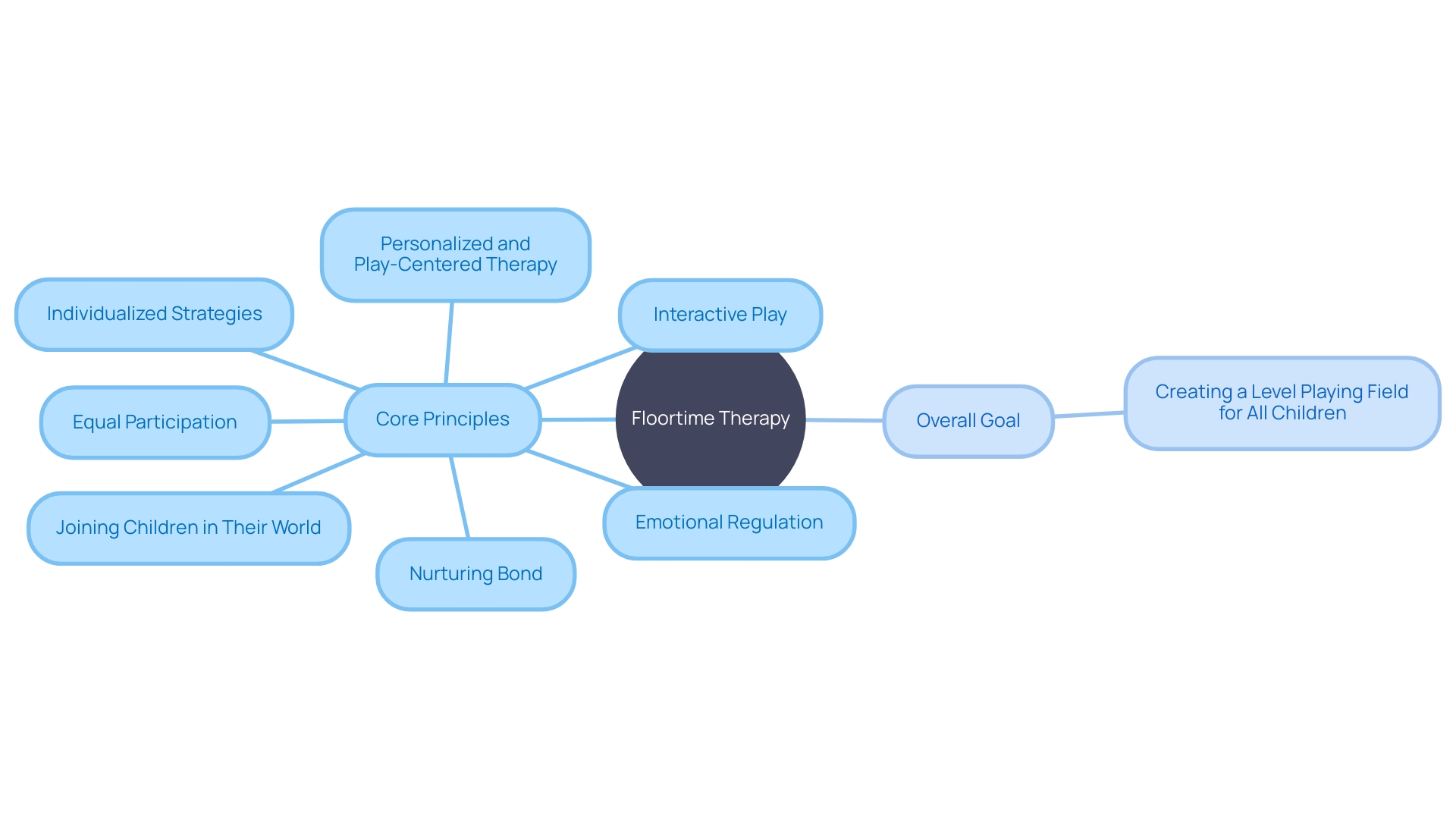
Supporting children with unique developmental needs is enhanced through personalized, play-centered therapy. At the core of Floortime is a youngster-centered approach, which involves joining youngsters in their world by participating in activities they find meaningful and enjoyable. It's about meeting young individuals where they are and building upon their interests. Emotional regulation is another cornerstone, enabling individuals to identify and express their feelings in constructive ways. An nurturing bond between the individual and their caregiver or therapist forms the base of Floortime therapy, fostering trust and opening doors to emotional and relationship development. This is not a one-size-fits-all method; it's individualized, considering each individual's strengths and challenges to tailor strategies that resonate with them. Interactive play is the means by which young individuals explore, problem-solve, and home their social and communication skills. This hands-on, engaging treatment aligns with the philosophy of ensuring equal participation in life's 'race,' as emphasized by the esteemed psychiatrist Dr. David (Dan) R. Offord. By prioritizing stress reduction, acknowledging individual needs and strengths, and equipping caregivers with essential support, this approach aims to create a level playing field for all children, particularly those at risk of lagging behind.
Benefits of Floortime Therapy
Floortime intervention is an interactive and evolving form of support that aids children with autism spectrum disorder (ASD) in various aspects of their development. Through playful and interactive sessions, young individuals with ASD can enhance their social and emotional skills, learning to navigate their feelings and establish closer relationships with those around them. The nurturing program provides a supportive setting for youngsters to convey their thoughts, utilizing various means of communication from nonverbal cues to spoken expressions, enhancing their ability to communicate effectively in real-life situations.
Additionally, the approach encourages children to engage in problem-solving while playing, promoting mental adaptability and resilience in response to changes. This not only aids in their immediate problem-solving abilities but also equips them with skills that can be transferred to other life aspects. Parents and caregivers have a vital part to play in a therapeutic approach that involves interactive engagement with their offspring, ultimately strengthening the emotional bond and fostering a deeper comprehension of their child's distinctive reality.
These sessions are not confined to their advantages; the skills developed during the practice can be extended beyond the treatment environment, assisting individuals in implementing what they have acquired across various exchanges and surroundings. Such a holistic approach is in line with the insights shared by pediatric occupational therapist Kara, who stresses the significance of independence and the positive impact of parental involvement in therapeutic practices.
By embracing the belief that every young individual merits an equal opportunity, as expressed by Dr. David R. Offord, Floortime intervention aims to offer fair chances for children with ASD, ensuring their development and engagement in all aspects of life. This aligns with the current healthcare trend towards family-centered care, as noted by Forta's expansion of family-powered treatment practices and the use of AI to personalize care approaches. The common objective is to acknowledge and attend to the distinct needs of every individual and family, lessening tension and promoting well-being in a manner that is adaptable, helpful, and customized to individual schedules and requirements.
Research Findings and Outcomes
Investigation into a non-medication intervention known as Floortime, which aims to enhance the development of individuals with autism spectrum disorder, has produced promising outcomes. Research suggests that consistent engagement in specialized interventions can result in notable improvements in interpersonal abilities, encompassing a child's capacity to actively participate in social exchanges, sustain visual contact, and engage in reciprocal activities. Additionally, communication skills have been shown to improve, evidenced by expanded vocabulary, better sentence formation, and a heightened understanding of social cues. In addition to these developmental gains, the use of this specific treatment method can also help reduce challenging behaviors commonly observed in individuals with autism, including tantrums, aggression, and self-stimulation. Improvement in everyday tasks and schedules has been noticed, indicating a rise in autonomy for youngsters who participate in a specific type of intervention. However, it's important to acknowledge the personalized aspect of autism and comprehend that treatment results can differ greatly. Factors influencing the success of Floortime therapy include the unique needs of each individual, the consistency of therapy sessions, and active participation from parents or caregivers in the therapeutic process. The ultimate goal of such interventions reflects the sentiment of Dr. David (Dan) R. Offord who emphasized the importance of fair opportunities for individuals with disabilities, ensuring they receive the support they need for healthy development and overall well-being. As clinicians continue to seek the best support strategies for children and their caregivers, the evolving landscape of autism research and intervention underscores the necessity of quality in intervention research and respect for the autism community.
Conclusion
In conclusion, Floortime therapy is a personalized and play-centered approach that fosters the emotional and social growth of children with Autism Spectrum Disorder (ASD). It aligns with the philosophy that every child deserves engaged and peaceful participation in all aspects of their lives, despite the challenges posed by disabilities.
Floortime therapy follows principles such as a child-centered approach, emotional regulation, and nurturing bonds between the child and their caregiver or therapist. Through playful and interactive sessions, children with ASD enhance their social and emotional skills, establish closer relationships, and develop problem-solving abilities.
Research findings on Floortime therapy have shown promising outcomes. Consistent therapy can lead to enhancements in social and communication skills, a decrease in challenging behaviors, and progress in daily living activities. However, therapy outcomes can vary based on individual needs and the active participation of parents or caregivers.
In summary, Floortime therapy offers a personalized and empowering approach to support the development and well-being of children with ASD. By addressing their unique needs and leveraging their strengths, caregivers can reduce stress and promote meaningful social interactions. The philosophy of equitable opportunities for all children aligns with the principles and positive impact of Floortime therapy.
Continued research and intervention will contribute to the quality support strategies needed for the healthy development and overall well-being of children with ASD.
Frequently Asked Questions
What is DIR/Floortime therapy?
DIR/Floortime is a therapeutic approach developed by Dr. Stanley Greenspan and Dr. Serena Wieder aimed at promoting the emotional and social development of individuals with Autism Spectrum Disorder (ASD) through interactive play.
Who can benefit from DIR/Floortime therapy?
This therapy is designed for individuals with ASD, including those who may also have co-occurring intellectual disabilities. It focuses on enhancing their emotional regulation, social skills, and communication abilities.
How does DIR/Floortime therapy work?
The approach involves caregivers joining children in activities they find meaningful and enjoyable, allowing for personalized interaction. It emphasizes emotional regulation and fosters a nurturing bond between the child and caregiver, which is essential for trust and relationship development.
What are the core principles of DIR/Floortime?
Key principles include child-centered interaction, emotional regulation, and individualization, tailoring strategies to each child's strengths and challenges.
What skills can children develop through DIR/Floortime?
Children can enhance their social and emotional skills, learn to navigate their feelings, and develop communication abilities, including vocabulary and understanding social cues. They also improve problem-solving skills and mental adaptability.
How does DIR/Floortime therapy involve caregivers?
Caregivers play a vital role by actively engaging with their children during therapy sessions, which strengthens emotional bonds and deepens their understanding of their child's unique needs.
Are there any research findings supporting DIR/Floortime?
Research indicates that consistent engagement in DIR/Floortime can lead to improvements in interpersonal abilities, such as maintaining eye contact, engaging in reciprocal activities, and reducing challenging behaviors like tantrums and aggression.
What is the significance of family-centered care in this context?
Family-centered care is emphasized as it acknowledges the importance of the family in supporting the development of children with ASD. Programs like Forta's AI healthcare platform aim to enhance access to family-centered autism treatment practices.
Can the skills developed in DIR/Floortime therapy be applied outside of therapy sessions?
Yes, the skills learned can be extended to various environments, assisting individuals in applying what they have acquired in real-life situations.
What factors can influence the success of DIR/Floortime therapy?
Factors include the unique needs of each individual, the consistency of therapy sessions, and the active participation of parents or caregivers in the therapeutic process.
List of Sources
- What is Floortime Therapy?
- frontiersin.org (https://frontiersin.org/articles/10.3389/fpubh.2023.1309154/full)
- phxautism.org (https://phxautism.org/resources/what-is-autism)
- prnewswire.com (https://prnewswire.com/news-releases/forta-announces-55-million-series-a-to-build-ai-healthcare-and-improve-access-to-quality-care-302036962.html)
- oecd-ilibrary.org (https://oecd-ilibrary.org/education/social-and-emotional-skills-ses_ba34f086-en;jsessionid=j9MVt7LqscGYGUoHR_iyin9gNmvBM2M9_8e_5lp0.ip-10-240-5-92)
- cnet.com (https://cnet.com/health/mental/heres-what-you-need-to-know-about-autism-spectrum-disorder)
- theguardian.com (https://theguardian.com/society/article/2024/jun/01/the-truth-about-adhd-and-autism-how-many-people-have-it-what-causes-it-and-why-are-diagnoses-soaring)
- phxautism.org (https://phxautism.org/resources/what-is-autism)
- Principles of Floortime Therapy
- techcrunch.com (https://techcrunch.com/2024/01/23/forta-55m-series-a)
- prnewswire.com (https://prnewswire.com/news-releases/forta-announces-55-million-series-a-to-build-ai-healthcare-and-improve-access-to-quality-care-302036962.html)
- frontiersin.org (https://frontiersin.org/articles/10.3389/fpubh.2023.1309154/full)
- covid19criticalcare.com (https://covid19criticalcare.com/a-holistic-approach-to-childrens-health)
- covid19criticalcare.com (https://covid19criticalcare.com/healthy-holidays-body-and-mind)
- health.clevelandclinic.org (https://health.clevelandclinic.org/time-management-tips-with-adhd?utm_medium=social&utm_source=twitter&utm_campaign=cc+tweets)
- todaysparent.com (https://todaysparent.com/family/special-needs/how-to-support-children-with-autism)
- oecd-ilibrary.org (https://oecd-ilibrary.org/education/social-and-emotional-skills-ses_ba34f086-en;jsessionid=j9MVt7LqscGYGUoHR_iyin9gNmvBM2M9_8e_5lp0.ip-10-240-5-92)
- colbypearce.net (https://colbypearce.net/2024/09/03/drawing-the-line-regaining-parental-authority-safely-when-caring-for-a-young-person-recovering-from-a-tough-start-to-life)
- covid19criticalcare.com (https://covid19criticalcare.com/a-holistic-approach-to-childrens-health)
- Benefits of Floortime Therapy
- letgrow.org (https://letgrow.org/independence-therapy-autism)
- frontiersin.org (https://frontiersin.org/articles/10.3389/fpubh.2023.1309154/full)
- whenwomeninspire.com (https://whenwomeninspire.com/2024/03/21/aba-therapy-autism-support)
- greymattersofcarmel.com (https://greymattersofcarmel.com/autism-treatment-symptoms-neurofeedback-brain)
- all-about-psychology.com (https://all-about-psychology.com/high-functioning-autism-guide.html)
- techcrunch.com (https://techcrunch.com/2024/01/23/forta-55m-series-a)
- prnewswire.com (https://prnewswire.com/news-releases/forta-announces-55-million-series-a-to-build-ai-healthcare-and-improve-access-to-quality-care-302036962.html)
- covid19criticalcare.com (https://covid19criticalcare.com/a-holistic-approach-to-childrens-health)
- growingearlyminds.org.au (https://growingearlyminds.org.au/holding-page)
- Research Findings and Outcomes
- pubs.asha.org (https://pubs.asha.org/doi/full/10.1044/2023_PERSP-23-00104)
- miragenews.com (https://miragenews.com/low-quality-autism-studies-dominate-early-1127669)
- prnewswire.com (https://prnewswire.com/news-releases/forta-announces-55-million-series-a-to-build-ai-healthcare-and-improve-access-to-quality-care-302036962.html)
- frontiersin.org (https://frontiersin.org/articles/10.3389/fpubh.2023.1309154/full)
- growingearlyminds.org.au (https://growingearlyminds.org.au/holding-page)
- covid19criticalcare.com (https://covid19criticalcare.com/a-holistic-approach-to-childrens-health)
- tacanow.org (https://tacanow.org/monthly-learning-series)
- sciencedirect.com (https://sciencedirect.com/science/article/pii/S2666606524001676)


