

Introduction
Navigating adulthood with autism brings unique challenges and opportunities, demanding a comprehensive approach to employment, social skills, legal rights, and daily living. Understanding the employment landscape for autistic adults reveals significant gaps, yet highlights the potential for inclusive workplaces that value neurodiverse talents. Social skills and relationships can be nurtured through structured training and supportive communities, fostering meaningful connections and mental well-being.
Knowledge of legal rights underpins effective self-advocacy, ensuring that autistic individuals can secure necessary accommodations and opportunities. Lastly, developing daily living skills through tailored programs enhances independence and quality of life. This holistic perspective empowers autistic adults to lead fulfilling lives, supported by resources and initiatives designed to meet their diverse needs.
Employment and Career Development
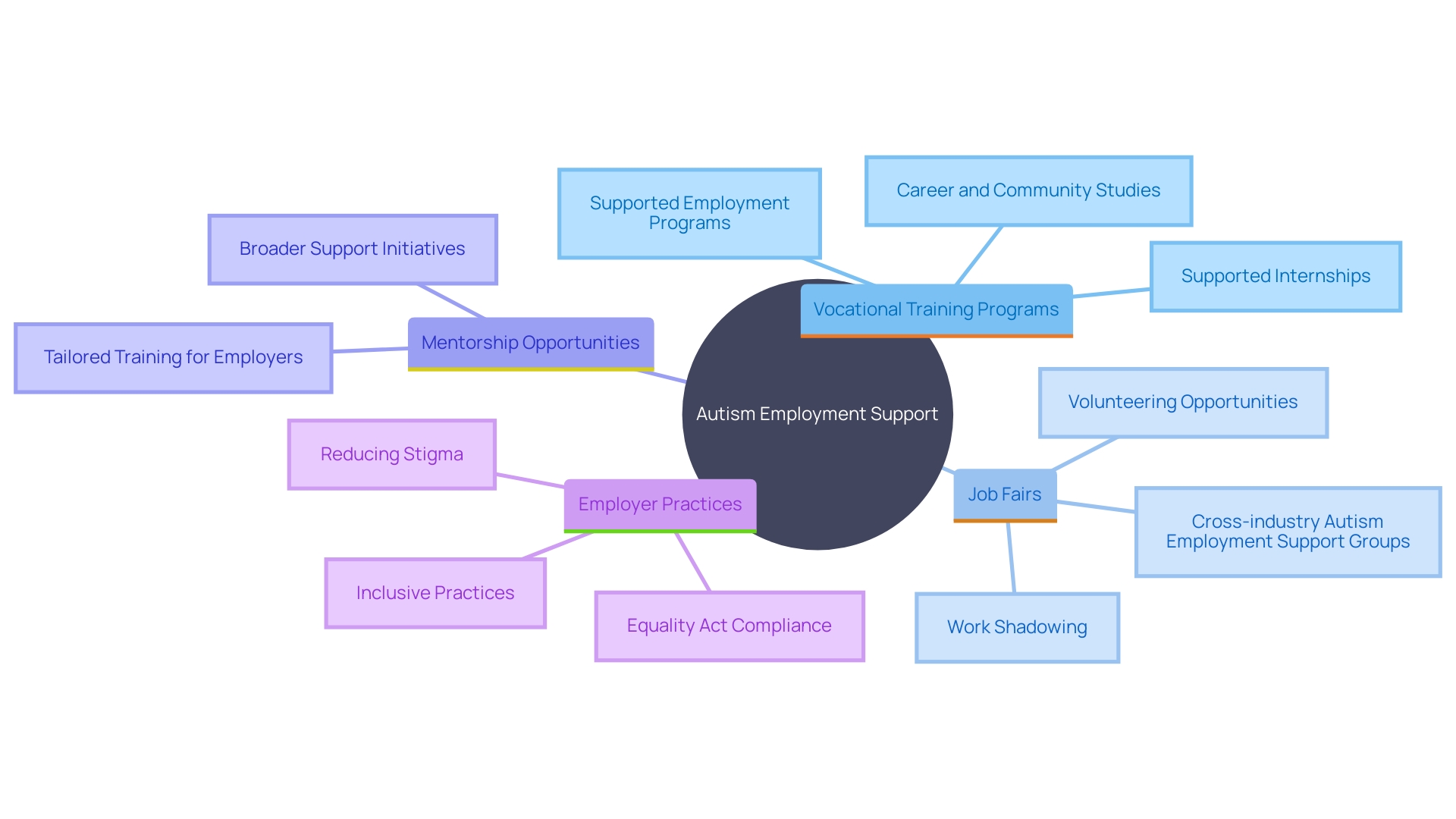
Comprehending the job market for individuals on the autism spectrum is crucial. 'Despite significant strides in autism awareness, only 21% of people with disabilities, including autism, were employed in 2022.'. This statistic emphasizes the ongoing disparity in the employment sector even though many people on the spectrum have valuable abilities and a strong motivation to work. Exploring various career paths that align with their unique strengths is imperative, as well as identifying supportive employers who prioritize inclusivity.
Resources such as vocational training programs, job fairs specifically for neurodiverse people, and organizations dedicated to connecting adults on the spectrum with meaningful employment can offer essential support. For instance, promoting supported internships can help young individuals on the spectrum gain work experience and develop necessary skills. Mentorship programs also play a vital role, providing guidance and encouragement as people navigate their career journeys.
Keith Wargo, President & CEO of Autism Speaks, emphasizes that “small, but meaningful steps taken by employers can make a significant difference.” This includes ensuring that the design of employment support programs meets the varied needs of individuals on the spectrum, offering opportunities for volunteering and work shadowing to build their confidence and knowledge. By fostering an inclusive workplace, companies can not only tap into a diverse talent pool but also drive economic growth and enhance overall productivity.
Social Skills and Relationships
Developing social abilities and nurturing relationships can be especially difficult for autistic adults. Resources that concentrate on social abilities training, workshops, and peer support groups can be advantageous. These programs often provide structured environments where individuals can practice communication, understand social cues, and develop interpersonal skills. Building a nurturing community where individuals on the spectrum can exchange experiences and gain knowledge from each other can also improve social growth and assist in forming enduring friendships. Grants in this area should support individuals on the spectrum to make connections, build relationships, and establish friendships, addressing the common issues of disconnection and isolation. Innovative research shows that developmental interventions improve social communication, which is vital for building these relationships. For instance, a study conducted by the University of Virginia showed that many nonverbal individuals on the spectrum have reading and writing abilities, indicating that written communication could create new social and job opportunities. Additionally, programs like those at The College of New Jersey's Career and Community Studies serve students with autism and other disabilities, providing an inclusive environment to develop social skills. Overall, these efforts are crucial in supporting the mental health and well-being of autistic individuals, helping them lead fulfilling lives.
Legal Rights and Advocacy
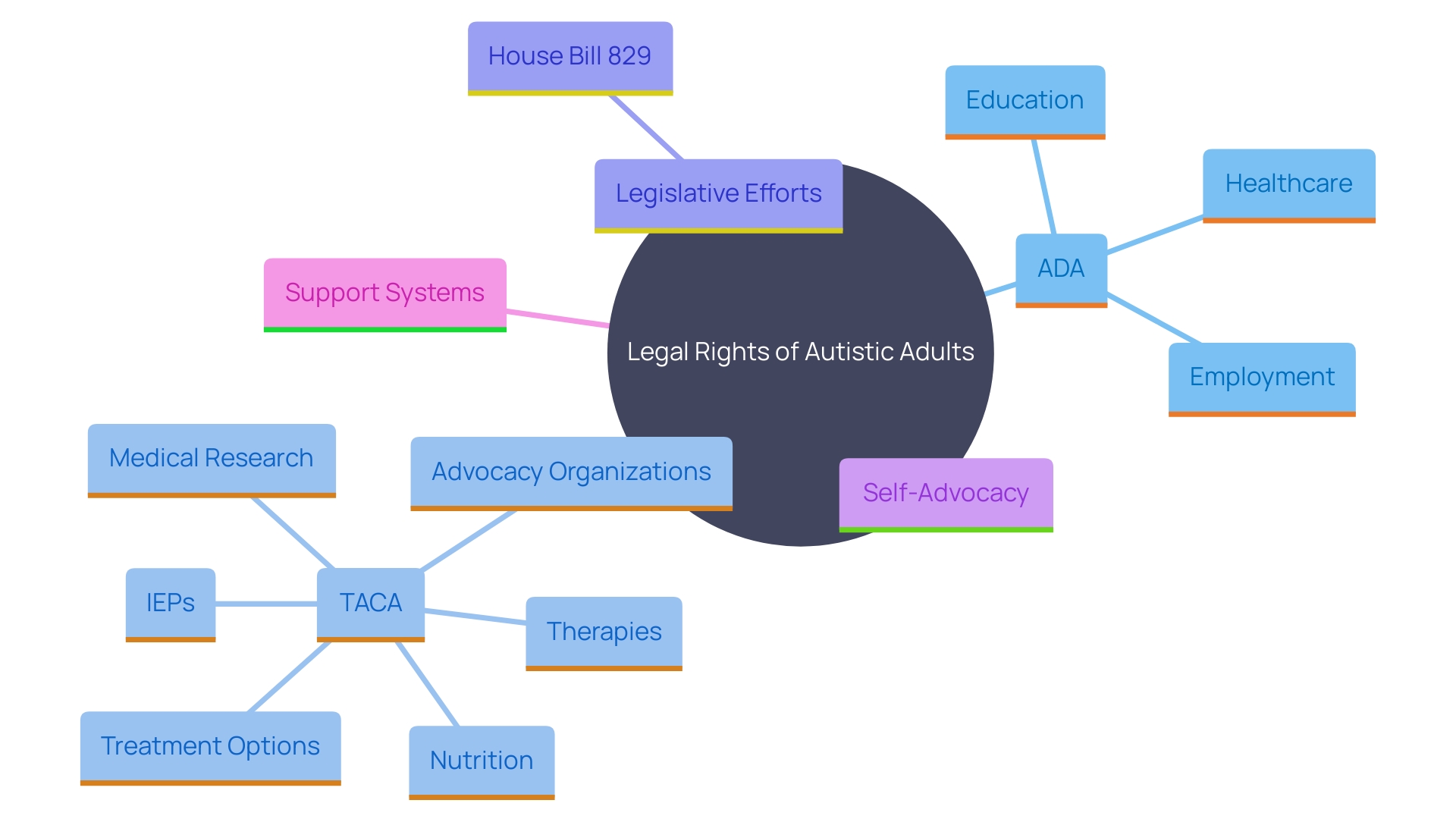
Autistic adults possess specific legal rights that safeguard them in various aspects of life, including employment, education, and healthcare. Understanding these rights is crucial for effective self-advocacy. The Americans with Disabilities Act (ADA), one of the most significant laws in the U.S., ensures equal opportunities and accessibility for people with disabilities. This landmark legislation has paved the way for increased inclusivity, from job sites to public spaces, highlighting the importance of embedding values like equity, access, and inclusion into policymaking.
Organizations focused on advocacy efforts provide valuable information about these laws and offer resources to assist people with autism in navigating legal systems. For example, the Autism Community in Action (TACA) shares general information about medical research, treatment options, therapies, and nutrition, enabling people to make informed choices. Furthermore, recent legislative initiatives, like House Bill 829, seek to require autism-focused training for law enforcement personnel, minimizing adverse interactions and promoting a safer environment for individuals on the spectrum.
Case studies highlight the ongoing challenges and successes within the community of individuals on the spectrum. 'Sarah Selvaggi Hernandez, an occupational therapist who has a developmental condition and is deaf, recently won a municipal discrimination lawsuit, setting a new precedent for disability rights and representation in government.'. Her victory underscores the importance of persistent self-advocacy and the need for reasonable accommodations under the ADA. Furthermore, Cody Clark, a self-advocate for those on the spectrum and entrepreneur, highlights the potential of people with varied abilities to succeed in inclusive work settings.
Despite these advancements, many individuals on the autism spectrum face significant barriers in the job market. Research has indicated that individuals on the spectrum are frequently underemployed, often holding positions that do not match their capabilities. Addressing this issue requires promoting cross-industry autism employment support groups, supported internships, and tailored job training programs. These initiatives can assist individuals on the spectrum in enhancing their knowledge, abilities, and self-assurance, ultimately promoting autonomy and professional growth.
By comprehending their legal entitlements and utilizing helpful resources, individuals on the spectrum can advocate for themselves more effectively, ensuring they obtain the adjustments and chances they deserve.
Daily Living Skills and Independence
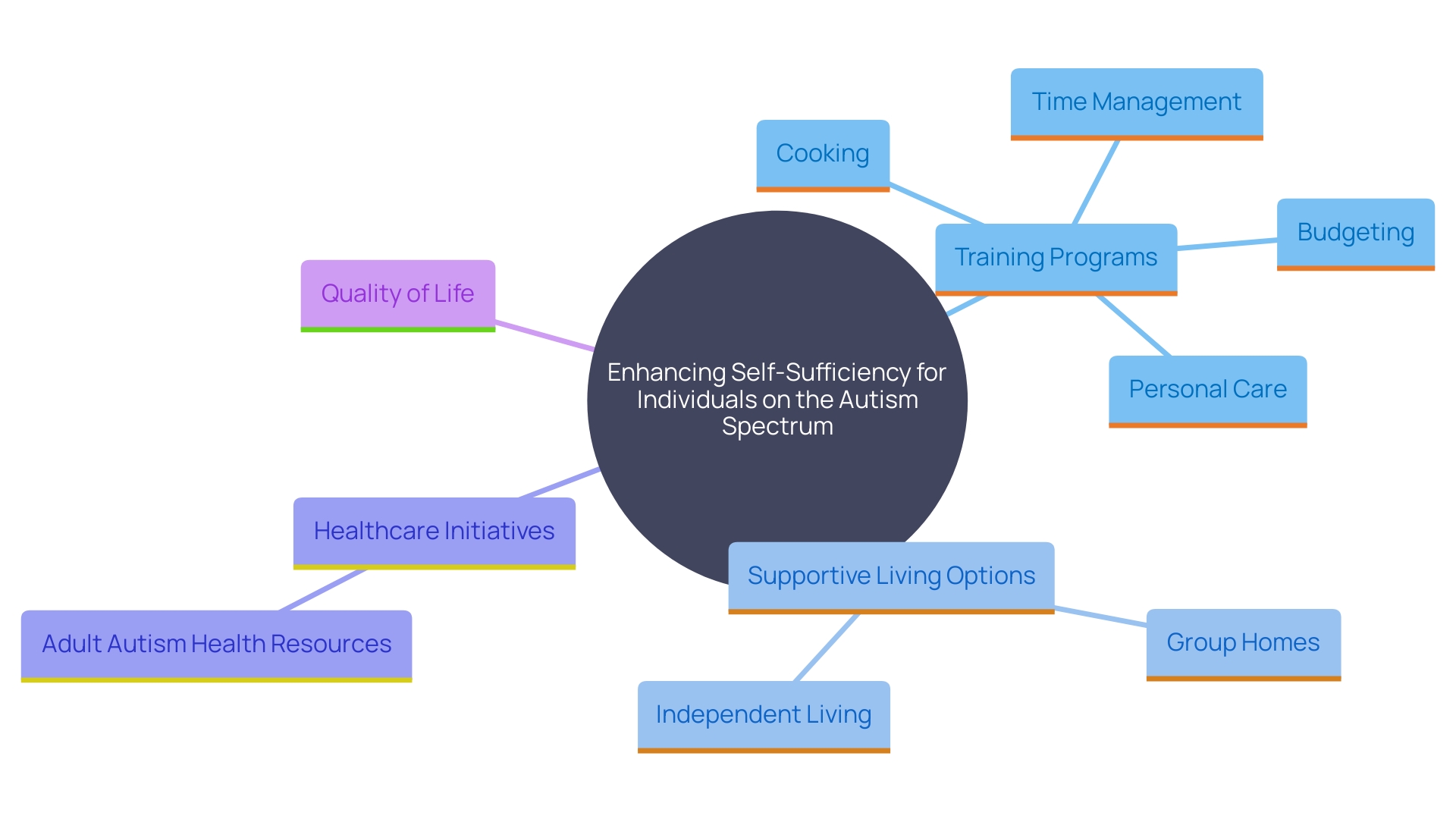
Cultivating everyday capabilities is essential for promoting self-sufficiency among individuals on the autism spectrum. Programs offering training in budgeting, cooking, personal care, and time management can significantly enhance their quality of life. According to the Autism Community in Action (TACA), tailored resources can reduce challenging behaviors and promote self-sufficiency through hands-on activities and real-world practice. It is estimated that those with high support needs encompass up to 48% of the spectrum, highlighting the importance of these programs.
Supportive living arrangements, such as group homes or supported independent living programs, provide additional assistance while promoting personal growth. The College of New Jersey's Career and Community Studies program is an example, serving students with autism and other disabilities, including those with intellectual disabilities. By creating environments that encourage independence and build essential skills, these programs help individuals on the spectrum manage their daily routines effectively.
'Additionally, the Adult Autism Health Resources initiative by Harvard Medical School, supported by the Nancy Lurie Marks Family Foundation, highlights the necessity for quality medical care for adults on the spectrum, recognizing that they need the same level of healthcare as neurotypical people. This initiative aims to educate clinicians, caregivers, and self-advocates, ensuring that autistic individuals receive the support they need to thrive.
Conclusion
Navigating adulthood with autism encompasses a multifaceted approach that addresses employment, social skills, legal rights, and daily living. The employment landscape reveals a stark underrepresentation of autistic individuals in the workforce, emphasizing the urgent need for inclusive practices that recognize their unique talents. By leveraging resources such as vocational training and mentorship programs, autistic adults can find meaningful career opportunities that align with their skills, ultimately contributing to a more diverse and productive workforce.
Social skills and relationship-building are essential for the well-being of autistic adults. Structured training and supportive communities can foster connections, combat isolation, and enhance interpersonal skills. Innovative interventions, such as those focusing on written communication, can further expand social and employment opportunities, highlighting the importance of inclusive programs that nurture social development.
Understanding legal rights is crucial for empowering autistic individuals to advocate for themselves effectively. The Americans with Disabilities Act (ADA) provides a foundation for equitable treatment, yet many still face barriers in employment and other areas. Advocacy organizations play a critical role in disseminating information and resources, enabling autistic adults to navigate legal systems and secure the accommodations they need.
Lastly, developing daily living skills is vital for promoting independence and improving quality of life. Tailored training programs and supportive living arrangements can equip autistic adults with essential skills, fostering self-sufficiency and personal growth. By prioritizing these elements, communities can create environments that empower autistic individuals to lead fulfilling lives, ultimately benefiting society as a whole.
Frequently Asked Questions
What is the current employment situation for individuals on the autism spectrum?
As of 2022, only 21% of people with disabilities, including those on the autism spectrum, were employed. This statistic highlights the ongoing disparity in the employment sector, despite many individuals having valuable skills and a strong desire to work.
Why is it important to explore various career paths for individuals on the autism spectrum?
Exploring different career paths helps individuals identify jobs that align with their unique strengths. It is essential to find supportive employers who prioritize inclusivity, which can lead to more meaningful employment opportunities.
What resources are available to support employment for individuals on the autism spectrum?
Resources include vocational training programs, job fairs specifically for neurodiverse individuals, and organizations dedicated to connecting adults on the spectrum with meaningful jobs. Supported internships and mentorship programs are also vital in helping individuals gain skills and confidence.
How can employers create more inclusive workplaces for individuals on the autism spectrum?
Employers can take small but meaningful steps, such as designing employment support programs that meet the varied needs of individuals on the spectrum, providing volunteering and work shadowing opportunities, and fostering an inclusive culture that values diversity.
What role do social skills training and community support play for autistic adults?
Social skills training programs, workshops, and peer support groups help individuals practice communication, understand social cues, and develop interpersonal skills. Building a nurturing community enhances social growth and helps form lasting friendships.
What legal rights do autistic adults have regarding employment and education?
Autistic adults are protected under the Americans with Disabilities Act (ADA), which ensures equal opportunities and accessibility in various aspects of life, including employment, education, and healthcare. Understanding these rights is crucial for effective self-advocacy.
How can individuals on the autism spectrum advocate for themselves effectively?
By understanding their legal rights and utilizing available resources, such as advocacy organizations, individuals can better navigate legal systems and ensure they receive necessary accommodations and opportunities.
What are some challenges autistic individuals face in the job market?
Many individuals on the autism spectrum experience underemployment, often in positions that do not match their skills or capabilities. This highlights the need for tailored job training programs and autism employment support groups.
What types of everyday skills training can benefit individuals on the autism spectrum?
Training in budgeting, cooking, personal care, and time management can significantly enhance quality of life and promote self-sufficiency among individuals on the spectrum. These programs help manage daily routines effectively.
What initiatives exist to ensure quality healthcare for autistic adults?
Initiatives like the Adult Autism Health Resources by Harvard Medical School aim to provide quality medical care for adults on the spectrum. They focus on educating clinicians and caregivers to ensure autistic individuals receive the necessary support for their health needs.
List of Sources
- Employment and Career Development
- gov.uk (https://gov.uk/government/publications/the-buckland-review-of-autism-employment-report-and-recommendations/the-buckland-review-of-autism-employment-report-and-recommendations)
- journals.sagepub.com (https://journals.sagepub.com/doi/10.1177/13623613241236110)
- nextforautism.org (https://nextforautism.org/neuroinclusive-workplace-panel-2024)
- autismspeaks.org (https://autismspeaks.org/advocacy-news/autism-speaks-ceo-testifies-congress-pathways-employment-individuals-autism-and-other)
- gov.uk (https://gov.uk/government/publications/the-buckland-review-of-autism-employment-report-and-recommendations/the-buckland-review-of-autism-employment-report-and-recommendations)
- autismcollegeconnection.com (https://autismcollegeconnection.com/resources)
- Social Skills and Relationships
- fhautism.com (https://fhautism.com/about-our-autism-conferences/developing-talents-with-dr-temple-grandin-march-15-2024)
- fhautism.com (https://fhautism.com/shop/developing-talents-careers-for-individuals-with-autism)
- nextforautism.org (https://nextforautism.org/our-work/grants-and-guidelines/grant-guidelines-2024-grant-cycle)
- nimh.nih.gov (https://nimh.nih.gov/news/events/2024/disability-equity-mental-health-neurodevelopmental-conditions)
- news.harvard.edu (https://news.harvard.edu/gazette/story/newsplus/harvard-medical-school-launches-adult-autism-health-resources-initiative)
- neurosciencenews.com (https://neurosciencenews.com/literacy-nonverbal-asd-25717)
- onlinelibrary.wiley.com (https://onlinelibrary.wiley.com/doi/10.1002/aur.3105)
- bmj.com (https://bmj.com/content/383/bmj-2023-076733?utm_campaign=usage&utm_content=tbmj_sprout&utm_id=BMJ005&utm_medium=organic&utm_source=twitter%7C)
- autismcollegeconnection.com (https://autismcollegeconnection.com/resources)
- Legal Rights and Advocacy
- tacanow.org (https://tacanow.org/monthly-learning-series-education)
- aals.org (https://aals.org/about/publications/newsletters/2024-summer/spotlight-on-sections-law-and-mental-disability)
- perspectivesblog.sagepub.com (https://perspectivesblog.sagepub.com/blog/research/equity-access-and-inclusion-adas-promise-30-years-in-the-making?utm_source=twitter&utm_medium=SAGE_social&utm_content=sagejournals&utm_term=439efe35-6fc0-4940-baba-aa8224994194&utm_campaign=auth_awa_awab_dps_jan2024)
- disabilityinsider.com (https://disabilityinsider.com/2023/12/19/law/florida-bill-proposes-mandatory-autism-training-for-law-enforcement)
- disabilityscoop.com (https://disabilityscoop.com/2024/02/06/one-of-the-countrys-first-elected-officials-with-autism-wins-discrimination-case/30733)
- onlinelibrary.wiley.com (https://onlinelibrary.wiley.com/doi/10.1002/aur.3105)
- journals.sagepub.com (https://journals.sagepub.com/doi/10.1177/13623613241236110)
- gov.uk (https://gov.uk/government/publications/the-buckland-review-of-autism-employment-report-and-recommendations/the-buckland-review-of-autism-employment-report-and-recommendations)
- autismspeaks.org (https://autismspeaks.org/advocacy-news/autism-speaks-ceo-testifies-congress-pathways-employment-individuals-autism-and-other)
- tacanow.org (https://tacanow.org/monthly-learning-series-education)
- ada.gov (https://ada.gov/topics/title-ii)
- Daily Living Skills and Independence
- news.harvard.edu (https://news.harvard.edu/gazette/story/newsplus/harvard-medical-school-launches-adult-autism-health-resources-initiative)
- nextforautism.org (https://nextforautism.org/our-work/grants-and-guidelines/grant-guidelines-2024-grant-cycle)
- reporter.nih.gov (https://reporter.nih.gov/project-details/10996217)
- tacanow.org (https://tacanow.org/monthly-learning-series-education)
- autismspeaks.org (https://autismspeaks.org/advocacy-news/advocating-those-severe-intense-and-challenging-behaviors)
- autismcollegeconnection.com (https://autismcollegeconnection.com/resources)
- frontiersin.org (https://frontiersin.org/articles/10.3389/fpubh.2023.1309154/full)
- onlinelibrary.wiley.com (https://onlinelibrary.wiley.com/doi/abs/10.1111/jppi.12478)


