

Introduction
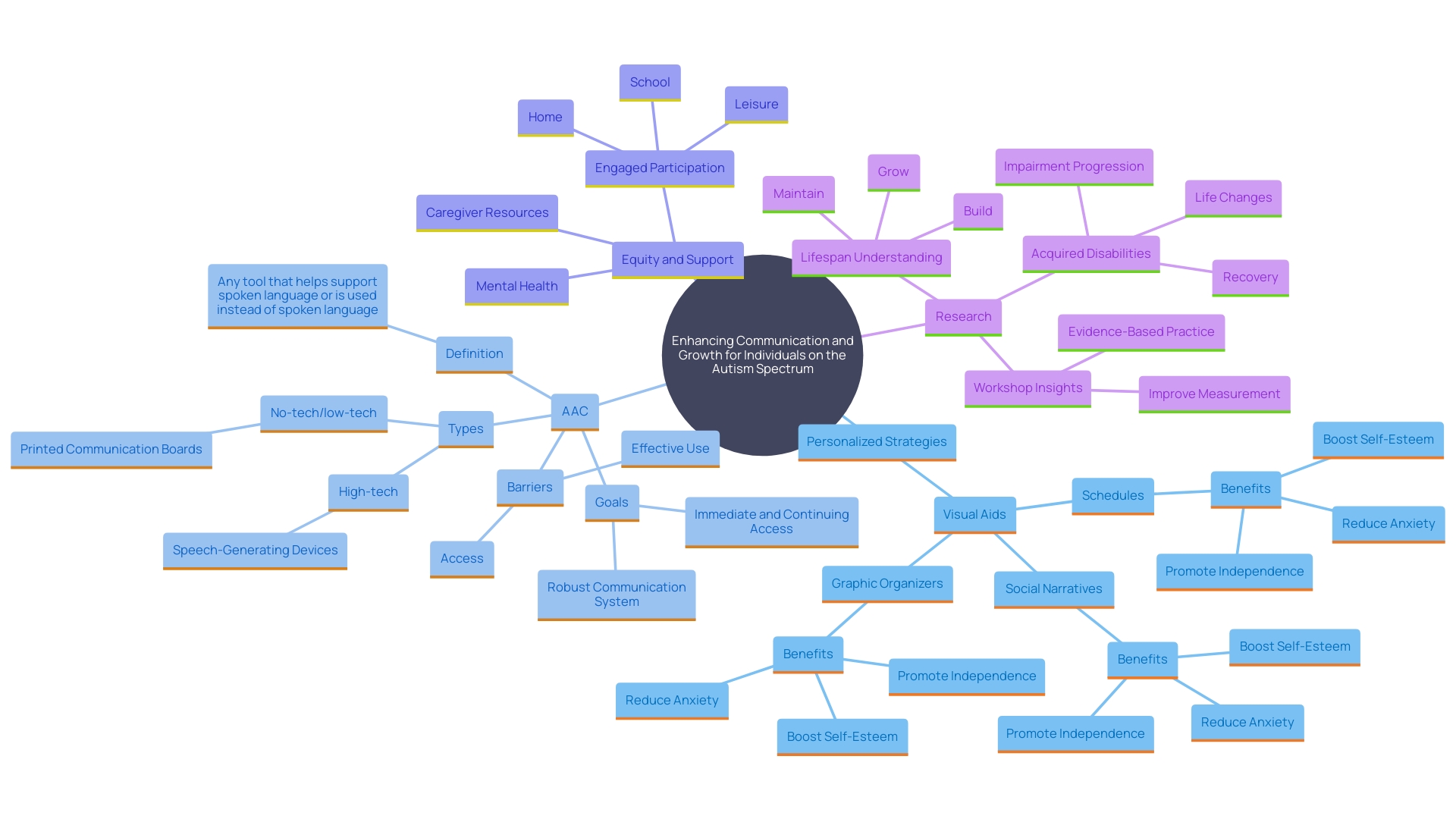
Early intervention is essential for children on the autism spectrum, as it can significantly improve communication skills and overall development. Personalized strategies that cater to each child's unique needs are key to this process. Visual supports, such as schedules, social stories, and graphic organizers, can be particularly effective.
These tools help convey information in a clear and accessible manner, making it easier for children to understand and follow daily routines.
By tailoring visual supports to individual learning styles, caregivers can create structured environments that promote independence and reduce anxiety. This proactive approach not only enhances communication but also boosts self-esteem and social engagement, laying a strong foundation for future interactions. As Dr. David Offord noted, ensuring that children with disabilities have well-supported participation in their daily lives is crucial for their mental health and overall well-being.
By recognizing their unmet needs and the assets they bring to their communities, caregivers can help reduce chronic stress and foster a more inclusive society.
The Importance of Early Intervention and Personalized Strategies
Prompt action is essential for individuals on the autism spectrum, as it can significantly enhance communication abilities and overall growth. Personalized strategies that cater to each individual’s unique needs are key to this process. Visual aids, such as schedules, social narratives, and graphic organizers, can be particularly effective. These tools help convey information in a clear and accessible manner, making it easier for children to understand and follow daily routines.
By tailoring visual supports to individual learning styles, caregivers can create structured environments that promote independence and reduce anxiety. This proactive approach not only enhances communication but also boosts self-esteem and social engagement, laying a strong foundation for future interactions. As Dr. David Offord noted, ensuring that individuals with disabilities have well-supported participation in their daily lives is crucial for their mental health and overall well-being. By recognizing their unmet needs and the assets they bring to their communities, caregivers can help reduce chronic stress and foster a more inclusive society.
Case Study Overview: Implementing Visual Supports
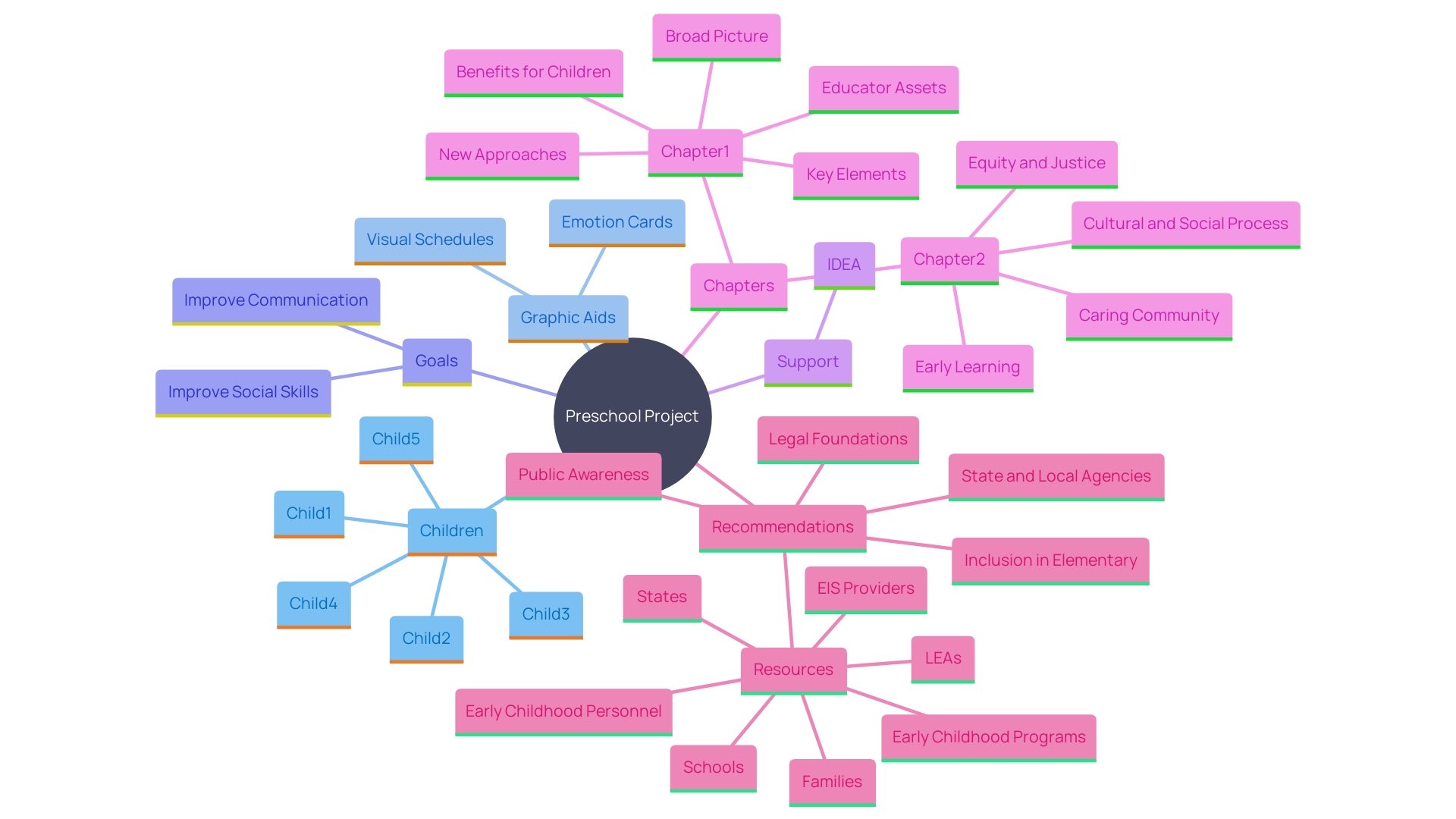
A preschool in California embarked on a groundbreaking project to incorporate graphic aids into its curriculum for youngsters with autism. The project focused on five young individuals, aged 3 to 5, aiming to enhance their communication and social skills. Over six months, the preschool introduced visual schedules, emotion cards, and social stories to facilitate understanding and interaction. Regular evaluations were carried out to gauge progress and modify strategies, ensuring a customized approach for each individual. This initiative reinforces the importance of inclusive early years programs, supported by the Individuals with Disabilities Education Act (IDEA), which advocates for high-quality individualized programming and inclusion of individuals with disabilities from the earliest ages.
Methods of Visual Support: Pictures, Symbols, and Technology
Different techniques of visual assistance were utilized throughout the case study to improve interaction and involvement for youngsters on the autism spectrum. Visual timetables offered a clear routine, assisting youngsters in anticipating upcoming activities and lowering anxiety. Symbolic expression boards, a type of Augmentative and Alternative Communication (AAC), allowed young individuals to convey their needs and emotions effectively, promoting independence and emotional control. Furthermore, technology, including tablet applications with interactive symbols, was incorporated to sustain high engagement levels and provide various means of interaction.
Dr. David (Dan) R. Offord, a renowned child psychiatrist, emphasized the importance of equitable participation for children with disabilities, stating, “I do not mind if my children are in a race as long as the race is fair.” This principle guided the integration of these visual supports, ensuring that children with autism could participate meaningfully in their daily activities.
The introduction of symbol-based software solutions like TD Snap further illustrated the potential of technology in facilitating interactions. TD Snap is a flexible app designed to aid individuals with speech and language disabilities, including autism. It promotes the advancement of interaction, language, and literacy skills through touch, eye gaze, and scanning, making it accessible and user-friendly.
These visual aids not only addressed the needs of the youngsters but also emphasized their strengths, fostering a more inclusive and supportive atmosphere. The case study demonstrated that with the right tools and resources, youngsters with autism could engage more fully in their educational and social environments, aligning with the broader goal of ensuring every individual's fair chance in the 'race' of life.
Case Study Findings: Improvements in Communication Skills
The outcomes of the case study were encouraging. Children showed significant advancements in both verbal and non-verbal communication abilities. Parents observed a higher frequency of their offspring initiating conversations and effectively expressing their needs. Furthermore, the use of visual supports was noted to facilitate smoother transitions during daily routines, significantly reducing anxiety and preventing meltdowns. This aligns with the perspective of Dr. David (Dan) R. Offord, who emphasized the importance of well-supported involvement of young individuals with disabilities in various life domains as a critical factor for mental health and equity. By recognizing the unique needs of autistic children and ensuring that caregivers have the necessary resources, we can create a supportive environment conducive to their healthy development and overall well-being.
Strategies for Effective Implementation of Visual Supports
To ensure the success of graphical aids, several strategies are crucial. Regular use of graphic supports during daily activities helps establish familiarity and strengthens learning. Training staff and parents on the effective use of these tools is essential, enabling everyone to maintain a unified approach. Regular feedback sessions with caregivers help refine techniques, ensuring that adaptations meet evolving needs. In a similar vein, the IACC focuses on improving coordination and communication across various federal agencies involved in autism research and services. This partnership seeks to improve the assistance framework for individuals on the autism spectrum, similar to how graphical aids are organized among caregivers. Additionally, the Proxy platform exemplifies the importance of bridging gaps between families and care providers, emphasizing the need for a supportive community and personalized care plans.
Challenges and Considerations in Using Visual Supports
The introduction of visual supports has shown promising results, yet certain hurdles have been noted. At first, some youngsters showed resistance to alterations in their routines, highlighting the significance of a gradual and patient approach. As Dr. David (Dan) R. Offord, a renowned youth psychiatrist, once remarked, “Growing up in Canada is like a race.”. I do not mind if my children are in a race as long as the race is fair.” This sentiment resonates with ensuring that every child, including those with autism, is given a fair chance to adjust to new strategies at their own pace.
Furthermore, ensuring that all staff members consistently apply these strategies required ongoing training and assistance. The Interagency Autism Coordinating Committee (IACC) also emphasizes the importance of coordinated efforts among various stakeholders, including educators, caregivers, and medical professionals, to effectively support autistic individuals. This collaborative approach is crucial to developing a unified strategy that aligns with each individual's unique needs and preferences.
Caregivers were encouraged to remain adaptable and observant of each individual’s specific reactions and preferences, fostering a more inclusive and supportive environment. By recognizing the individual challenges and strengths of each child, caregivers can better support their development and participation in daily activities, as highlighted by the efforts of the National Academies of Sciences, Engineering, and Medicine in promoting well-being and equitable opportunities for all children.
Conclusion
The importance of early intervention and personalized strategies for children on the autism spectrum cannot be overstated. Implementing visual supports such as schedules, emotion cards, and social stories has proven to enhance communication skills and foster independence. By tailoring these tools to meet each child's unique needs, caregivers can create structured environments that promote understanding and reduce anxiety.
This proactive approach not only boosts self-esteem but also lays a strong foundation for social engagement and future interactions.
The case study highlighted the transformative impact of integrating visual supports in educational settings, demonstrating significant improvements in communication abilities among children. Parents reported increased initiation of conversations and smoother transitions during daily routines. These advancements underscore the critical role that well-supported participation plays in the mental health and overall well-being of children with disabilities, reinforcing the necessity for inclusive practices in early childhood programs.
While challenges remain in the consistent implementation of visual supports, the strategies outlined provide a roadmap for success. Ongoing training and collaboration among caregivers, educators, and medical professionals are essential for creating a unified approach. By remaining flexible and responsive to each child's needs, a supportive environment can be fostered, ensuring that every child has a fair chance to thrive.
Ultimately, recognizing and addressing the unique strengths and challenges of children with autism is key to building a more inclusive society that values their contributions.
Frequently Asked Questions
Why is prompt action important for individuals on the autism spectrum?
Prompt action is crucial as it significantly enhances communication abilities and overall growth. Early intervention helps tailor personalized strategies to meet each individual's unique needs.
What types of visual aids are effective for individuals with autism?
Effective visual aids include schedules, social narratives, and graphic organizers. These tools convey information clearly, helping children understand and follow daily routines.
How do personalized strategies and visual supports benefit individuals on the autism spectrum?
Tailoring visual supports to individual learning styles creates structured environments that promote independence, reduce anxiety, enhance communication, and boost self-esteem and social engagement.
What was the focus of the preschool project in California regarding children with autism?
The project aimed to enhance communication and social skills for five children aged 3 to 5 by incorporating visual schedules, emotion cards, and social stories over six months.
What role do visual timetables play in supporting children with autism?
Visual timetables provide a clear routine, helping children anticipate upcoming activities and lowering anxiety levels.
What technology was introduced to support interaction for children with autism?
Technology, including tablet applications with interactive symbols, was introduced to maintain high engagement levels and offer various means of interaction.
What were the outcomes of the preschool project's case study?
The case study showed significant improvements in both verbal and non-verbal communication abilities, with children initiating conversations more frequently and experiencing smoother transitions during daily routines.
What strategies are essential for the successful implementation of graphic aids?
Key strategies include regular use of graphic supports, training staff and parents, and conducting regular feedback sessions to refine techniques.
What challenges were encountered while implementing visual supports?
Some children initially resisted changes in their routines, indicating the need for a gradual and patient approach to adjustments.
How can caregivers ensure a supportive environment for children with autism?
Caregivers should remain adaptable, observant of individual reactions, and consider each child's specific challenges and strengths to foster an inclusive environment.
List of Sources
- The Importance of Early Intervention and Personalized Strategies
- frontiersin.org (https://frontiersin.org/articles/10.3389/fpubh.2023.1309154/full)
- iacc.hhs.gov (https://iacc.hhs.gov/news/2023/summary-of-advances-release-2022.shtml)
- albany.edu (https://albany.edu/news-center/news/2024-noteworthy-research-grants-awards-and-publications-7)
- sites.ed.gov (https://sites.ed.gov/idea/idea-files/policy-statement-inclusion-of-children-with-disabilities-in-early-childhood-programs?utm_content=&utm_medium=email&utm_name=&utm_source=govdelivery&utm_term=)
- autisticadvocacy.org (https://autisticadvocacy.org/2024/01/comments-for-the-january-24th-iacc-meeting)
- grants.nih.gov (https://grants.nih.gov/grants/guide/notice-files/NOT-DC-24-041.html?utm_source=dlvr.it&utm_medium=twitter)
- frontiersin.org (https://frontiersin.org/articles/10.3389/fpubh.2023.1309154/full)
- Case Study Overview: Implementing Visual Supports
- mailchi.mp (https://mailchi.mp/992ff2efaba8/news-and-events-from-the-faculty-of-information-oct2022edition-13776096?e=[UNIQID])
- sites.ed.gov (https://sites.ed.gov/idea/idea-files/policy-statement-inclusion-of-children-with-disabilities-in-early-childhood-programs?utm_content=&utm_medium=email&utm_name=&utm_source=govdelivery&utm_term=)
- grants.nih.gov (https://grants.nih.gov/grants/guide/notice-files/NOT-DC-24-041.html?utm_source=dlvr.it&utm_medium=twitter)
- frontiersin.org (https://frontiersin.org/articles/10.3389/fpubh.2023.1309154/full)
- events.nationalacademies.org (https://events.nationalacademies.org/41983_03-2024_independent-analysis-of-the-comprehensive-autism-care-demonstration-program?utm_source=twitter&utm_medium=social&utm_term=nasem_dbasse&utm_content=1c79710a-4c4f-4549-bb9e-033d511e338e&utm_campaign=hootsuite)
- elearningindustry.com (https://elearningindustry.com/autism-awareness-month-supporting-strengths)
- whenwomeninspire.com (https://whenwomeninspire.com/2024/03/21/aba-therapy-autism-support)
- nap.nationalacademies.org (https://nap.nationalacademies.org/resource/26853/interactive?utm_source=twitter&utm_medium=social&utm_term=nasem_dbasse&utm_content=31ecbf04-768e-44ec-a76c-3a5381792308&utm_campaign=hootsuite)
- sites.ed.gov (https://sites.ed.gov/idea/idea-files/policy-statement-inclusion-of-children-with-disabilities-in-early-childhood-programs?utm_content=&utm_medium=email&utm_name=&utm_source=govdelivery&utm_term=)
- Methods of Visual Support: Pictures, Symbols, and Technology
- frontiersin.org (https://frontiersin.org/articles/10.3389/fpubh.2023.1309154/full)
- museum.msu.edu (https://museum.msu.edu/case-study/enhancing-museum-accessibility)
- multibriefs.com (https://multibriefs.com/briefs/NABE)
- mytobiidynavox.com (https://mytobiidynavox.com/store/snap)
- grants.nih.gov (https://grants.nih.gov/grants/guide/notice-files/NOT-DC-24-041.html?utm_source=dlvr.it&utm_medium=twitter)
- Case Study Findings: Improvements in Communication Skills
- arxiv.org (https://arxiv.org/abs/2407.18874)
- frontiersin.org (https://frontiersin.org/articles/10.3389/fpubh.2023.1309154/full)
- grants.nih.gov (https://grants.nih.gov/grants/guide/notice-files/NOT-DC-24-041.html?utm_source=dlvr.it&utm_medium=twitter)
- albany.edu (https://albany.edu/news-center/news/2024-noteworthy-research-grants-awards-and-publications-7)
- scimex.org (https://scimex.org/newsfeed/ai-eye-test-for-autism-in-kids-may-be-able-to-tell-how-severe-it-is)
- iacc.hhs.gov (https://iacc.hhs.gov/news/2023/summary-of-advances-release-2022.shtml)
- frontiersin.org (https://frontiersin.org/articles/10.3389/fpubh.2023.1309154/full)
- Strategies for Effective Implementation of Visual Supports
- fightingblindness.org (https://fightingblindness.org/resources/ny-researcher-s-app-transforms-commuting-for-the-visually-impaired-250)
- makethingsaccessible.com (https://makethingsaccessible.com/aaa/stories/aleks)
- frontiersin.org (https://frontiersin.org/articles/10.3389/fpubh.2023.1309154/full)
- formative.jmir.org (https://formative.jmir.org/2024/1/e56043)
- elearningindustry.com (https://elearningindustry.com/autism-awareness-month-supporting-strengths)
- accessibility.com (https://accessibility.com/blog/sensory-friendly-design-creating-digital-spaces-that-support-autistic-users?utm_campaign=AccessibilityPlus2023&utm_source=hs_email&utm_medium=email&utm_content=280083345)
- iacc.hhs.gov (https://iacc.hhs.gov/news/2023/summary-of-advances-release-2022.shtml)
- medcitynews.com (https://medcitynews.com/2024/01/startupdates-new-developments-from-healthcare-startups-88)
- grants.nih.gov (https://grants.nih.gov/grants/guide/notice-files/NOT-DC-24-041.html?utm_source=dlvr.it&utm_medium=twitter)
- Challenges and Considerations in Using Visual Supports
- nap.nationalacademies.org (https://nap.nationalacademies.org/catalog/27800/applied-behavior-analysis-within-the-department-of-defenses-comprehensive-autism-care-demonstration?utm_source=twitter&utm_medium=social&utm_term=nasem_dbasse&utm_content=d9be4f21-d431-47d4-bbcc-3232527c9d34&utm_campaign=hootsuite)
- frontiersin.org (https://frontiersin.org/articles/10.3389/fpubh.2023.1309154/full)
- accessibility.com (https://accessibility.com/blog/sensory-friendly-design-creating-digital-spaces-that-support-autistic-users?utm_campaign=AccessibilityPlus2023&utm_source=hs_email&utm_medium=email&utm_content=280083345)
- auntminnie.com (https://auntminnie.com/practice-management/article/15665183/ecr-10-steps-to-creating-quality-initiative-for-children-with-autism)
- iacc.hhs.gov (https://iacc.hhs.gov/news/2023/summary-of-advances-release-2022.shtml)
- albany.edu (https://albany.edu/news-center/news/2024-noteworthy-research-grants-awards-and-publications-7)
- gao.gov (https://gao.gov/products/gao-24-106843?utm_medium=social&utm_source=twitter&utm_campaign=usgao)


