

Introduction
Navigating the world of sensory processing in autism can feel like traversing uncharted territory for many parents and educators. Sensory processing issues are a prevalent component of autism, profoundly affecting how children interact with their surroundings. These challenges often present as heightened sensitivities to sounds, textures, lights, and other sensory stimuli, which can lead to significant distress and behavioral difficulties.
With autism estimated to impact 1 in 36 individuals according to the CDC, gaining a deep understanding of these sensory differences is pivotal in creating supportive environments that cater to the unique needs of each child. This article delves into the intricacies of sensory processing in autism, explores its impact on daily life and learning, and offers practical strategies for fostering sensory-friendly spaces. Through the lens of a compelling case study, it highlights the transformative power of tailored sensory interventions in enhancing the well-being and development of children on the autism spectrum.
Understanding Sensory Processing in Autism
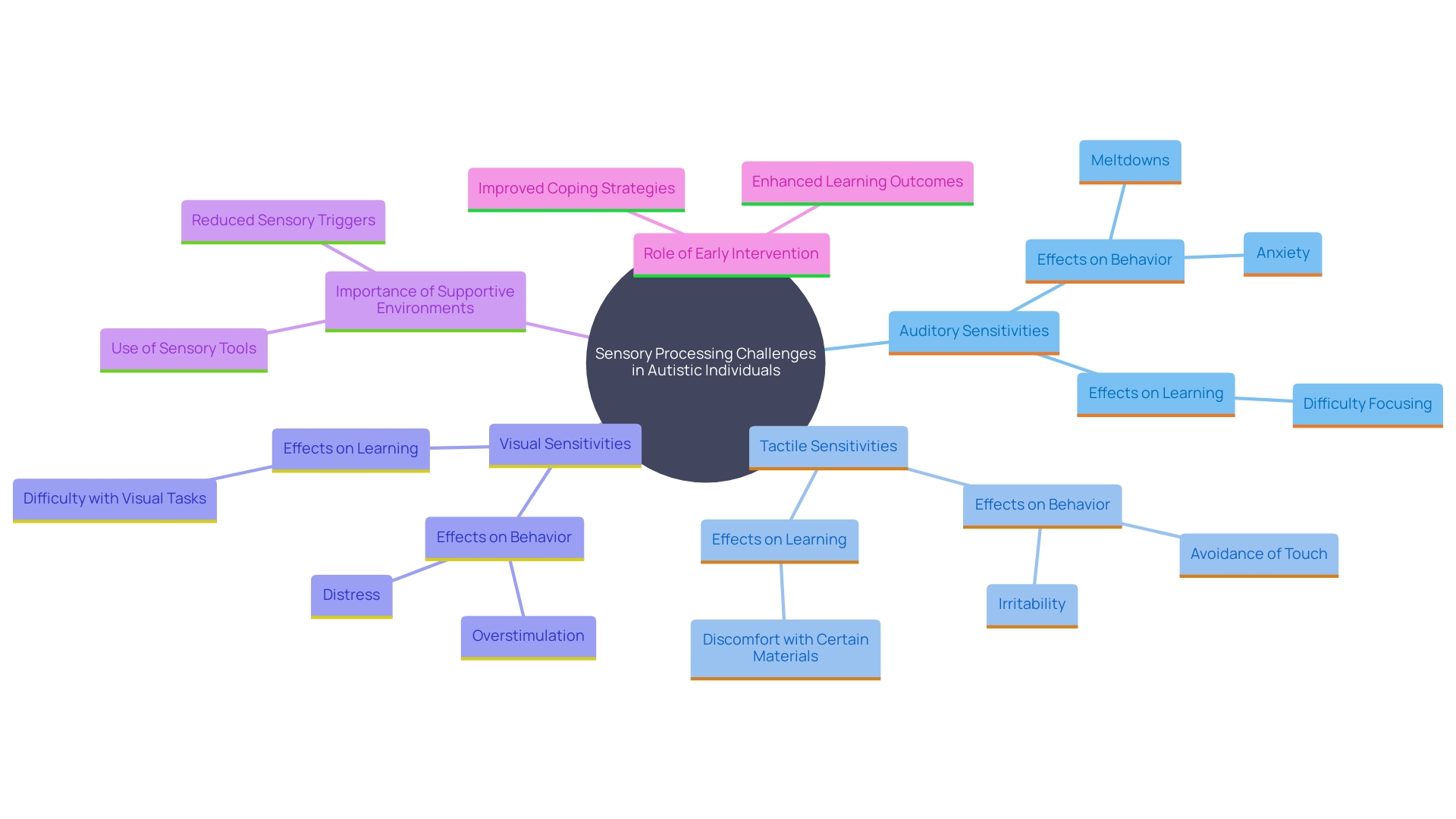
Sensory processing challenges are a frequent characteristic of this condition, significantly affecting how young individuals perceive and respond to their surroundings. These challenges often manifest as heightened sensitivity to auditory, tactile, visual, and other perceptual inputs. For numerous young individuals on the spectrum, these perceptual experiences can be extremely overpowering, resulting in considerable anguish and behavioral difficulties. As per the CDC, autism is projected to impact 1 in 36 people, and comprehending these perceptual variations is crucial for guardians and teachers.
Establishing nurturing settings designed for the distinct perceptual requirements of autistic youngsters is essential. Sensory processing issues may include extreme sensitivity or significantly lower sensitivity to stimuli such as sounds, textures, and lights. For instance, a young person might be a proprioceptive seeker, craving deep pressure or active movements like jumping, which helps them regulate sensory input and maintain a sense of well-being.
Research also emphasizes the significance of early action in enhancing results for youngsters with developmental disorders. Research has demonstrated that comprehending how young individuals with developmental disorders process sounds can inform strategies that improve language growth and daily activities. This knowledge is vital, especially considering that about 25% of people with autism have limited language abilities and high support needs.
To assist young individuals effectively, it’s important to acknowledge that processing difficulties can differ significantly. For instance, some young individuals may experience visual and auditory sensitivities that impact their daily lives and school experiences. By understanding and addressing these perceptual differences, parents and educators can help create environments that promote growth, learning, and well-being for autistic individuals.
Impact of Sensory Issues on Daily Life
Sensory perception challenges can significantly interfere with daily routines and activities for young individuals. They may find it challenging to engage in everyday tasks, such as getting dressed, due to heightened sensitivity to certain fabrics. Social settings with varying noise levels can also be overwhelming. These perceptual challenges often result in anxiety, meltdowns, or withdrawal, profoundly affecting the individual's well-being and family dynamics.
Studies show that approximately 70% of youngsters with autism encounter perceptual integration difficulties. Children exposed to TVs and DVDs in their first three years of life are more likely to develop atypical processing of sensations. Such difficulties can significantly affect their quality of life and development.
Parents frequently navigate these challenges, seeking solutions to make their offspring feel more comfortable and secure. Comprehending and responding to these perceptual requirements is essential for promoting a nurturing atmosphere for individuals with autism.
Classroom Challenges: Sensory Processing and Learning
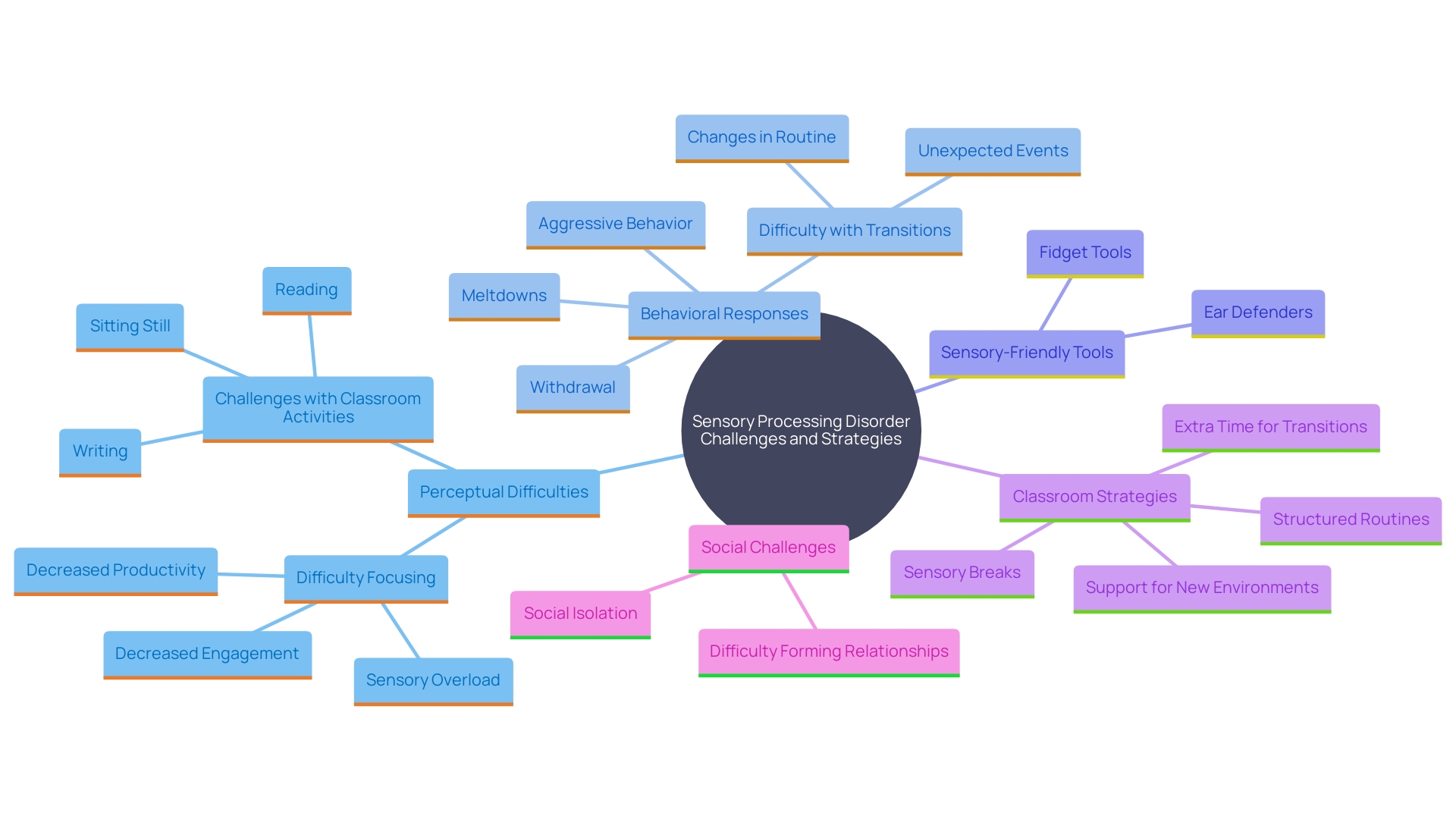
In educational environments, perceptual difficulties can greatly affect a child's capacity to concentrate and acquire knowledge efficiently. 'Learners with processing disorder (SPD) may experience hypersensitivity or hyposensitivity to stimuli such as bright lights, loud noises, or crowded spaces, which can affect their attention and participation.'. For some students, this overwhelming experience can result in behavioral responses like acting out, while others may withdraw.
Comprehending these perceptual challenges is vital for educators to establish a supportive classroom environment. The inclusion of tools and strategies that are friendly to the senses, such as bags with visual cue cards and headphones to dampen loud sounds, can assist in managing overwhelming stimuli. Moreover, incorporating breaks that engage the senses and including the five senses in classroom activities can reduce anxiety and enhance concentration.
It's essential for educators to acknowledge and respond to these perceptual needs to ensure all learners can succeed academically and socially. As noted by Dr. Pooky Knightsmith, while awareness of SPD is growing, many educators and parents still seek practical ways to support these students. By promoting a welcoming classroom that supports perceptual differences, we can establish a more favorable learning atmosphere for all students.
Strategies for Creating Sensory-Friendly Environments
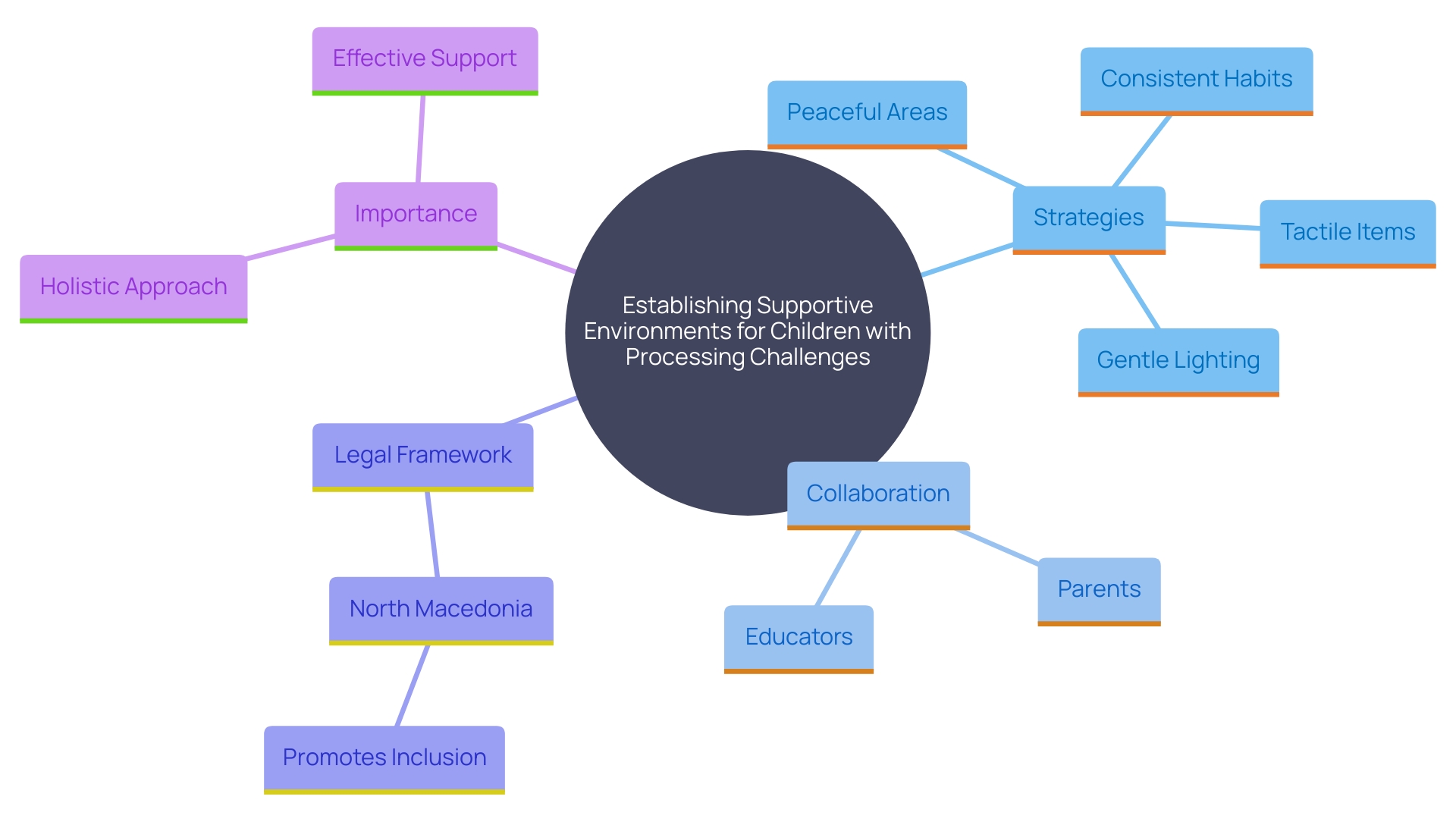
Establishing a space that accommodates various stimuli is essential in assisting young individuals with processing challenges. Basic alterations can create a considerable impact, such as offering peaceful areas for pauses, utilizing gentle illumination, or including tactile items like fidget toys. For example, spaces equipped with objects such as swings, tactile materials, and water bubble machines can provide a soothing environment for young individuals to manage their experiences.
Moreover, creating consistent habits can assist children in feeling more secure and lessen anxiety associated with unforeseen experiences. As per Alison Neal, an advanced practitioner in integration therapy, these changes can be applied both at home and in educational environments to tackle daily challenges efficiently.
Parents and educators can collaborate to design environments that acknowledge and accommodate sensory needs, fostering a sense of safety and inclusion. In North Macedonia, for example, classrooms are mandated by law to integrate autistic individuals with their neurotypical peers, highlighting the significance of establishing inclusive environments. Sensory variations, like hypersensitivity or hyposensitivity to stimuli, are frequently observed in individuals on the spectrum and can greatly affect their everyday experiences.
Studies from Drexel University show that approximately 70% of kids with developmental disorders face processing difficulties, highlighting the significance of nurturing surroundings. These environments, whether in homes, schools, or public spaces like museums, can empower children to feel understood and supported, enhancing their overall well-being and development.
Case Study: Addressing Sensory Needs in School Settings
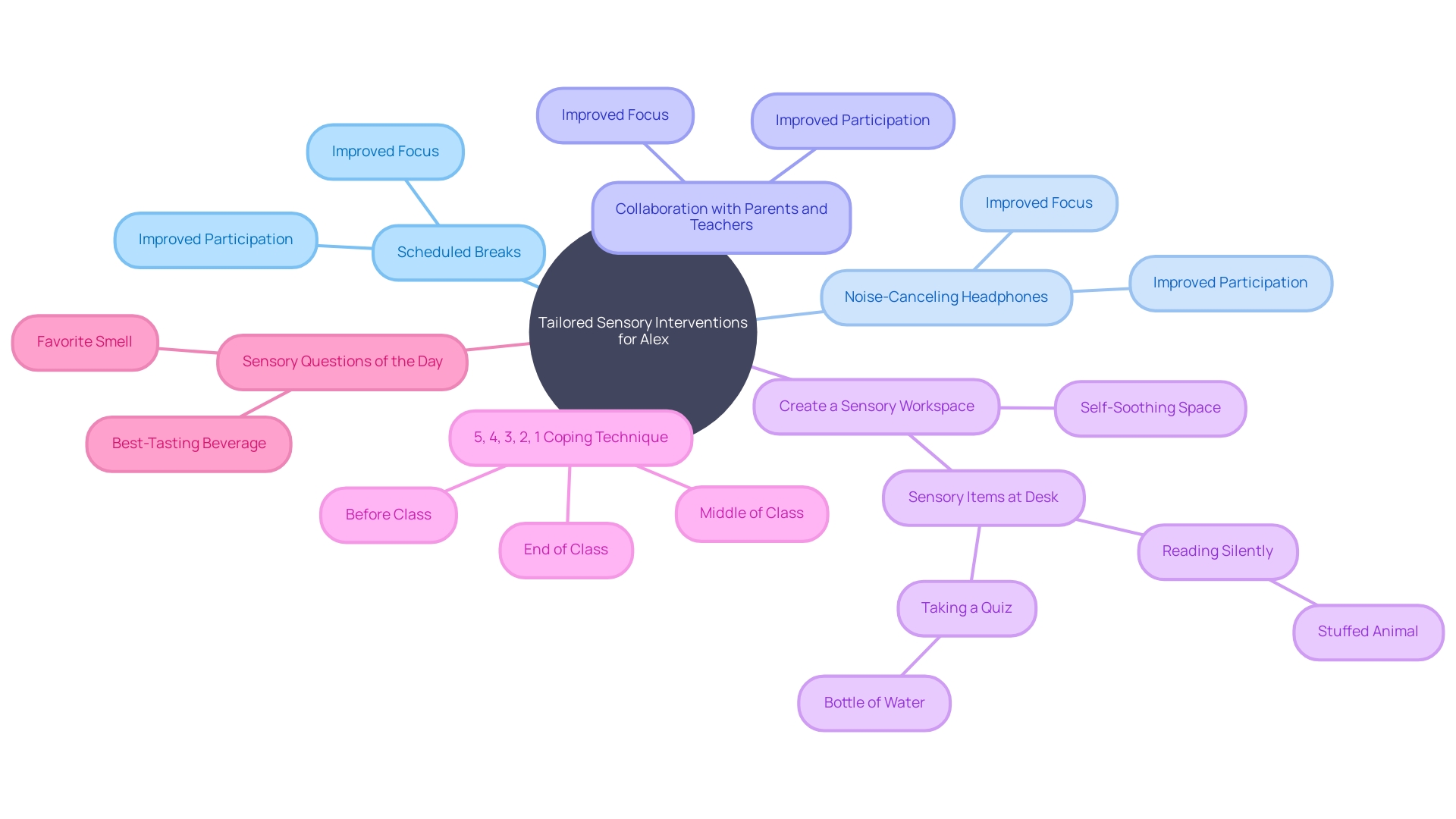
An engaging case study highlights the substantial effect of meeting the needs related to senses for a third-grade student with autism named Alex. Alex experienced severe sensitivity to noise, which hindered his ability to concentrate during lessons. By collaborating closely with Alex's parents, teachers implemented a tailored stimulation diet. This plan included scheduled breaks in a quiet room and the use of noise-canceling headphones during class. These interventions enabled Alex to better manage overload of stimuli, resulting in improved focus and active participation in classroom activities. This example underscores the critical importance of tailored sensory interventions in enhancing the educational experience for children on the autism spectrum.
Conclusion
Understanding and addressing sensory processing issues in children with autism is essential for fostering their development and well-being. These sensory challenges can significantly impact daily life, affecting everything from routine tasks to social interactions. Recognizing that sensory processing varies widely among individuals allows parents and educators to create tailored strategies that enhance comfort and security in various settings, including home and school.
The implications of sensory processing issues extend into educational environments, where they can disrupt learning and participation. By implementing sensory-friendly tools and practices, educators can facilitate a more inclusive atmosphere that accommodates the unique needs of each student. The example of Alex illustrates the transformative power of personalized sensory interventions, highlighting how targeted support can lead to improved focus and engagement in classroom activities.
Ultimately, creating sensory-friendly spaces and routines is a collaborative effort that requires the commitment of both parents and educators. By working together to understand and address the sensory needs of children with autism, a supportive and empowering environment can be established. This approach not only enhances the quality of life for these children but also reinforces their potential to thrive in both academic and social contexts.
Frequently Asked Questions
What are sensory processing challenges?
Sensory processing challenges refer to difficulties in how individuals perceive and respond to sensory stimuli, such as sounds, textures, and lights. These challenges can cause heightened sensitivity or reduced sensitivity to various inputs, significantly affecting daily activities and interactions.
How common are sensory processing challenges in individuals with autism?
Research indicates that approximately 70% of youngsters with autism experience sensory processing difficulties, impacting their quality of life and development.
What are the typical manifestations of sensory processing challenges?
These challenges can manifest as extreme sensitivity to certain sensory inputs (e.g., loud noises, certain fabrics) or as a craving for sensory input (e.g., jumping or seeking deep pressure). This can lead to anxiety, meltdowns, or withdrawal in social situations.
Why is it important to understand sensory processing challenges?
Understanding these challenges is crucial for parents and educators, as it enables them to create nurturing environments that cater to the unique sensory needs of individuals with autism, promoting their growth, learning, and overall well-being.
How can sensory processing challenges affect daily life?
Sensory processing issues can interfere with everyday tasks, such as getting dressed or participating in social settings. These challenges can lead to significant anxiety and behavioral difficulties, affecting the individual’s well-being and family dynamics.
What strategies can be implemented in educational settings to support students with sensory processing challenges?
Educators can create supportive environments by using sensory-friendly tools, such as visual cue cards and noise-canceling headphones, and by incorporating sensory breaks and activities that engage the five senses. A welcoming classroom atmosphere can help these students succeed academically and socially.
What role do parents play in supporting children with sensory processing challenges?
Parents are essential in understanding and addressing their child's sensory needs. By collaborating with educators and implementing strategies at home, they can help create a nurturing environment that fosters comfort and security.
Can early intervention improve outcomes for children with sensory processing issues?
Yes, research emphasizes the importance of early intervention in improving outcomes for children with developmental disorders, including those with sensory processing challenges. Understanding how these children process sensory information can inform strategies that enhance their language development and daily functioning.
How can environments be modified to accommodate sensory processing challenges?
Simple changes, such as providing quiet areas for breaks, using soft lighting, and incorporating tactile items like fidget toys, can significantly improve the experiences of individuals with sensory processing challenges. Consistent routines can also help reduce anxiety related to unexpected situations.
What is a case study that illustrates the impact of tailored sensory interventions?
A third-grade student with autism named Alex struggled with noise sensitivity. Through collaboration between parents and teachers, tailored interventions, including scheduled quiet breaks and noise-canceling headphones, were implemented. These strategies led to improved focus and participation in classroom activities, highlighting the effectiveness of personalized sensory support.
List of Sources
- Understanding Sensory Processing in Autism
- psychologytoday.com (https://psychologytoday.com/us/blog/the-neurodivergent-psychologist/202401/manage-clashing-sensory-needs)
- childrenandscreens.org (https://childrenandscreens.org/learn-explore/research/nurturing-the-neurodivergent-unique-considerations-for-youth-screen-use)
- drtracycooper.org (https://drtracycooper.org)
- researchautism.org (https://researchautism.org/event/webinar-making-math-meaningful-for-autistic-students#register)
- autismlearns.co.uk (https://autismlearns.co.uk/understanding-sensory-processing-autism-3)
- Signs and Symptoms of Autism Spectrum Disorder (https://cdc.gov/autism/signs-symptoms)
- crd.york.ac.uk (https://crd.york.ac.uk/prospero/display_record.php?RecordID=565111)
- phxautism.org (https://phxautism.org/resources/what-is-autism)
- autismspeaks.org (https://autismspeaks.org/science-news/autism-speaks-funds-new-research-auditory-processing-disorder)
- assistivetechnologyblog.com (https://assistivetechnologyblog.com/2024/02/driving-change-how-home-visits-can-shape-the-future-of-autism-and-other-research.html)
- psychologytoday.com (https://psychologytoday.com/us/blog/the-neurodivergent-psychologist/202401/manage-clashing-sensory-needs)
- Impact of Sensory Issues on Daily Life
- usnews.com (https://usnews.com/news/health-news/articles/2024-01-08/too-much-screen-time-might-harm-kids-sensory-processing)
- iacc.hhs.gov (https://iacc.hhs.gov/news/2023/summary-of-advances-release-2022.shtml)
- crd.york.ac.uk (https://crd.york.ac.uk/prospero/display_record.php?RecordID=565111)
- Signs and Symptoms of Autism Spectrum Disorder (https://cdc.gov/autism/signs-symptoms)
- faculty.lsu.edu (https://faculty.lsu.edu/huddllab)
- psychologytoday.com (https://psychologytoday.com/us/blog/the-neurodivergent-psychologist/202401/manage-clashing-sensory-needs)
- autismlearns.co.uk (https://autismlearns.co.uk/understanding-sensory-processing-autism-3)
- Classroom Challenges: Sensory Processing and Learning
- crd.york.ac.uk (https://crd.york.ac.uk/prospero/display_record.php?RecordID=565111)
- sec-ed.co.uk (https://sec-ed.co.uk/content/best-practice/understanding-sensory-processing-disorder)
- autismlearns.co.uk (https://autismlearns.co.uk/understanding-sensory-processing-autism-3)
- educatingalllearners.org (https://educatingalllearners.org/biden-harris-administration-announces-updated-resource-to-support-the-inclusion-of-children-with-disabilities-in-early-childhood-programs)
- disabilityscoop.com (https://disabilityscoop.com/2024/01/16/city-is-countrys-first-to-be-named-sensory-inclusive/30694)
- eschoolnews.com (https://eschoolnews.com/sel/2024/01/09/education-will-embrace-sensory-spaces?utm_campaign=Daily%20Stories%20V1&utm_content=278034601&utm_medium=social&utm_source=twitter&hss_channel=tw-27081171)
- edutopia.org (https://edutopia.org/article/incorporating-five-senses-classroom)
- aph.org (https://aph.org/events/building-communication-using-the-sensing-and-learning-approach)
- sec-ed.co.uk (https://sec-ed.co.uk/content/best-practice/understanding-sensory-processing-disorder)
- Strategies for Creating Sensory-Friendly Environments
- autismlearns.co.uk (https://autismlearns.co.uk/understanding-sensory-processing-autism-3)
- medium.com (https://medium.com/usaid-2030/creating-inclusive-spaces-for-all-184beeff7609)
- hsptools.com (https://hsptools.com/event/parenting-sensitive-youth-masterclass-alane-freund)
- nationalchildrensmuseum.org (https://nationalchildrensmuseum.org/sensory-friendly-hours?utm_source=twitter&utm_medium=owned_marketing&utm_campaign=sensory_friendly_hours&utm_content=ap_fdnsy13w4q)
- faculty.lsu.edu (https://faculty.lsu.edu/huddllab)
- usnews.com (https://usnews.com/news/health-news/articles/2024-01-08/too-much-screen-time-might-harm-kids-sensory-processing)
- ssph-journal.org (https://ssph-journal.org/journals/international-journal-of-public-health/articles/10.3389/ijph.2024.1606721/full)
- bmjopen.bmj.com (https://bmjopen.bmj.com/content/13/12/e080400.full)
- thelancet.com (https://thelancet.com/journals/eclinm/article/PIIS2589-5370(23)00538-2/fulltext)
- Case Study: Addressing Sensory Needs in School Settings
- crd.york.ac.uk (https://crd.york.ac.uk/prospero/display_record.php?RecordID=565111)
- sec-ed.co.uk (https://sec-ed.co.uk/content/best-practice/understanding-sensory-processing-disorder)
- iacc.hhs.gov (https://iacc.hhs.gov/news/2023/summary-of-advances-release-2022.shtml)
- news-medical.net (https://news-medical.net/news/20240228/NIH-funds-study-on-neural-mechanisms-behind-autism-and-sound-sensitivity.aspx)
- autismlearns.co.uk (https://autismlearns.co.uk/understanding-sensory-processing-autism-3)
- edutopia.org (https://edutopia.org/article/incorporating-five-senses-classroom)
- edutopia.org (https://edutopia.org/article/incorporating-five-senses-classroom)


