

Introduction
Navigating daily life can be uniquely challenging for adults with autism. They often encounter hurdles in social settings, communication, sensory experiences, and executive functions.
However, with the right strategies and support, adults with autism can lead fulfilling lives. In this article, we will explore the challenges faced by adults with autism, coping strategies that can help them thrive, the importance of resilience and coping mechanisms, and available resources specifically tailored to their needs. By understanding and addressing these aspects, we can empower and support the well-being of adults with autism.
Challenges Faced by Adults with Autism
Navigating daily life can be uniquely challenging for adults with autism. They often encounter hurdles in social settings, where interpreting cues and engaging with others can feel like a bewildering labyrinth, potentially leading to a sense of isolation and difficulty forming lasting bonds. Communication is another area of complexity, with both verbal exchanges and nonverbal signals sometimes getting lost in translation, heightening the risk of misunderstandings.
Sensory experiences are also intensified for many autistic adults, who may find the glare of bright lights, the cacophony of loud sounds, or the touch of certain fabrics unbearably intense. Additionally, executive functions such as organizing, planning, and time management can be areas of struggle, turning routine tasks into significant obstacles. It's important to note that the journey towards understanding one's neurodivergence is personal and varied.
Many in the autistic community embrace self-diagnosis, recognizing the limitations and often inconclusive results of formal medical testing for autism. For those who find that an official diagnosis doesn't alter the support they require, the investment in testing may not be necessary. This perspective underscores the importance of acknowledging and accommodating the unique experiences of autistic adults, whether or not they hold a formal diagnosis.
Coping Strategies for Adults with Autism
With an estimated 1 in 45 adults in the United States diagnosed with autism spectrum disorder (ASD), the need for understanding and support is more crucial than ever. For those adults who may have lived without a diagnosis or perhaps were misdiagnosed, recognizing the signs of autism is an essential first step.
It's important to know that the core aspects of autism, including difficulties with social communication and a tendency towards restricted and repetitive behaviors, manifest in adults just as they do in children. Self-awareness plays a pivotal role in managing the day-to-day experiences of adult autism.
By understanding personal strengths and challenges, individuals can pinpoint stress triggers and seek appropriate accommodations. Building a solid support network is equally vital; this can include family, friends, and healthcare professionals who are attuned to the unique experiences of those on the spectrum.
Engaging in sensory-friendly activities, such as mindfulness exercises or hobbies, can offer much-needed regulation and peace. Additionally, structured routines and visual aids, like calendars, can streamline daily life, easing anxiety and enhancing independence. Professional guidance through therapy or counseling can offer further personalized strategies, enabling adults with autism to thrive in their personal and professional lives. The message is clear: with the right strategies and support, adults with autism can lead fulfilling lives.
Importance of Resilience and Coping Mechanisms
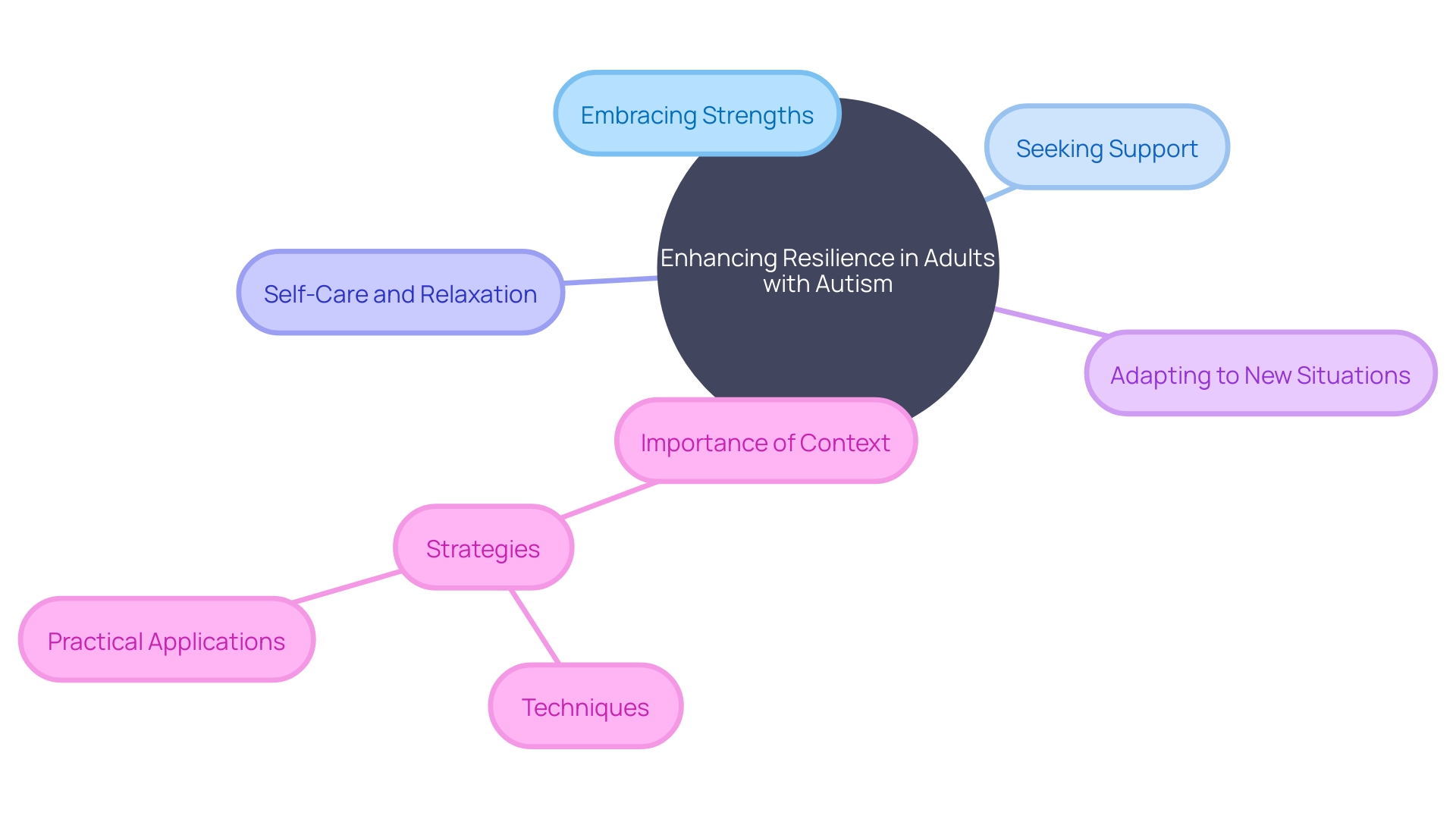
For adults with autism, resilience isn't just a buzzword; it's a vital skill that empowers them to manage daily challenges. The journey towards resilience begins with embracing one's strengths and understanding that seeking support is a sign of courage, not weakness.
Self-care and relaxation are not indulgences but necessary practices that fortify their ability to withstand stress and recover from life's hurdles. It's about finding peace in activities that soothe the mind and body, whether it's a quiet moment with a book or the rhythmic motions of a calming hobby.
The importance of resilience lies not just in bouncing back but also in adapting to new situations with flexibility and grace. It's a testament to the tenacity of the human spirit, especially when navigating the complexities of autism.
However, current research often misses the mark in addressing the real-world implications of autism, focusing too much on lab-based studies that lack relevance to everyday life. Adults with autism and their families have voiced their concerns, highlighting a gap between academic findings and practical applications.
They seek knowledge that translates into tangible benefits, like mastering daily tasks and enjoying life's simple pleasures, which have become even more apparent during the COVID-19 pandemic when routines were disrupted. This has underscored the need for research that considers the 'Individual-in-Context,' recognizing that the environments and daily activities are integral to well-being and flourishing. To truly enhance the lives of adults with autism, we must shift our focus from abstract concepts to the nuances of daily living. It's about acknowledging the importance of context, the variability of challenges based on the situation, and the critical role of personal motivation. By doing so, we can foster an environment where adults with autism don't just survive but thrive, armed with resilience that's informed by a deep understanding of their lived experiences.
Autism Resources for Adults
Navigating the world with autism as an adult can be a unique challenge, especially given that 1 in 45 adults in the U.S. are diagnosed with autism spectrum disorder (ASD). With the rise in public health outreach and increased awareness, more adults may be identifying the signs of ASD later in life. Recognizing the signs, such as difficulties with social communication and restricted, repetitive behaviors, is crucial for these individuals and their support networks.
To support this journey, there are specialized resources that cater specifically to the needs of adults with autism. These include organizations and advocacy groups that provide details on employment, housing, and social engagement tailored for autistic adults. Online communities offer a space to connect, share experiences, and seek advice, fostering a sense of belonging and mutual understanding.
For personalized guidance, therapists and support groups with expertise in autism can make a significant difference for individuals and their families. The importance of these resources is underscored by the power of quality data, as highlighted by the U.S. Census Bureau's efforts in data collection for the 2022 Economic Census, which emphasizes the confidentiality and value of accurate information. Accessing and utilizing these resources can enhance the understanding of autism in adults and improve access to essential support services.
Conclusion
In conclusion, adults with autism face unique challenges in social settings, communication, sensory experiences, and executive functions. However, with the right strategies and support, they can lead fulfilling lives.
Coping strategies such as self-awareness, building a support network, engaging in sensory-friendly activities, and utilizing structured routines can help them manage their daily experiences. Resilience is a vital skill that empowers them to adapt to new situations with flexibility and grace.
To enhance their lives, it is crucial to understand their lived experiences deeply and provide personalized support. Specialized resources such as organizations, advocacy groups, online communities, therapists, and support groups are available to offer employment guidance, housing options, social engagement opportunities, and personalized support services. By addressing the challenges faced by adults with autism and providing tailored strategies and support systems, we can empower them to navigate daily life successfully. With the right tools and resources in place, adults with autism can embrace their unique strengths and lead fulfilling lives.
Frequently Asked Questions
What are some challenges that adults with autism face in daily life?
Adults with autism often struggle with social interactions, communication, intense sensory experiences, and executive functions such as organizing, planning, and time management. These challenges can lead to feelings of isolation and difficulties in forming relationships.
Why might communication be difficult for autistic adults?
Autistic adults may have trouble with both verbal communication and interpreting nonverbal cues, which can lead to misunderstandings.
Can sensory experiences affect autistic adults differently?
Yes, many autistic adults experience heightened sensory sensitivity, finding stimuli like bright lights, loud sounds, or certain textures overwhelming.
Is an official diagnosis of autism always necessary for adults?
Not necessarily. Some adults with autism may choose self-diagnosis due to the limitations and inconclusive nature of formal testing. Whether or not they have a formal diagnosis, it's important to acknowledge and support their unique experiences.
How many adults in the United States are diagnosed with autism spectrum disorder (ASD)?
It's estimated that 1 in 45 adults in the U.S. are diagnosed with ASD.
What are some coping strategies for adults with autism?
Adults with autism can benefit from knowing their personal strengths and challenges, building a support network, engaging in sensory-friendly activities, maintaining structured routines, using visual aids, and seeking professional guidance through therapy or counseling.
Why is resilience important for adults with autism?
Resilience helps adults with autism manage daily challenges, adapt to new situations, and recover from stress. It involves embracing strengths, seeking support, practicing self-care, and finding peace in soothing activities.
How has the COVID-19 pandemic affected research on autism?
The pandemic has highlighted the need for research that focuses on the 'Individual-in-Context' and considers the real-world implications of autism, rather than being limited to lab-based studies.
What resources are available for adults with autism?
There are specialized resources such as organizations, advocacy groups, online communities, therapists, and support groups that provide information and support on employment, housing, social engagement, and personalized guidance for adults with autism.
How can adults with autism recognize the signs of ASD?
Recognizing signs like difficulties with social communication and restricted, repetitive behaviors is crucial. Increased awareness and public health outreach are helping more adults identify these signs, potentially later in life.
List of Sources
- Challenges Faced by Adults with Autism
- mhanational.org (https://mhanational.org/blog/adult-autism-seeking-official-diagnosis)
- Coping Strategies for Adults with Autism
- autismspeaks.org (https://www.autismspeaks.org/signs-autism-adults)
- authenticallyemily.uk (https://www.authenticallyemily.uk/blog/autism-and-mental-health-practical-advice-for-managing-your-mental-health)
- Importance of Resilience and Coping Mechanisms
- link.springer.com (https://link.springer.com/content/pdf/10.1007/s11920-023-01441-9.pdf)
- Autism Resources for Adults
- census.gov (https://www.census.gov/en.html)
- disabilitydebrief.org (https://www.disabilitydebrief.org/library/)
- autismspeaks.org (https://www.autismspeaks.org/signs-autism-adults)
- gov.uk (https://www.gov.uk/government/publications/the-buckland-review-of-autism-employment-report-and-recommendations/the-buckland-review-of-autism-employment-report-and-recommendations)


